Ann Arbor — Advocates for Washtenaw County’s progressive criminal justice policies contend they’ve resulted in a fairer system, although critics warn they endanger the public by not holding violent offenders accountable.
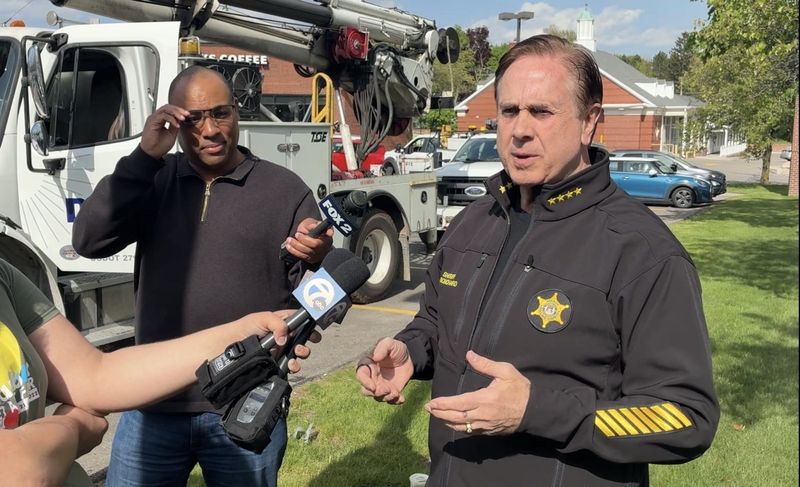
The May 19 carjacking and shooting of a mother in front of her son in an Orion Township mall, allegedly by a man who was given probation two years ago for assaulting a woman in Washtenaw County, was decried by critics. One of them was Oakland County Sheriff Mike Bouchard, who said the suspect should have been incarcerated for his earlier crime, and that the incident is part of a pattern of violent felons getting light treatment from Washtenaw County law enforcement officials, only to commit more crimes.

The shooting has rekindled a debate that has raged since criminal justice reforms began in the mid-20th century, with a new wave of changes enacted since May 2020 in response to nationwide protests following the officer-involved death of Minneapolis resident George Floyd.
Reform advocates said the criminal justice system unfairly punishes minorities, due to systemic racism and the individual prejudices of police, prosecutors, judges and other officials. Recent reforms have included abolishing cash bail, not prosecuting certain crimes, expanding mental health programs and diverting defendants to rehabilitation programs instead of prison.
Critics of the changes countered that the focus should be on preventing and punishing behavior, not lowering penalties after crimes have been committed. They point to crime statistics that began skyrocketing after changes to the criminal justice system were enacted, with the U.S. violent crime rate more than doubling from 1965-75, from 200 to 488 incidents per 100,000 residents, according to FBI statistics. In 2025, the estimated rate was 359.1 incidents.
Washtenaw County Prosecutor Eli Savit, the Democratic nominee for Michigan attorney general, has led many of the recent criminal justice reforms. After he took office in 2021, he directed his staff to stop requesting cash bail, making Washtenaw County the first jurisdiction in Michigan to adopt such a policy. Savit also announced upon taking office that he would stop prosecuting certain “low-level crimes” for juveniles and adults, including sex work.
Savit said his crime-fighting philosophy works.
“My approach is we treat serious crimes seriously, and we send people to prison when they have demonstrated that they need to be locked up and separated from the community,” he said. “But we also recognize that there are people that come through our system who may be headed down the wrong path and can benefit from rehabilitative options — things like substance use and mental health treatment.”
But Bouchard, a Republican who has been sheriff for more than 27 years, countered that the policies create more problems than solutions.
“These policies put people in danger. Some of the judges and the prosecutor in Washtenaw County are not holding violent offenders accountable, and that’s a problem,” he said. “It’s not just in Washtenaw County, but that’s where there’s definitely a problem.”
Bouchard slaps Washtenaw Co. policies over Orion Twp. carjacking
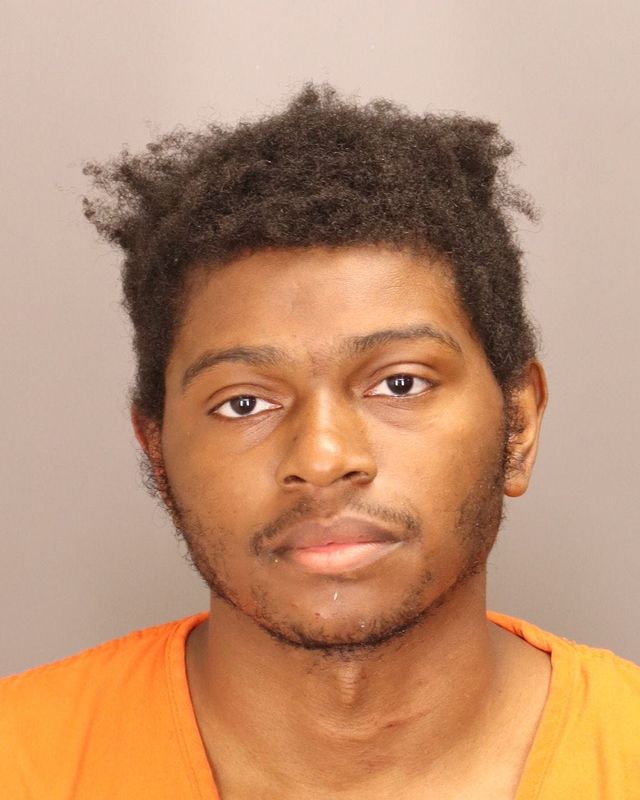
Much of the rancor over the Orion Township carjacking and shooting centers on the handling of a 2024 case involving the alleged gunman, Mauriel Hearn.
Hearn, 25, was on probation after pleading guilty two years ago to assault when he allegedly shot a woman in her 40s outside an Old Navy store last month and stole her car. In the 2024 incident, Hearn tied up a woman with duct tape, suffocated her and threatened to sexually assault her, Bouchard said.
The initial charge against Hearn in the 2024 incident was assault with intent to commit murder, which can result in up to life in prison. But Savit and Washtenaw County Circuit Judge Carol Kunkhe agreed to invoke the Holmes Youthful Trainee Act (HYTA), which is why there’s no online record of the court proceedings, Bouchard said.
HYTA is a deferred sentencing program that allows young defendants to plead guilty to certain crimes without officially being convicted. If they successfully complete probation, the charges are dismissed and the criminal record sealed. When the law was first enacted in 1966, it covered defendants from ages 17-21 years, although it’s since been expanded to cover people from ages 18-26.
Bouchard called the decision to invoke HYTA in Hearn’s case “ridiculous. … How is a 23-year-old violent felon considered a youth? This flawed way of thinking is causing a lot of real-world pain.”
The sheriff added: “The same prosecutor and judge let a person waiting for homicide kill two more people; he was arrested in Detroit. He killed someone, was given a tether and he cut it off and killed two more people.”
According to the sheriff, the gun Hearn allegedly used in the Orion Township case has been linked to an April carjacking in Detroit.
The Detroit Police Department said in a Thursday statement: “We have evidence to suggest the cases are connected. We are continuing our investigation, and once the investigation is completed, we will submit our findings to the Wayne County Prosecutor’s Office.”
Bouchard said Hearn “is a dangerous person, whose record reflects that.”
“In the (2024) case, he duct-taped a woman, hog-tied her to a bed, suffocated her, and threatened to sexually assault her,” Bouchard said. “In what world does that person get probation? How does that make sense?”
Hearns’ attorney Delphia Simpson did not return a phone call seeking comment.
Savit defended his handling of the case: “He did not get a plea deal, which involved any reduction of charges. He pleaded guilty as charged. There was no agreement to any particular sentence. He pleaded guilty as charged and was sentenced by the judge, which is essentially exactly what would have happened had we gone through a trial, which always carries some risks.”
Kunkhe, who presided over Hearn’s 2024 case, did not return a phone call and email seeking comment.
In 2021, Kunkhe was criticized after allowing a murder suspect with a lengthy criminal history out of jail on a tether. Because Orlando Whitfield’s case had been delayed in the early months of the COVID-19 epidemic, Kunkhe released Whitfield on a tether in May 2020.
In June 2021, Detroit Police named Whitfield as a person of interest in the shooting deaths of a 27-year-old woman and a 31-year-old man whose bodies were found in their home in the 18000 block of Northlawn on Detroit’s west side. The couple’s young son was present during the killing, but unharmed.
After being named as a person of interest in the Detroit homicides, Whitfield turned himself in at the Washtenaw County Jail. Five days later, he was found dead in his cell. Authorities said no foul play was involved.
“This is the same judge and the same prosecutor in the (2024) Hearn case,” Bouchard said. “That’s just one judge and the prosecutor with two cases. Imagine what a review of the entire caseload might find.”
Ann Arbor: ‘Neighborhood Watch signs are an expression of exclusion’
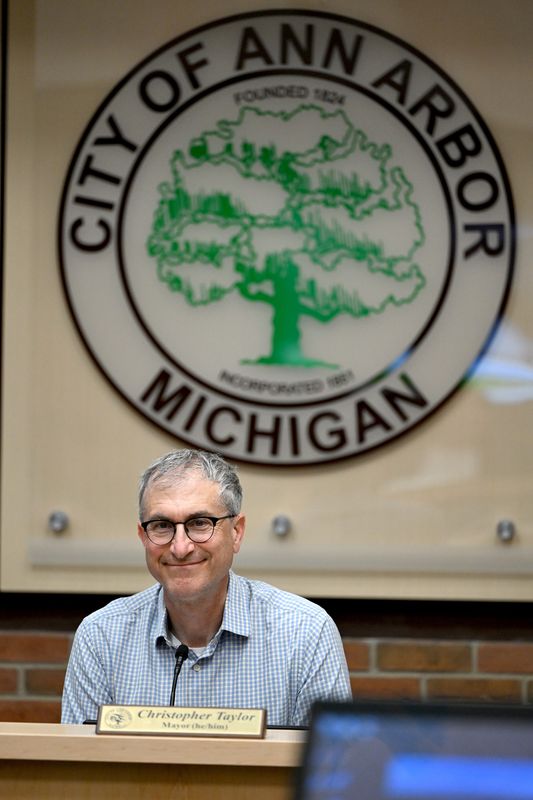
A major focus of recent reforms has been the criminal justice system’s impact on minorities. Last month, Ann Arbor officials spent more than $16,000 removing Neighborhood Watch signs in the city because, according to Mayor Christopher Taylor in a TikTok video posted on the city’s official account, “Neighborhood Watch signs are an expression of exclusion.”
The Ann Arbor City Council in 2023 enacted a “Driving Equity Ordinance” that aims to “eliminate biased stops, prevent racial profiling, protect public safety, and increase public trust in law enforcement,” and “… to curtail the practice of stopping vehicles for secondary traffic offenses as a pretext to investigate hunches that do not amount to reasonable suspicion that a crime occurred.
“Pretext stops are humiliating, traumatizing, and can lead to broad distrust of law enforcement in communities of color, and further exacerbate the generational trauma already suffered by families of color in our community,” the ordinance said. “The City of Ann Arbor recognizes that racial inequity is endemic in our criminal justice system, and is committed to honestly examining, and actively changing, policies and practices that perpetuate systemic racial injustice in our community.”
Phone calls and emails to Ann Arbor City Council members were not returned.
Immediately after taking office in January 2021, Savit launched the Prosecutor Transparency Project in collaboration with the American Civil Liberties Union of Michigan, the University of Michigan Law School and the Vital Projects Fund. The initiative “is geared towards taking an unflinching look at potential racial inequities in the Prosecutor’s Office-and taking action to eliminate inequitable treatment,” according to the project’s website.
“I’m proud of that study, because we opened our doors to the ACLU and UofM researchers, and they went through and looked at every data point where you might see people being treated because of race,” Savit said. “This came against the backdrop of observations from other groups that Black people in our court system are overrepresented as compared to their population.
“The question we wanted to figure out: Is this disparity we see in the court system reflective of something our office is doing, or is it reflective of something else? What it generally found was that cases are submitted to the prosecutor’s office, and we authorize charges against Black and White defendants at around the same percentage,” Savit said. “That didn’t fully answer the question, but I felt an obligation to take a hard look to see if anything was going on where we might consciously or unconsciously be treating people differently.”
But University of Detroit Mercy criminal professor emeritus Daniel Kennedy said progressive policies have been a “disaster” for Black people.
“Whenever you defund police, or stop cash bail and a defendant gets out and kills somebody, they’re not generally doing it in White neighborhoods,” Kennedy said. “These are good intentions with bad results. Good intentions might make some people feel good, but who do these policies make feel good, and who do they hurt? They hurt the Black community, mostly, and this pattern has been going on for a very long time.”
But Wayne State University Criminal Justice Professor Khari Brown, an Ann Arbor resident, said Washtenaw County’s policies are “a step in the right direction.”
“When Eli Savit was elected, one of the first things he did was to author a policy directive aimed at providing more funding for divergent programs for people who’d committed nonviolent crime, and avoided charging juveniles for low-level misdemeanors,” Brown said.
The Ann Arbor initiative banning Neighborhood Watch signs was driven by community organizations, he said.
“There was a large bias in terms of who officers were stopping,” Brown said. “It matters how committed people are of combating racial bias in the criminal justice system. In Washtenaw County, the response has made a difference, and the crime numbers reflect that.”
Washtenaw County’s crime trends
While crime in Washtenaw County has dropped in multiple categories in the last few years, there have also been some significant long-term increases.
There were two homicides in Washtenaw County in 2007, according to Michigan State Police data. That shot up to 20 homicides in 2023 and dropped to 12 in 2024, the most recent data available. Aggravated assaults jumped from 636 in 2007 to 1,098 in 2024, down from a high of 1,211 in 2021.
Robberies in the county dropped from 264 in 2007 to 83 in 2024, marking the fifth straight year of decline. Sexual assaults fell from 351 in 2007 to 206 in 2024.
Nonviolent crimes have fallen in Washtenaw County in the last few decades, according to MSP data. Car thefts dropped from 728 in 2007 to 526 in 2024, while larcenies countywide fell from 5,113 to 4,238 during the period.
Store owner and justice advocate spar over policies
After Savit took office in January 2021, he said he wouldn’t prosecute consensual sex work, charge juveniles for low-level offenses, authorize charges for illegal drugs or weapons found in routine traffic stops, or prosecute possession of natural psychedelic drugs.
Kenneth Nixon, director of community outreach for Safe & Just Michigan, a nonprofit that advocates for “evidence-based policies that reduce the harms of the criminal legal system and promote justice, community safety and healing,” said progressive policies like Savit’s help society.
“People complain when someone gets a low bond or no bond and commits a crime, but would they make that same argument if (the defendant) had been given $100,000 bond and posted it?” said Nixon, who was released in 2021 after spending 16 years in prison for killing two children in a house fire. The Wayne County Conviction Integrity Unit found problems with the case and agreed to drop the charges. Nixon has a pending federal lawsuit against the city.
“These policies reduce incarceration rates, which is a strain across the country,” Nixon said. “We’re bursting at the seams with prisons full of people who committed low-level crimes. Those resources could be used for education, rather than warehousing people.”
But Shelly Adkins, who lives in Oakland County but owns hardware stores in Dexter and Milan, said Savit’s reforms have “gone way too far.”
“I run two Ace hardware stores in the county, and I deal with a lot of retail theft,” she said. “The cops say don’t even bother calling them because the prosecutors won’t do anything; they’ll just slap them on the wrist — and if they do prosecute, the judges aren’t going to do a frigging thing anyway. If you keep letting them get away with it, they’ll keep doing it.”
Adkins said she was disappointed when Savit agreed to resentence the man who killed her nephew, Lionel Campbell Jr., on Dec. 10, 2007, outside the Village Grove Apartments in Ypsilanti. Police said the shooting followed an argument over a few hundred dollars.
The jury deliberated for three hours before finding Frye guilty of second-degree murder. He was sentenced to 30 to 60 years in prison.
Frye unsuccessfully appealed his case three times. When his attorney filed a motion for relief from judgment in January, Savit’s office said it would not oppose the motion. Frye argued that his attorney erred by not allowing him to mount a self-defense claim.
Adkins said her family was told about the decision to resentence Frye the day before the hearing.
“They said they couldn’t find us because everyone had changed their phone numbers,” she said.
“I don’t understand how he could lose his appeals, and then the prosecutor decides not to fight (the conviction),” Adkins said. “It doesn’t make sense to me. It just seemed like they were looking for an excuse to let (Frye) out.”
Frye’s attorney, Jonathan Sacks, did not return a phone call.
Savit said when problems are found with cases, “we have a duty as ministers of justice to follow the law.”
Frye was resentenced last month to 15 to 30 years in prison, with credit for 16 years served.
“He’ll get turned loose,” said Adkins, who raised her nephew’s son after he was killed. Campbell’s son is 18, and his daughter is 22, Adkins said.
“Adonis murdered their dad, but he’ll be getting out of prison soon, and there’s nothing we can do about it,” Adkins said. “The parole board still has to parole him, but with the resentencing, we’re sure he’ll be getting out soon.”
“You keep hearing about someone getting turned loose and committing another crime,” she added. “You just pray (Frye) made a change. Even though (Campbell’s children) don’t have a dad, hopefully (Frye) finds the Lord and changes his ways.”
ghunter@detroitnews.com
(313) 222-2134
@GeorgeHunter_DN
This article originally appeared on The Detroit News: Are violent felons getting off easy in Washtenaw County?
Reporting by George Hunter, The Detroit News / The Detroit News
USA TODAY Network via Reuters Connect

By George Hunter, The Detroit News | USA TODAY Network