

By Ann Saphir
June 17 (Reuters) – Federal Reserve Chairman Kevin Warsh did not submit an interest-rate path projection as part of the central bank’s quarterly publication of economic projections on Wednesday, spelling big changes ahead for what’s become a key guidepost for investors on monetary policy.

The central bank’s latest “dot plot” released on Wednesday depicting the anonymized individual rate-path views of policymakers featured just 18 submissions. The full slate of Fed policymakers numbers 19.
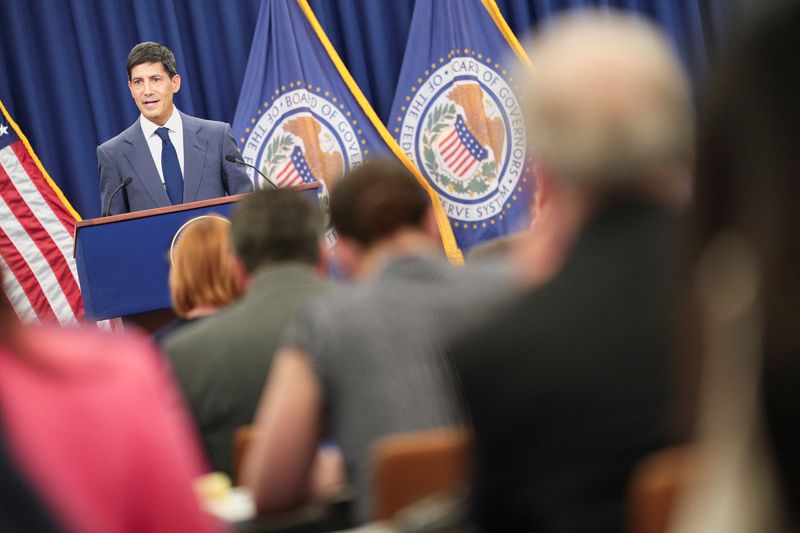
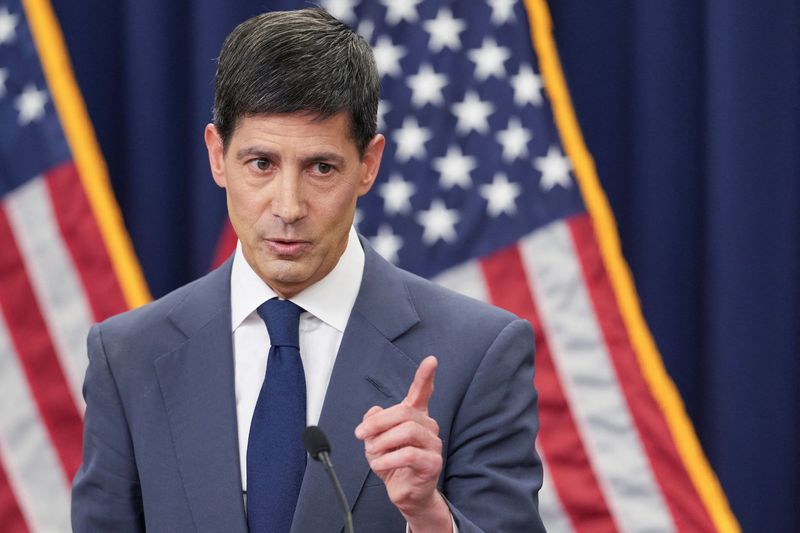
“It’s been the practice of this committee for participants to submit these projections, and I have encouraged my colleagues to continue to do so,” Warsh said at his press conference following the Fed meeting. “I however refrained from offering any projections of my own, consistent with my long-held views on the SEP, at least as it is currently structured.”
Warsh announced he’s convening a task force of Fed staff and outside experts to review the Fed’s communications practices, including the dot plot that the Fed has published four times every year since 2012 to give the public a sense of where the central bank may be headed on rates.
He said he “wouldn’t be surprised” if there were a new communications framework in place by the end of the year. He also announced reform-oriented task forces in four other areas.
Fed policymakers themselves concede the dot plot is imperfect — it doesn’t, for instance, show how each policymaker’s forecasts for the labor market and inflation affect their rate-path view.
Nonetheless, it has been part of a suite of progressively more open communication practices that policymakers credit with helping investors and the wider public understand the central bank’s thinking, which they believe has made monetary policy more effective.
Warsh, however, has long criticized such forward guidance, arguing it locks policymakers into a specific rate path without due regard to changing economic data.
Half of policymakers submitting projections believe they will need to raise the Fed’s policy rate this year, the dot plot showed. Six of the nine who expect higher rates by year end felt that more than one quarter-point rate hike would be needed.
Eight of Warsh’s colleagues felt holding rates steady in their current 3.50%-3.75% range will be enough to bring inflation back down to the Fed’s 2% goal. One policymaker felt a rate cut would be needed.
That puts Warsh in a tough place, as he was picked for the job by President Donald Trump with the expectation that he cut interest rates. Financial markets, however, are now pricing in a strong likelihood of a rate hike by the Fed’s September meeting.
In his press conference, Warsh characterized the rate-path projections as being evenly split between those who want a hold or a cut, and those who feel a hike will be needed.
“I noted that all the submissions were coming in with pencils, you know, those kind with the big erasers,” Warsh said. “That’s to say that I think my colleagues around the table when they submitted their dots understand the world is changing quite quickly and they didn’t feel bound by them six weeks from now.”
Even so, the projections illustrate how quickly the debate within the central bank has flipped from a focus on how long to hold rates steady before cutting them, to a growing worry that the Fed will need to raise rates to keep price pressures from higher fuel prices from seeping more broadly into underlying inflation.
Global oil prices have dropped sharply since last week when Iran and the U.S. announced a deal to end their conflict and get oil flowing through the Strait of Hormuz again. But it is not clear how quickly shipping and exports could recover after the agreement is signed, particularly given the damage that energy facilities sustained during the three-month war.
Inflation has been running above the Fed’s 2% target for more than five years.
The projections published on Wednesday show central bankers have become more pessimistic about inflation since March, reflecting the sharp rise in inflation since the start of the war.
Inflation by the personal consumption expenditures price index is now seen at 3.6% by the end of the year, based on the median policymaker view. In March policymakers expected year-end PCE inflation of 2.7%.
Core PCE inflation, which strips out volatile oil and food prices, is now seen hitting 3.3%, compared with 2.7% previously.
The unemployment rate is now projected at 4.3% by year-end, matching the actual reading in May and lower than the 4.4% policymakers had expected in March. The forecast suggests increasing confidence that the labor market is not weakening or in need of support from rate cuts, as some policymakers had worried earlier this year.
GDP growth is seen at 2.2% this year, weaker than the 2.4% forecast as of March.
(Reporting by Ann Saphir; Editing by Andrea Ricci)
By Ann Saphir | Reuters | © Copyright Thomson Reuters 2026.
