Facing $94 million in unfunded building costs and a 40% drop in Mass attendance, the Catholic Archdiocese of Detroit has embarked on a restructuring plan that some fear could lead to the merger or closure of parishes, especially those in Detroit and its inner-ring suburbs.
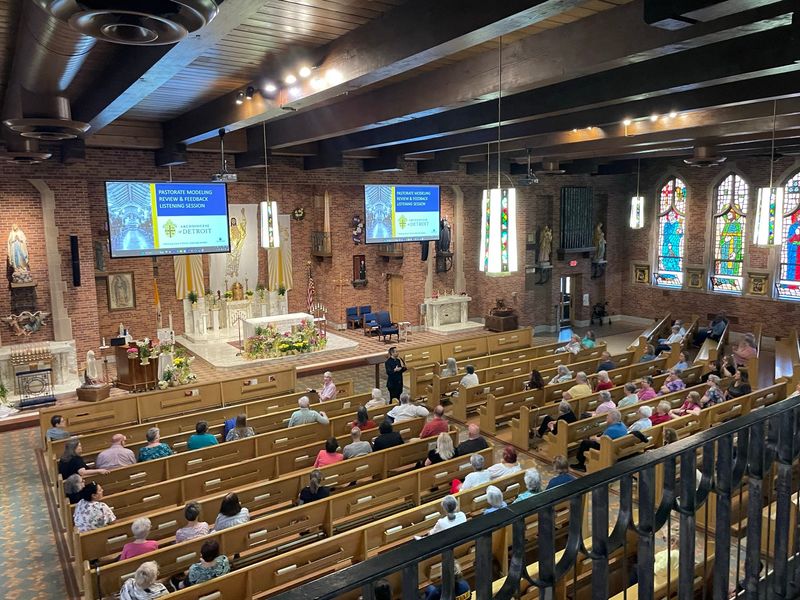
The restructuring plans were announced in November and are now in the second phase, a period that involves what are called “listening sessions” at local churches, where archdiocesan officials and priests listen to the concerns and hopes of Catholics across the six counties of the Detroit archdiocese. The sessions will continue until mid-June. Some Catholics in Michigan have expressed concern that the archdiocese has already determined what churches to shutter, but archdiocesan officials say they’re closely listening to what people have to say and won’t make any final decisions until next year, 2027.

As part of the process, the Detroit archdiocese released information online in March about parish finances and attendance data in workbooks that provide a detailed look at the conditions of churches, showing how some are doing well with revenue while others struggle. There are now about 900,000 Catholics in the archdiocese, which includes Wayne, Oakland, Macomb, Lapeer, Monroe and St. Clair counties. That’s down from about 1.5 million in 2005 and the lowest number of Catholics in the region since the 1940s.
Mass attendance plunged 40% from 2011 to 2024, from 231,076 Catholics attending Mass every weekend on average to 139,088 Catholics every weekend. In 2024, less than a third of pews were filled with worshippers, according to data provided by the archdiocese. Funerals now outnumber infant baptisms in metro Detroit, indicating an aging population that is not being replaced with younger Catholics. And there are now only 224 priests in the archdiocese, many of them aging, with only 134 priests projected by 2034.
“We have been struggling to maintain buildings, ministries, and structures that were designed for a much larger Church,” Archbishop of Detroit Edward Weisenburger said in an open letter on the restructuring project. “The situation that unfolded in the last 50 years has left us stretched — sometimes stretched too thinly to serve as well as we want. Moreover, as we struggle to care for buildings and parish structures where there are very few people, we are also seeking to ensure the presence of the Church as we follow the Catholic population in those areas where the Church is growing.”
Archdiocese has $94 million shortfall in building costs
One major problem is building maintenance. Metro Detroit is filled with historic churches that inspire worshippers with architectural beauty, but they’re costly to maintain. Many need repairs and some struggle to pay for basic needs like heating.
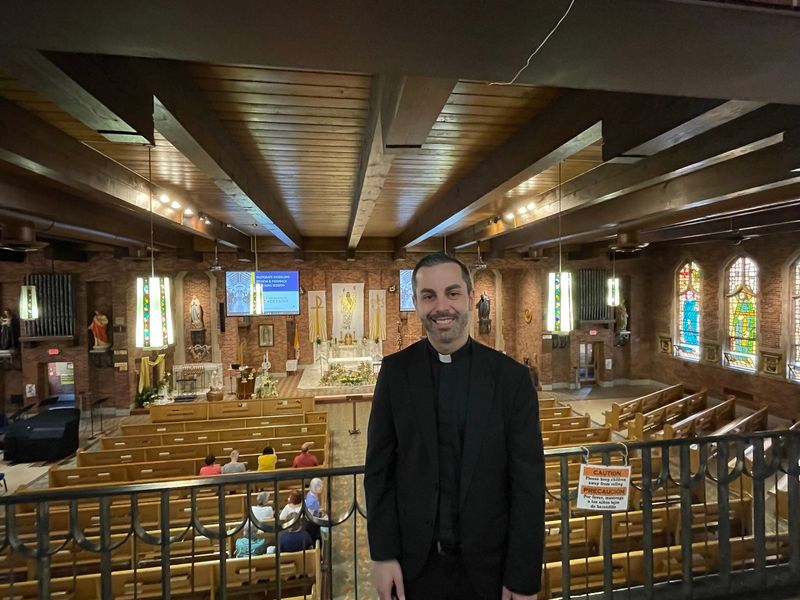
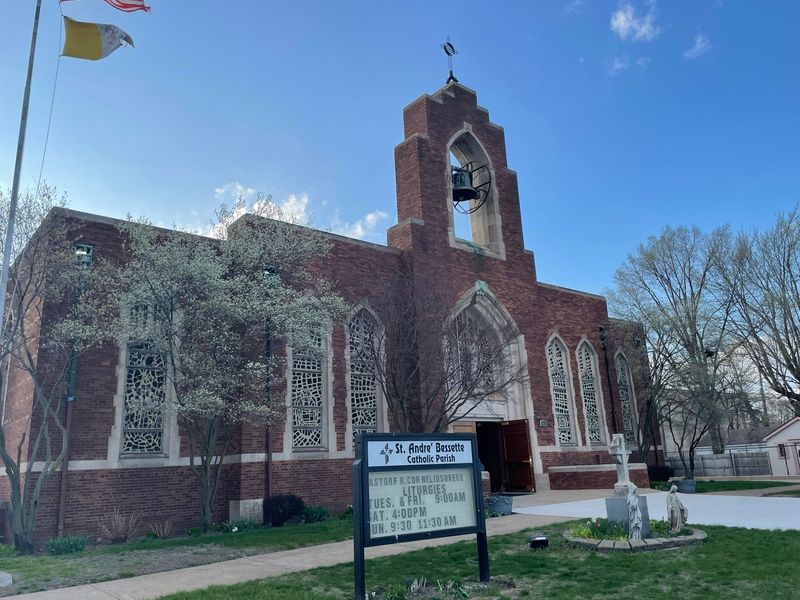
“Across the Archdiocese, we have about $94 million in unfunded building maintenance,” Rev. Mario Amore, director of parish renewal at the archdiocese of Detroit, told the Free Press during an interview before a listening session in April at St. André Bessette Catholic Church in Ecorse. The archdiocese arrived at the $94 million figure after conducting an audit of all their facilities and buildings in its 209 parishes, which “helps us to understand the conditions of the buildings, not only preventative maintenance needs, but urgent capital expenses as well,” Amore said.
Some parishes may have the funds to repair and maintain their buildings, “but across the archdiocese, there’s $94 million that the community by itself wouldn’t be able to fund,” Amore added.
The closing and merging of parishes in metro Detroit has been an ongoing process for decades. There was controversy when Cardinal Edmund Szoka shuttered numerous Detroit parishes in 1989. And under the previous archbishop of Detroit, Allen Vigneron, there were church closings and the creation of what were called “families of parishes,” where churches were grouped together.
The current plan, the details of which are still being worked out, will probably result in what’s called a “pastorate model.”
“The difference here in the pastorates is that there’s going to be the groupings, but that there’s going to be one pastor, one boss essentially, who makes sure that the community is working together and their spiritual needs are being met,” Amore explained.
The restructuring plans have 15 planning areas of different geographic regions within the archdiocese. Planning Area 1, for example, has 13 parishes that are mostly within the western area of the city of Detroit. Planning Area 2 includes nine parishes in southwest Detroit, several of them with Spanish language masses. The other 13 planning areas are in other parts of southeastern Michigan. The data shows a wide range in the finances of individual parishes. In Planning Area 1, six of the 13 parishes had deficits in fiscal year 2025. In Planning Area 2, only one of the nine parishes had a deficit that same fiscal year.
Older churches face attendance, financial challenges
Data at St. Scholastica Parish in Detroit illustrates some of the challenges older churches are facing. It was founded in 1928 by Benedictine monks from Kansas, establishing a church, elementary school and Benedictine high school. But the schools closed in the early 2000s, affecting the church’s finances. The closing of Catholic schools hurts the ability of parishes to maintain their buildings and priests since tuition is sometimes used in part to help parishes. There were only three infant baptisms at St. Scholastica from 2023 through 2024 while there were 15 funerals. They faced a deficit in fiscal years in 2023 and 2024, but had a small surplus in 2025 as they reduced their expenses.
Another issue is that, in many of the parishes, attendees live outside the parish boundary, traveling a long distance in some cases to attend Mass. At St. Constance Church in Taylor, only 18% of the members live within the parish boundaries. Attendance at weekend Mass has dropped 66% at St. Constance, from 605 people every weekend on average in 2016 to 205 people in 2014. At Divine Child Church in Dearborn, which has a shrinking Catholic population, Mass attendance has plunged 39% since 2015.
Amore said he understands the concerns many have that parishes could be shuttered or merged, but added there are limited resources.
Fear about closures is “an issue that is on the hearts and minds of parishioners, because they love their parish communities,” Amore said. “They take great pride in them, which they should, but we have to be good stewards of not only our financial resources, but our human resources as well.”
Spending too much money on buildings detracts from the mission of the Church, he said. The restructuring effort focuses on three goals: vibrant parishes, flourishing priests and a mission-ready church.
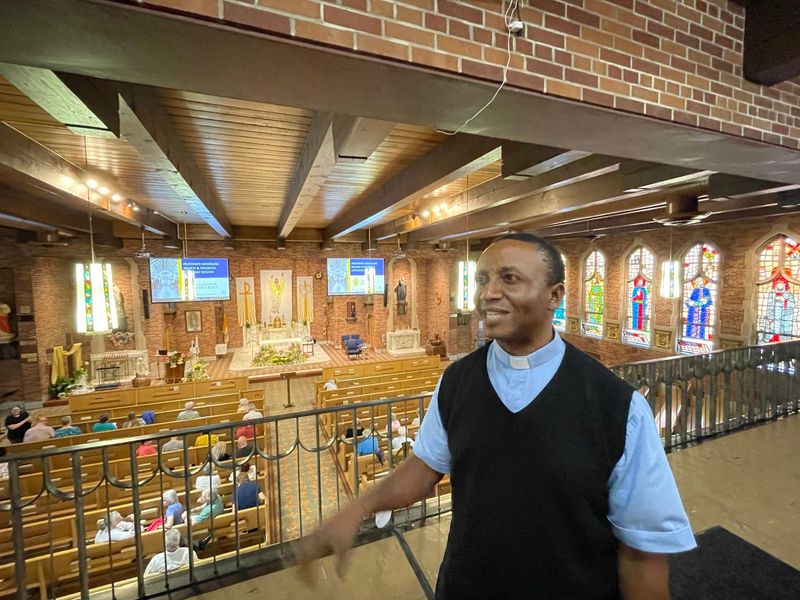
The Rev. Cornelius Okeke, pastor at St. André Bessette Catholic Church, said he’s been hearing various feelings from parishioners about the restructuring plans.
“It’s mixed,” Okeke said. “A good number of people are very enthusiastic … mapping for the future generation of Catholics in the archdiocese. … Some people are anxious.”
He said Catholics should listen to the Holy Spirit during the process, “what the Holy Spirit is telling the Church to do.”
The archdiocese offers the same advice, posting on its website “A Prayer for Restructuring the Archdiocese of Detroit” that asks for the blessing of revered Catholic leaders, including Blessed Solanus Casey.
Some priests are also anxious about the process because the archdiocese has indicated there may be some shuffling around of pastors due to dwindling attendance in the older parishes.
“As our Catholic population has moved from the city to the near suburbs and from the near suburbs to the farther out suburbs, this has resulted in too few priests in large parishes and too many priests in small parishes,” the archdiocese said on its website.
The listening session on April 14 at St. André Bessette Catholic Church, which has roots stretching back to the 19th century, drew a crowd that appeared to be mostly elderly people. The communications director for the archdiocese did not allow a Free Press reporter to attend the session to observe what was discussed.
The Ecorse church now has a Spanish-language Mass, reflecting the growing Latino population, said Roberto Sanchez, a parishioner. St. André Bessette was formerly St. Francis Xavier, established in 1848, and then merged with Our Lady of Lourdes in River Rouge in 2011, and renamed.
“The old people can’t keep it going,” said Denise Balog, a parishioner. “We’re eventually going to be gone, but we need that youth.”
For more information on the restructuring plans and how to attend listening sessions in your parish, visit https://restructuring.aod.org/
Contact Niraj Warikoo: nwarikoo@freepress.com
This article originally appeared on Detroit Free Press: Detroit Catholic archdiocese restructures as Mass attendance drops 40%
Reporting by Niraj Warikoo, Detroit Free Press / Detroit Free Press
USA TODAY Network via Reuters Connect