Hopping a plane to go see Grandma or the Grand Canyon this summer could be packed with extra expenses and more frustration, especially if last year’s turbulence ramps up in 2026.
This summer, airlines are being squeezed by higher jet fuel prices, budget-conscious consumers, a shortage of air traffic controllers, and a major shift in the landscape as we head into the Memorial Day weekend.

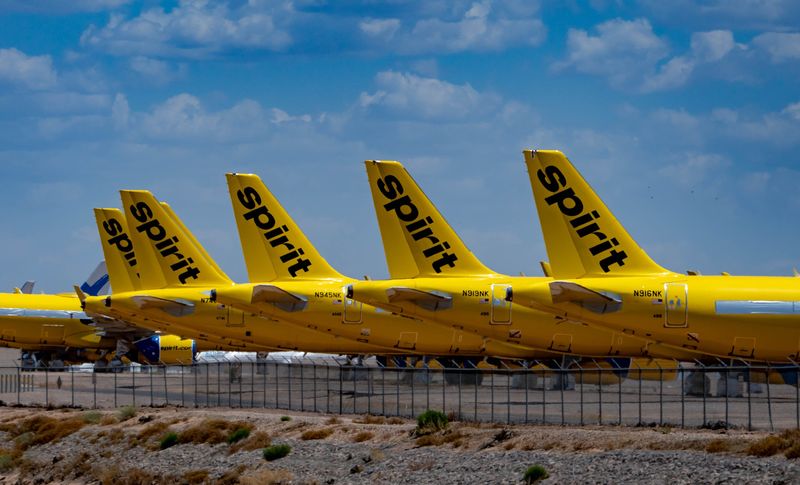
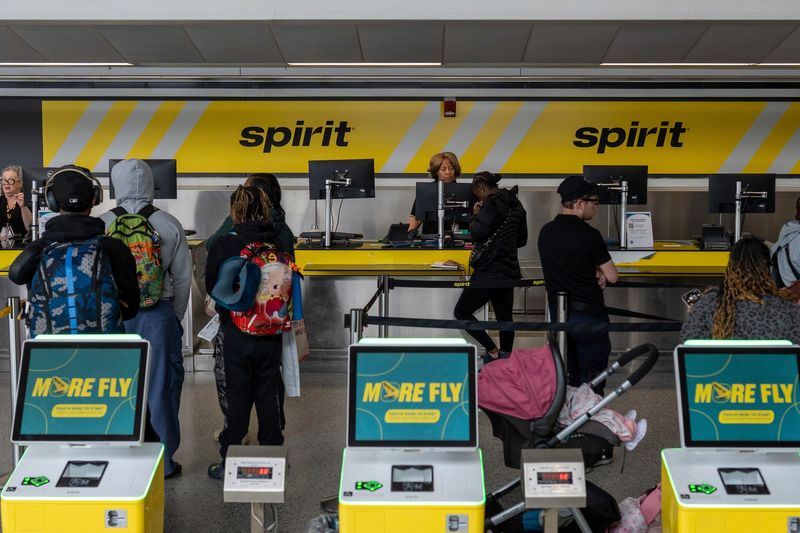
On May 2, Spirit Airlines shut down, canceling all future flights and leaving many bargain-hunting families scrambling for other low-cost options. Hint: Keep a close eye on those baggage fees when shopping.
A new report issued Tuesday, May 19, from the U.S. PIRG Education Foundation summarized 2025’s travel woes: “The Plane Truth: Airline travel isn’t likely to get less stressful in the near future.”
More flights ended up canceled and delayed in 2025 than the previous year, leading to the worst on-time performance since 2014, according to “The Plane Truth 2026.”
One in 12 domestic flights on the 10 largest U.S. airlines arrived an hour or more late in 2025, according to the report, which reflects new data from U.S. Department of Transportation.
Arriving late means that you might miss a connection or even an important event, like a wedding or concert, if you’re cutting things too close.
“More than 100,000 flights were canceled by the largest U.S. operating carriers,” according to the report. “Overall, nearly one-fourth of flights — about 1.66 million flights including delays, cancellations and diversions — did not arrive on time in 2025.”
Airline fares jumped more than 20% in one year
We’re also paying a great deal more to travel — and we might have a lousy experience to boot.
Airline fares rose a startling 20.7% over the past 12 months through April, according to the U.S. Bureau of Labor Statistics. Gasoline rose 28.4% and fuel oil rose 54.3% over the past 12 months through April.
Over the last 12 months, the Consumer Price Index increased 3.8% before seasonal adjustment.
Will summer 2026 travel be more stressful?
Teresa Murray, a co-author of the “Plane Truth” report, says it’s hard to know whether this summer will be worse than last for travelers. Many variables come into play — bad weather, full flights, how much consumers potentially could cut back on travel as they’re dealing with high inflation.
“We think there is definitely the potential for having a more stressful summer,” Murray told the Detroit Free Press.
“One of the 10 largest airlines is out of business. Airlines are cutting flights to deal with jet fuel costs and there’s already been some documentation of that. The airlines figure it’s better to fly fewer flights that are fuller and more cost effective for them.”
In addition, hundreds of flights per day at Chicago O’Hare International Airport are being cut this summer to address a mandated schedule reduction by the Federal Aviation Administration to mitigate endless delays and cancellations. United and American Airlines had been adding flights in a turf war, which experts said contributed to overscheduling.
The U.S. Department of Transportation noted that less than 60% of arrivals and departures were on time last summer at O’Hare.
Murray suggests that consumers take a proactive approach, given all the challenges. Key tip: Travelers must download the airline’s app and check for delays or cancellations before leaving the house.
Spirit Airlines shutdown reshapes low‑cost travel options
Even if you never flew on Spirit, Spirit’s collapse shakes up the landscape for all travelers.
Spirit had a 3.8% market share of U.S. passengers in February, according to Cirium, an aviation analytics company.
Yet even 4% isn’t inconsequential, according to Murray, who directs the Consumer Watchdog office for U.S. PIRG, a nonprofit advocacy group that has advocated for more passenger protections.
Travelers in some markets depended more on Spirit flights than others. At Detroit Metropolitan Airport, Spirit had 15.7% of U.S. domestic market share in February, second to the 60% share in Detroit for Delta Air Lines, according to Cirium.
Customers of other airlines could see higher fares and fees, as well as more packed flights.
Many consumers who flew the discount airline now need to find low-cost options elsewhere. Unfortunately, all airlines don’t play by the same rules and put restrictions on economy or budget fares, or other fares.
Baggage fees can erase the savings on cheap tickets
Murray said consumers will need to carefully study a variety of restrictions, including the cost of checking a bag or carrying a bag onto a plane.
Someone who buys a Basic Economy ticket on United Airlines, for example, cannot carry a bag onboard when traveling within the United States. You have to pay to check that bag.
For tickets bought on or after April 3, bag fees on these United flights start at $45 if you prepay, $50 in the lobby and $75 at the gate. You cannot gate check bags for free. You’re allowed one personal item that must fit under the seat in front of you. If it doesn’t fit once you’re at the gate, that will be $75.
United even has an online “checked bag fee calculator” to help you figure out how much it will cost you to check your bags on specific trips.
Murray noted that many airlines now generally charge $45 to $50 for the first bag you check. But some of these fees will shock you.
Frontier Airlines allows a personal item that fits under the seat in front of you, but that bag must fit the dimensions required by that airline. Otherwise, you’re looking at complex chart of fees. “Bag prices vary depending on your travel dates and when you purchase them,” according to Frontier’s website.
You can use a Frontier calculator online — which, of course, wastes more of your time — to figure out what a baggage fee will be on a trip before you book it. I tried Detroit to Chicago O’Hare in July and found that the fees could range from $69 to $99 for a carry on — or the first checked bag — for that trip. The lowest fee would apply if you paid for the carry-on when you booked the ticket on the web or using a mobile app. The fees are per person, per direction.
Many airlines will charge consumers higher baggage fees at the airport if they do not pay in advance.
Can you imagine that consumers once walked the planet and could take baggage on a flight and not pay extra?
American Airlines, Murray noted, instituted the first fees for checking a bag in the industry in 2008. And then, it was just $15.
She said that airlines may favor higher baggage fees because revenues from such fees aren’t subject to the same 7.5% federal excise tax that airlines pay on domestic airfares.
How travelers can avoid some air travel headaches
As people search for bargains, Murray said travelers should take into account whether it’s worth it to grab a lower-cost flight if it involves catching a connecting flight at an airport that’s notorious for delays.
PIRG offers an online resource at PIRG.org/flighttips to better understand what to do if your flight is canceled, how to check a flight’s on-time record, and tips to consider before you book a flight.
What airlines owe passengers when flights are canceled
Before you book a flight, consider what airlines promise up front — and what they don’t — when trouble arises.
The U.S. Department of Transportation’s passenger dashboard at FlightRights.gov shows the binding commitments from the current nine largest airlines in situations that involve a controllable cancellation and delay of three hours or more caused by the airline.
What’s controllable? Things like staffing, equipment failures, tight scheduling. We’re not talking about delays due to extreme weather, high winds, hurricanes and more.
All will provide food vouchers when a controllable cancellation results in passenger waiting three hours or more for new flight.
Eight major airlines have agreed to commit to providing complimentary hotel accommodations and ground transportation back and forth to the hotel for any passenger affected by an overnight cancellation, but Frontier won’t.
Don’t automatically expect frequent flyer miles, cash on the spot, or travel vouchers with most airlines when a cancellation results in passenger waiting for three hours or more from the scheduled departure time.
None of the nine U.S. airlines commits to cash compensation. A few airlines committed to offering frequent flyer miles or a travel voucher. Southwest, JetBlue, Hawaiian, and Alaska are committing to travel or credit vouchers. That doesn’t mean you cannot try to negotiate or ask for such breaks, especially if you’re a long-standing customer.
Where you’re traveling, what time you’re flying, the airline you’re booked on, and the airports you’re dealing with all can impact how well things will go.
Detroit Metro Airport performs better than many major hubs
Detroit Metropolitan Airport in Romulus ranked No. 5 in top on-time performance in 2025, the same as 2024, based on Bureau of Transportation Statistics. In 2025, 79.52% of flights had on-time arrivals.
Your odds are significantly better for avoiding delays when you travel earlier in the morning.
In May 2025, for example, more than 90% of the flights arrived on time from 7 a.m. to shortly before 10 a.m. at he Detroit airport. But less than 70% of the flights arrived on time between 9 p.m. and shortly before midnight. The on-time arrivals dropped to 62% in the hour between 10 p.m. and shortly before 11 p.m.
In May 2025, arrivals and departures overall were on time more than 80% of the time.
A flight is counted as “on time” if it operated less than 15 minutes after the scheduled time shown in the carriers’ Computerized Reservations Systems, according to the Air Travel Consumer Report, which is produced monthly by the Department of Transportation’s Office of Aviation Consumer Protection.
Complaints against U.S. airlines hit new records four years out of five from 2020 to 2024, the PIRG report noted. Currently, it appears 2025 did not set a new record. “But we don’t know for certain because we don’t have data for the full year,” the report stated.
The number of complaints filed against U.S. airlines with federal regulators skyrocketed starting in 2022, primarily about cancellations and delays and the lack of timely refunds required by law when flights are canceled, according to the PIRG report. Yet the Department of Transportation has had trouble tallying complaints quickly to release detailed complaint data for the past few years.
In April, the Department of Transportation released its most comprehensive report data in three years, which only reflected less than half of 2025. The data doesn’t break down the reason for the 2025 complaints.
Based on a very limited window, that data shows complaints for August through December fell by 23%, compared with the same period of 2024.
It is, perhaps, interesting to note that in late July 2024 massive delays and cancellations hit Detroit Metropolitan Airport and elsewhere after a global tech outage triggered havoc for days and a flurry of complaints for weeks from consumers.
Consumers, no doubt, learned some lessons when they ended up personally hit by the sudden disruption. Many of us only fly once or twice a year, though, and a lot can change, such as the higher baggage fees and even what you thought were the rules.
The Department of Transportation had approved a new rule in 2024 under the Biden administration to require airlines and ticket agents to disclose up front various baggage fees, as well as fees for changing or canceling a reservation. But the rule to protect consumers from these confusing, surprise junk fees was challenged by the airline industry and ultimately vacated in federal appeals court in February.
“DOT’s Bureau of Transportation Statistics data shows that airline revenue from baggage fees increased by more than 30% between 2018 and 2022, while their operating revenue grew at less than half that pace in the same period,” according to a news release from the Department of Transportation in April 2024.
You’ve got to do your own research — and take time to play it smart.
Many of us are carrying extra baggage from some shocks to travel, including the sudden shutdown of Spirit Airlines in early May. It will take more time to protect yourself from things like surprising junk fees and out-of-the blue delays. But you’re better off doing some legwork long before you book that flight.
Contact personal finance columnist Susan Tompor: stompor@freepress.com. Follow her on X @tompor.
This article originally appeared on Detroit Free Press: After Spirit Airlines collapse, prepare for pricier, more stressful summer flights
Reporting by Susan Tompor, Detroit Free Press / Detroit Free Press
USA TODAY Network via Reuters Connect