

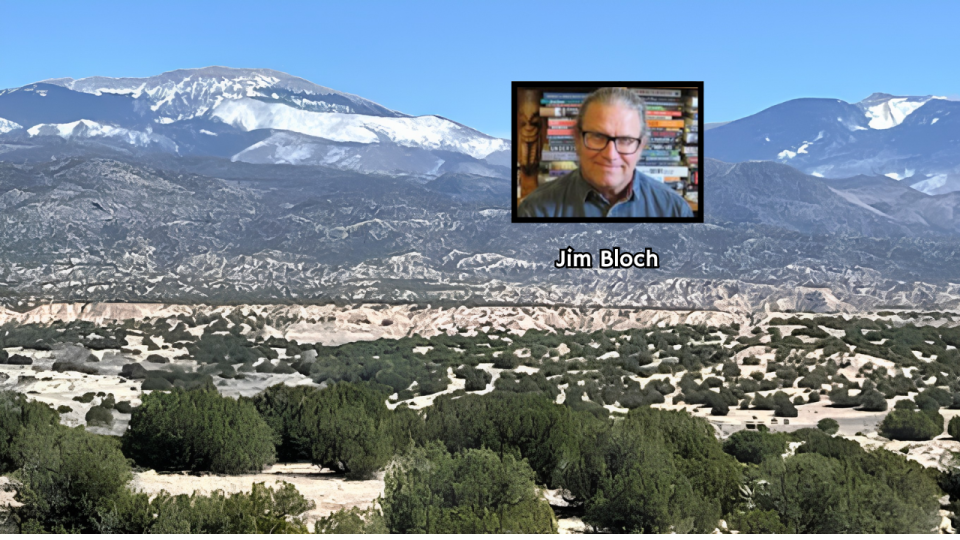
By Jim Bloch

Why should residents of the Great Lakes states worry about the shrinking snowpack in the Rocky Mountains?
As the winter snowpack melts, it flows into the streams and rivers upon which citizens of the West depend for water. It moistens the forests and grasslands, tamping down the risk of wildfires.

No snowpack, no water.
“Widespread western snow drought, worsened by a record-shattering March heat wave following a record-warm winter, is raising concerns about water supplies and wildfire risks in the months ahead,” according to Climate Central in a study released April 1.
The nonprofit organization is made up of scientists and communicators dedicated to studying the impacts of climate change on the contemporary world.
If Western states run out of water, where will they turn? One possible solution may be to divert water from the Great Lakes.
The Western snow drought
“Western mountain ranges act as natural water towers,” said the researchers. “They store snowpack each winter that later melts to recharge reservoirs and supply water to communities, farms, and ecosystems across the region.”
Overall, snow provides about 50 percent of all the water in the western U.S.
“From 1955 to 2023, April 1 snowpack across the western U.S. has declined 18% on average across 652 monitoring stations,” the report said.
Warming winters triggered by climate change mean that snowpacks are smaller and melt faster at a time when Western states need them to last longer through hotter, drier summers.
One of the consequences of the drought was a dismal ski season.
“Vail Resorts, arguably the biggest name in skiing in Colorado and around the world, told investors last month that visitation to its U.S. properties was down 20 percent due to a lack of snow in the western states,” reported CPR News, Feb. 15.
The amount of liquid water stored in snowpack is called the snow water equivalent.
“As of March 30, 2026, the snow water equivalent for the western U.S. was the lowest on record for April 1, when it’s usually near the annual peak,” said Climate Central. “The amount of water stored in western U.S. snowpack is currently 65% below the 1991-2020 normal — the lowest by far since 1981.”
The snow water equivalents stood at record lows at the end of March in Colorado, New Mexico, Arizona, Idaho, Oregon, Utah and Wyoming and near a record low in California.
By 2050, the snow water equivalent of the west is predicted to plunge another 25 percent.
“For decades, western snowpack has been shrinking, peaking earlier, and accumulating over a shorter season — trends that are likely to continue as the climate warms,” said Climate Central.
Colorado River
“Conditions are particularly concerning in the Colorado River Basin, a critical water source for the Southwest,” said the report. “And drought is forecast to continue or develop across the Southwest and Northwest through June 2026.”
The 1,400-mile-long river, with headwaters in the Continental Divide in Rocky Mountain National Park, flows all the way to the Gulf of California in Mexico. Seven states depend on it for water: Arizona, California, Colorado, Nevada, New Mexico, Utah and Wyoming. About 70 percent of the river’s water finds its way to farmland; 40 million people rely on it for drinking water, about the same number of those who rely on the Great Lakes.
As of April 17, the river system’s storage system was at 36 percent of its capacity, according to the U.S. Bureau of Reclamation. One of its main reservoirs, Lake Powell, is expecting 29 percent of its average inflow. The Bureau is predicting that the water levels in the lake, without interventions, may fall below the level needed to generate electricity at Hoover Dam.
The Great Lakes
The five Great Lakes contain about 21 percent of the world’s surface fresh water – but only about 14 percent of the U.S. population — and the second most fresh water by volume, trailing Lake Baikal in Russia.
Could the lakes be tapped by parched cities and industrial farms of the west?
Technically, water diversions beyond the Great Lakes Basin are illegal. The lakes are protected by the Great Lakes Compact, signed by the eight Great Lakes states and ratified by the U.S. Congress in 2008. Quebec and Ontario have similar legislation.
But, over his two terms, we’ve watch President Donald Trump shred treaties, ignore the Constitution, flaunt court orders and defy international laws.
Draining water from the lakes, however, is not a solution to the water shortages in the U.S.; it would be a symptom and then turn into an additional cause. Not that negative consequences have stopped Trump from imposing illegal tariffs, killing U.S. citizens in immigration efforts and engaging in an illegal war with Iran.
Western states should set water use limits based on the actual amount of water available. They should take actions that protect and enhance water availability, such safeguarding wetlands, restoring rivers, building healthy soil, recharging groundwater and building homes and businesses equipped to use water efficiently.
A move away from meat-centered diets would also help. Meat production contributes as much as 18 percent of greenhouse gases to the atmosphere, including 32 percent of methane emissions. Coupled with carbon dioxide emitted from burning fossil fuels like coal and gas, these gases trap the heat from the sun in the Earth’s atmosphere, causing the planet to warm, which in turn increases evaporation from the land, contributing to droughts. About 80 percent of agricultural land is used to raise crops to feed animals, an inefficient way to generate 20 percent of the world’s calories.
Inaction means more intense water shortages. Higher food prices might seem minor compared to more serious consequences, such as blackouts, unemployment, mass migration and political unrest.
Jim Bloch is a freelance writer based in St. Clair, Michigan. Contact him at bloch.jim@gmail.com.
