The pantheon of Detroit music is stacked with household names, giants who have helped transform culture across the globe.
But outside of history’s limelight are the exceptional artists who never got their due — the ones who could’ve-should’ve-would’ve if only circumstances had broken the right way.

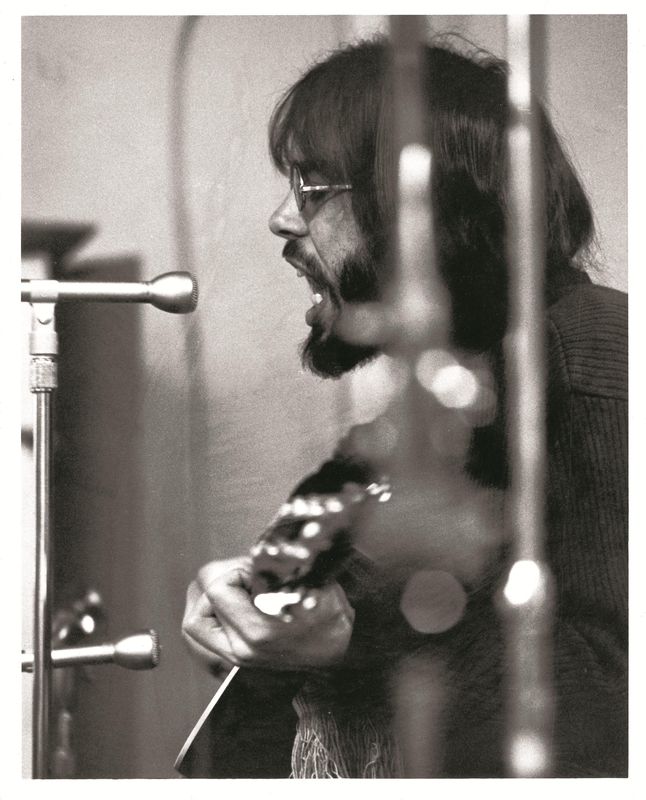
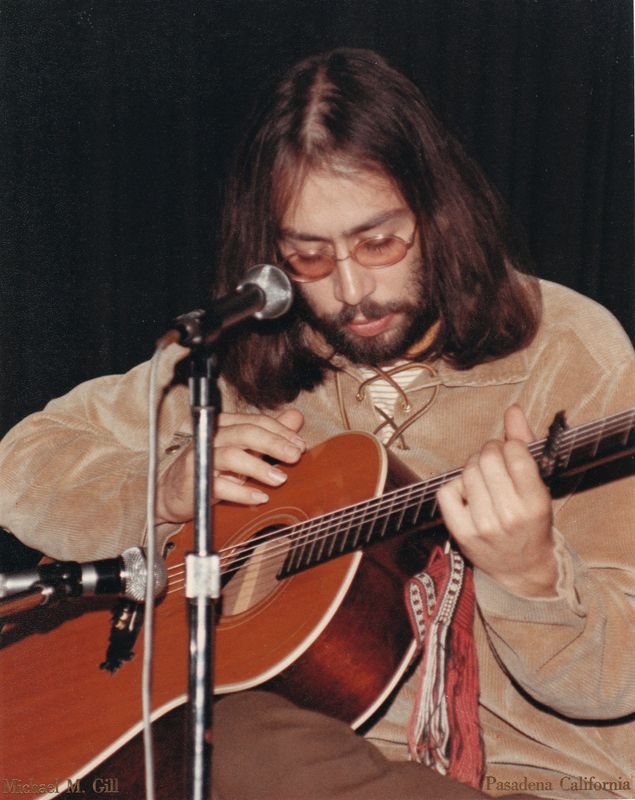
For the past year, Jack White’s Third Man Records has been on a mission to deliver belated justice by championing one of those unheralded greats: the late guitarist-singer-songwriter Ted Lucas.
Lucas, who died in 1992 at age 53, was a virtuoso instrumentalist and gifted song craftsman whose work spanned an impressive array of styles and genres. During his life, just as with the music connoisseurs now discovering his work, he was hailed as a supreme creative talent who never quite got out of his own way.
“This stuff is so good. There’s something here for everyone,” said Third Man co-founder Ben Blackwell. “If you appreciate ’70s singer-songwriter material, like a Paul Simon, there’s something for you here. If you appreciate British Invasion Beatles, if you appreciate (guitar pioneers) John Fahey or Peter Walker, if you appreciate psychedelic music, it’s all here. And everything the music does, it does really, really well.”
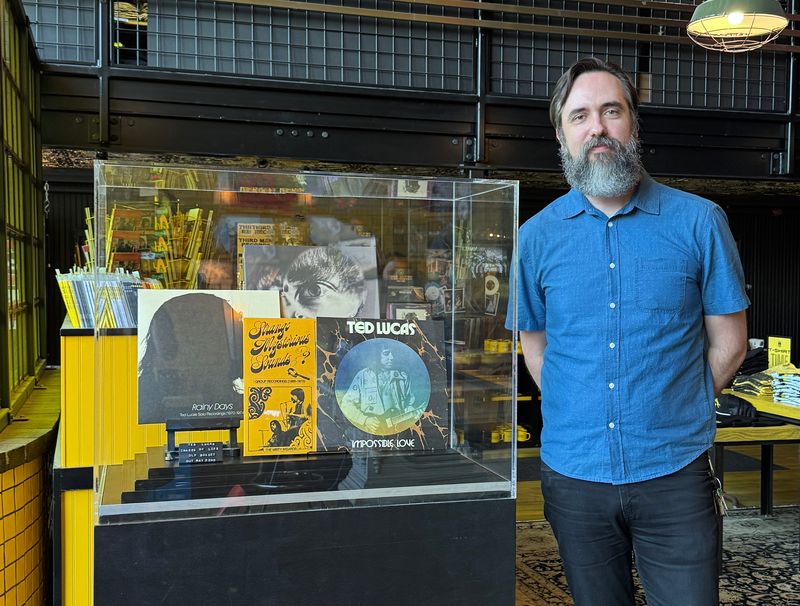
Last year, Third Man reissued Lucas’ lone solo album, 1975’s “OM.” This month, it’s upping the ante with a three-disc boxed set, “Images of Life,” which gathers material from across his three-decade career, with professional studio material alongside tracks recorded by Lucas alone at his Highland Park home.
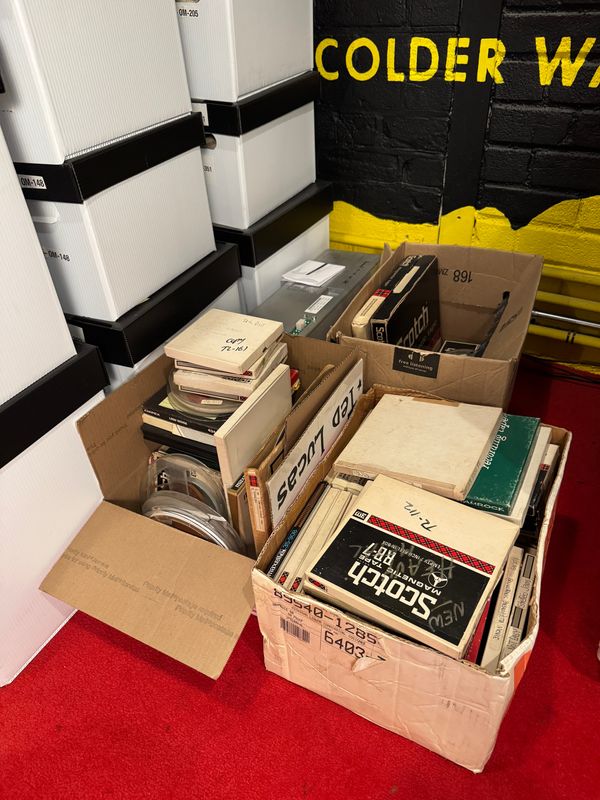
All of it was assembled by Third Man in a yearlong project involving nearly 500 tape reels, much of it not heard since Lucas hit the “record” button.
The compilation will be celebrated with a show Saturday night (May 16) at Third Man’s West Canfield location, featuring a lineup of Detroit musicians — self-proclaimed “Tedheads” — paying tribute to Lucas’ music.
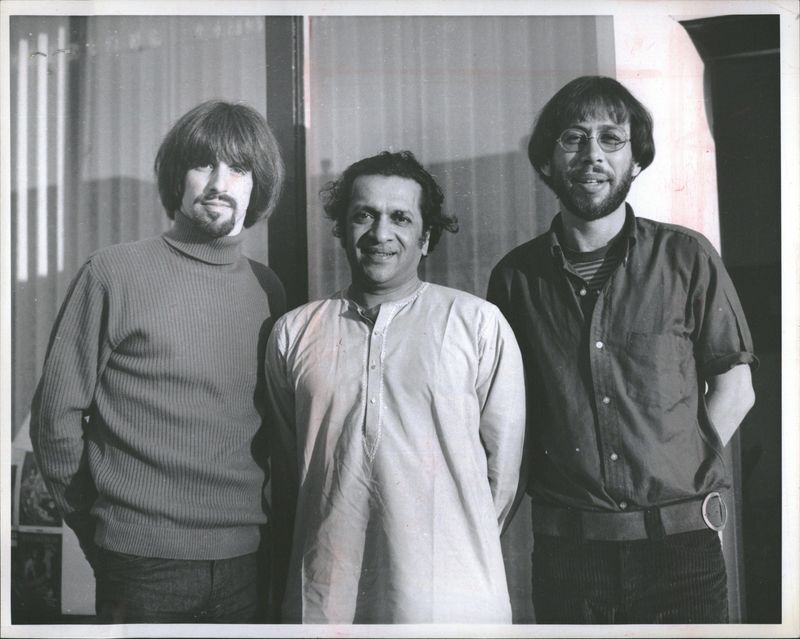
Among the players will be veteran percussionist-drummer Muruga Booker, who performed alongside Lucas in the mid-’60s psychedelic group the Spike-Drivers. He calls his late friend “one of the geniuses and jewels of Detroit.”
“It was a unique thing to play with Ted. Forget how it sounds. It was a transcendental experience,” Booker said. “It was the same feeling I had when I jammed with Jimi Hendrix — I left my body and couldn’t even tell you what I played. That’s what would happen playing with Ted.”
For first-time listeners, the music is indeed revelatory. The boxed set is a showcase of masterful guitar work, dexterity across musical modes, a keen melodic and lyrical sense, and an almost perfectionist-level work ethic that took him in ambitious new directions. It’s easy to hear what has turned Third Man and others into true believers.
“He was so far ahead of things that people just didn’t understand it at the time,” Booker said.
Some songs are featured in multiple incarnations, demonstrating Lucas’ willingness to tinker with arrangements in search of something great.
“Even with some of the best songs he wrote, there are these really disparate attempts at tackling them. ‘There’s a song here somewhere — maybe it’s a raga, maybe a skiffle folk thing, maybe a blues dirge — and I’m going to keep trying ’til I find it,’” Blackwell said. “The beauty is they’re all undeniably great.”
A Detroit musical mystery
Third Man isn’t the first to resurrect Lucas’ work. L.A.-based Yoga Records is among the labels that have posthumously released music by the late musician and his assorted bands.
Enter Mike Dutkewych, a Detroit record collector and historian, who was enlisted by Yoga in 2008 as local liaison to gather tapes and other items from the Lucas family.
“Over that time, I became really captivated not just by the music — which is great — but by the mystery of Ted Lucas,” said Dutkewych, who curated the new Third Man set and penned the liner notes.
The new attention on Lucas’ music may prompt comparisons to enigmatic Detroit artists such as Rodríguez and the band Death, who belatedly hit the public radar after acclaimed documentaries unearthing their work.
But unlike those musicians, Lucas wasn’t an obscure figure around town. He gigged regularly for two decades, appeared on popular TV programs such as Robin Seymour’s “Swingin’ Time,” and was frequently promoted by high-profile figures such as Bob Talbert, the late Detroit Free Press columnist who touted Lucas as a “superb master of any and every stringed instrument made.”
Still, a common thread ran through Lucas’ career: For all his creative gifts, he was plagued by opportunities narrowly missed — or undermined by his own doing.
“If there’s any theme with Ted Lucas, it’s tragically bad timing,” Dutkewych said. “He was either too ahead of things, or a little too far behind.”
Lucas was often paralyzed by a fear of failure, seizing up with indecision and emotional flare-ups, the historian said.
One act of self-sabotage came in 1966 at the New York office of Atlantic Records, where Lucas and the Spike-Drivers were set to sign a deal. But during a confrontation with the label’s Turkish-born president, Ahmet Ertegun, the Greek Orthodox-raised Lucas vocally attacked: “I’ll never work for a (expletive) Turk!”
The Spike-Drivers subsequently landed a deal with Reprise Records, releasing a pair of singles. But it wasn’t long before “that kind of energy from Ted broke up the group,” Dutkewych said.
“Everyone agrees he was this creative force,” Dutkewych said. “But he wasn’t the easiest person to coexist with.”
Putting Ted Lucas on the map
At Third Man, the seeds of Lucas obsession were planted in the late 2000s. Blackwell, a nephew of Jack White, had heard the name. But it was “just vaguely in the orbit, along with 10,000 other things,” he recalled.
It was only after a recommendation from a fellow music aficionado that Blackwell tracked down “OM,” the guitarist’s 1975 solo album. By the time of that release, Lucas had transitioned into life as a solo singer-songwriter, but — in another ill-fated move — he’d dilly-dallied on a request from Warner Bros. Records to submit music for a potential deal.
After two years of waiting, the label moved on. Lucas released the music himself, with little success.
But for Blackwell decades later, the music hit deep.
“I loved it immediately,” Blackwell said. “From the first needle drop, it’s so apparent this is special. It’s not like other self-released, private label, singer-songwriter albums. Here was Detroit’s answer to Nick Drake, 100%. There’s not a dead moment on the record.”
Material from that singer-songwriter period fills the second disc in Third Man’s new set, while the third disc documents Lucas’ bid for a commercial breakthrough. Working with collaborators such as then-little-known Don Was in the late 1970s, he was now sculpting jangly, hook-filled tracks that glistened like mainstream pop-rock.
“He’s rightfully considered one of the greatest guitar talents to come out of Detroit, and his proficiency with that instrument is top tier,” Dutkewych said. “But where he really shines is his beautiful approach to melody. He can write a song that is deceivingly simple. He can use his talent to make this universally appealing music, whether it’s a folk tune or a three-minute power-pop song, something like ELO or Wings on the radio at the time.”
But once again, Lucas failed to secure liftoff. In the early ’80s, disenchanted with the music business, he largely abandoned live performance and faded from public view.
“Ted just began playing his guitar at home or some little gig. You’re next to God when you play music, and I’m sure it brought him peace and joy on his own,” said Booker, Lucas’ longtime friend. “I just wish he’d found a Third Man before he croaked.”
For Blackwell and company, turning the world on to Ted Lucas has become part passion project, part civic duty.
“As I dug in, I felt like I knew Ted,” Blackwell said. “I know that sounds hokey. But we were in similar worlds. We just never crossed paths. There was a connection I felt beyond the grooves of the record. It was a spiritual, geographic connection. I could feel the city in his music.”
This won’t be the last the world hears of Lucas: With hundreds of hours of unheard music on its hands, Third Man has plans to share more.
And if a bona fide Ted Lucas revival takes hold, the musician himself called it.
As uncovered by Dutkewych, Lucas wrote a will 13 years before his 1992 death. While pointing out that “I have only a few possessions,” the musician sounded a typically visionary note.
“Since nothing sells like a dead artist,” Lucas wrote, “my words and music will increase in value after my no doubt untimely demise.”
Contact Detroit Free Press music writer Brian McCollum: 313-223-4450 or bmccollum@freepress.com.
‘Images of Life’
Ted Lucas: Strange Mysterious Sounds Tribute Show
With Matthew Smith, Warren Defever, Muruga Booker, Eddie Baranek and more
This article originally appeared on Detroit Free Press: A mysterious Detroit music gem is getting a revival by Third Man
Reporting by Brian McCollum, Detroit Free Press / Detroit Free Press
USA TODAY Network via Reuters Connect