By Laurie Chen and Karen Freifeld
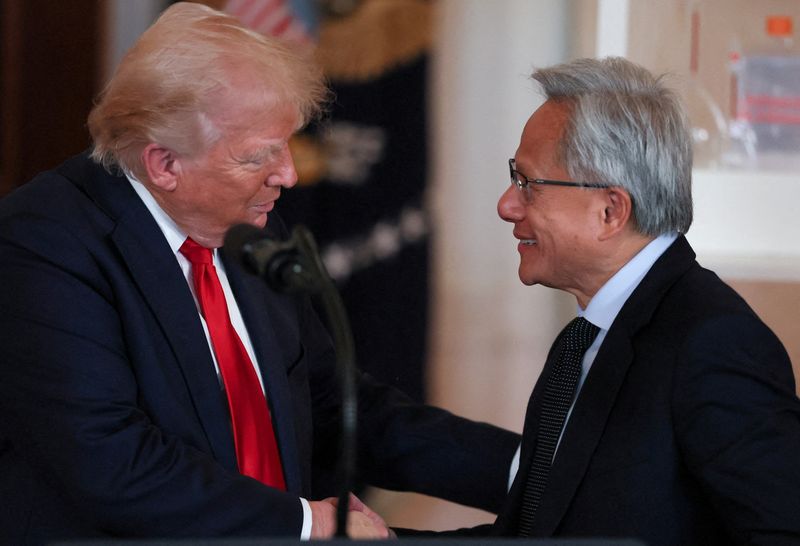
BEIJING/NEW YORK, May 13 (Reuters) – Nvidia CEO Jensen Huang has joined over a dozen U.S. CEOs on President Donald Trump’s visit to China this week.

Trump called Huang last-minute on Tuesday after seeing media coverage that he was not invited, according to one source familiar with the matter. Huang was seen by White House reporters boarding Air Force One in Alaska, joining Trump on his flight to China.
Huang did not appear on an initial list of executives provided by the White House earlier this week, which included Tesla CEO Elon Musk and Apple’s Tim Cook.
“Jensen is attending the summit at the invitation of President Trump to support America and the administration’s goals,” an Nvidia spokesperson said.
A White House spokesman said Huang’s schedule had changed and that it worked out for him to come.
Many of the companies joining Trump face significant regulatory or market access barriers in China, and view the summit as a political opening that could help accelerate regulatory discussions already underway in China, sources previously told Reuters.
Nvidia’s powerful H200 chips have not yet been sold to China, U.S. Commerce Secretary Howard Lutnick said last month, citing difficulties getting permission from the Chinese government.
Huang’s late addition to the trip suggests that H200s could be on the summit agenda.
The Trump administration in January gave a formal green light to China-bound sales of Nvidia’s H200 chips with conditions. The sales sparked concerns among China hawks in Washington who fear Beijing will harness the technology to supercharge its military.
Shipments of the chips have been stymied by disagreements over the terms of the sales both in China and the U.S., sources have said.
(Reporting by Laurie Chen in Beijing and Karen Freifeld in New York; Additional reporting by Trevor Hunnicutt and Stephen Nellis; Editing by Muralikumar Anantharaman)