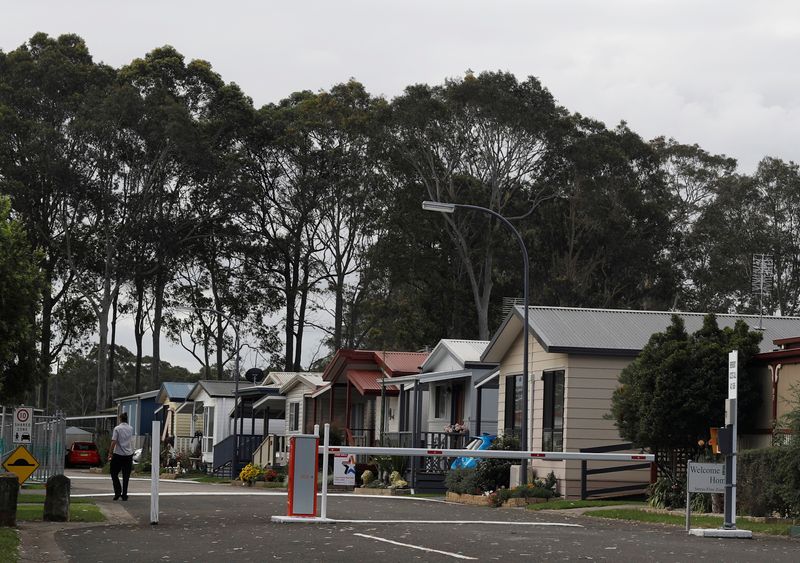
SYDNEY, May 12 (Reuters) – Australia’s government expects its ambitious reforms to the way it taxes property investments to take some of the immediate heat out of one of the world’s least affordable housing markets.
While the overhaul is aimed at addressing long-term structural imbalances, budget papers released on Tuesday also said Treasury modelling suggested house prices would temporarily grow by around two percentage points less “over a couple of years” relative to no tax policy change. In contrast, annual home price growth since 2000 has averaged 6%, the papers said.

The centre-left Labor government’s proposed changes seek to limit the scope for tax deductions on new residential investments – so-called negatively geared properties – to new builds and remove the current 50% discount on capital gains taxes.
Tax reform around property investment in Australia has long remained politically risky. Attempts by the Labor party to make such changes cost it an election just seven years ago.
However, Labor Prime Minister Anthony Albanese, who won a second term in a landslide election win last year, is now using a strong parliamentary majority to tackle the structural issue as the cost of living crisis becomes the main political issue.
“These changes will level the playing field for workers and first home buyers, and support investment in productive assets, including new housing supply,” Treasurer Jim Chalmers said in his budget speech to parliament.
Negative gearing has become a defining feature of Australia’s housing investment system over the past quarter century, allowing investors to deduct losses on their assets and then banking lightly taxed capital gains on disposal.
The tax breaks have long been blamed for skewing house ownership heavily to older, wealthier Australians who parked their savings in investment homes, pushing up prices to unaffordable levels for younger buyers.
HOUSING A ‘THIRD RAIL’ IN AUSTRALIAN POLITICS
“This is a really, really significant moment for the housing affordability debate,” said Edward Cavanough, CEO of the McKell Institute, a public policy research firm that has advocated for similar reforms.
“This has been a third rail of Australian policy for the last decade … the previous government didn’t want to touch it at all. There’s been a real hesitancy to go anywhere near it.”
Hal Pawson, an emeritus professor at the University of New South Wales, said putting downward pressure on house prices will “somewhat reduce the appeal of rental property investment”.
“As a result, first home buyers will more frequently come out on top at property auctions,” he said.
But the Property Investors Council of Australia said negative gearing “should have been left alone”.
“Higher taxes and fewer rental properties will ultimately lead to higher rents,” Chair Ben Kingsley said in a statement.
“That outcome will hurt the very Australians these policies are supposedly designed to help.”
Generations Y and Z now account for 43% of Australia’s 18 million enrolled voters, creating a political bloc outnumbering Baby Boomers and challenging conservative political norms around housing development in suburban areas and social equity.
Property prices have surged more than 40% over the past five years to record highs, supercharged by a post-pandemic migration boom and a chronic housing shortage, although recent interest rate hikes have slowed gains somewhat.
(Reporting by Sam Holmes, Stella Qiu and Christine Chen in Sydney; editing by Alexandra Hudson)