By Jonathan Stempel
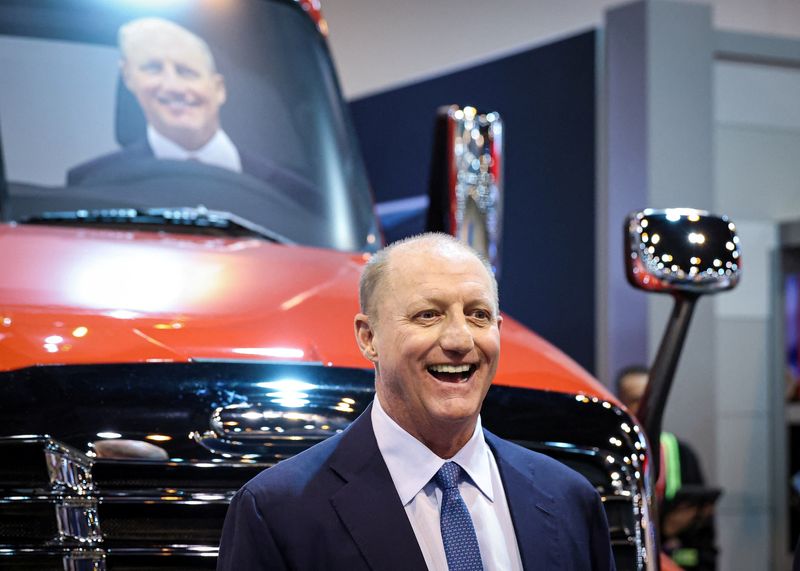
OMAHA, Nebraska, May 2 (Reuters) – Greg Abel will preside over his first Berkshire Hathaway annual meeting on Saturday, where shareholders hope to learn how the conglomerate built by Warren Buffett can evolve and grow – and resuscitate its severely underperforming stock.

Abel, 63, who became chief executive in January, must earn the trust of investors increasingly focused on technology and artificial intelligence, unlike Berkshire’s collection of insurers, retailers and hard-asset businesses in energy, industrials and manufacturing.
Though Berkshire is often considered a microcosm of the U.S. economy, its shares have lagged the Standard & Poor’s 500 by 39 percentage points since Buffett announced at last year’s meeting that he would step down. He remains chairman.
Abel had been Buffett’s designated successor since 2021, but the announcement was a surprise. The 95-year-old Buffett plans to watch from the audience of an arena in downtown Omaha, Nebraska, as Abel and other executives discuss Berkshire’s operations and answer shareholders’ questions.
“Greg has a formidable challenge, replacing the greatest investor who ever lived,” said Paul Lountzis, a money manager attending his 34th Berkshire annual meeting.
Berkshire, he added, “is not snazzy, it’s not exciting … It’s not a fast-growing technology stock. That’s what people are jumping on today.”
Indeed, AI-related investment was a key driver of the 2% gain in first-quarter U.S. gross domestic product, according to the Commerce Department’s advance estimate.
It is unclear how higher inflation and slumping consumer sentiment may have weighed on demand for products and services offered by Berkshire subsidiaries.
Investors are also getting more details as the company reported first-quarter results before the start of the meeting.
The meeting is the centerpiece of a weekend of shareholder events around Omaha, including investment conferences, private get-togethers, and shopping from Berkshire-owned businesses in a downtown exhibit hall.
Prior to the meeting, thousands of people lined up outside a downtown arena before doors opened at 7 a.m., though the lines were considerably shorter than in recent years.
Jobby Chin, a finance student from Singapore attending her first meeting, said she got in line at 2 a.m.
“I wanted to soak in the atmosphere, and network with finance professionals,” she said. “We wanted to make the most of the opportunity.”
Michael DiDonna, a fashion photographer from Oyster Bay, New York, said he arrived at 3:10 a.m. for his fifth Berkshire meeting.
“We like to sit in the same seat, to feel the energy,” he said. “It’s a really exciting time for Berkshire. I want to feel a part of the monumental shift at the company.”
CHALLENGES ON WHERE TO PUT CASH
Abel inherits many challenges that bedeviled Buffett, perhaps none more than where to invest Berkshire’s year-end $373 billion cash pile.
While Berkshire resumed stock repurchases in March after nearly two years with none, it has gone a decade without a needle-moving acquisition.
Many businesses have also been sluggish, with overall operating profit falling 6% in 2025 and revenue growth nonexistent.
Shareholders may also wonder how Abel can effectively manage Berkshire’s stock portfolio.
Unlike Buffett, Abel has no professional history as a stock picker, yet by February he was overseeing 94% of Berkshire’s stock investments, instead of giving more responsibility to investment manager Ted Weschler, who oversees the other 6%.
Buffett’s thinking about the handover changed over time, most notably in 2024 when he said someone like Abel who understands whole businesses can also understand stocks.
NEW STRUCTURE FOR MEETING
The structure of the meeting will differ from past gatherings.
Abel is expected to discuss Berkshire for an hour, and answer shareholder questions for 2-1/2 hours.
Also answering questions will be insurance chief Ajit Jain and, for the first time, Katie Farmer and Adam Johnson, respectively CEO of the BNSF railroad and a Berkshire president overseeing the conglomerate’s consumer, services and retail operations.
“It’s watching history unfold, a reset for the next generation,” said Tom Russo, a money manager who said he began attending Berkshire shareholder meetings in 1985.
The meeting is likely to focus far more on Berkshire than did meetings led by Buffett and late Vice Chairman Charlie Munger, which regularly addressed the economy, markets and lessons in life.
Buffett’s and Munger’s lively repartee was unique in corporate America and is much missed by shareholders.
But those who on Friday visited Berkshire’s annual shareholder shopping day, buying mementos such as Squishmallows and spatulas that featured Abel’s and Buffett’s visages, expressed confidence in Berkshire’s leadership transition.
“Warren wouldn’t turn it over to somebody who wasn’t competent,” said Lori Boyd, a retired special education teacher from Blue Springs, Missouri.
After the question-and-answer session ends, shareholders will vote whether to grant non-binding approval of compensation for top Berkshire executives, whether to have similar votes every three years, and whether Berkshire should publish a report discussing oversight of its more than 387,000 employees.
Berkshire’s board supports the “say-on-pay” proposals, and opposes publishing the report.
(Reporting by Jonathan Stempel in Omaha, Nebraska; additional reporting by Suzanne McGee, Editing by Colin Barr, Megan Davies and Edmund Klamann)