Bloomfield Hills — Three experts on the growth of data centers advised Metro Detroit county commissioners on Friday on how to prepare for the computing centers and protect communities as they spread across the region and state.
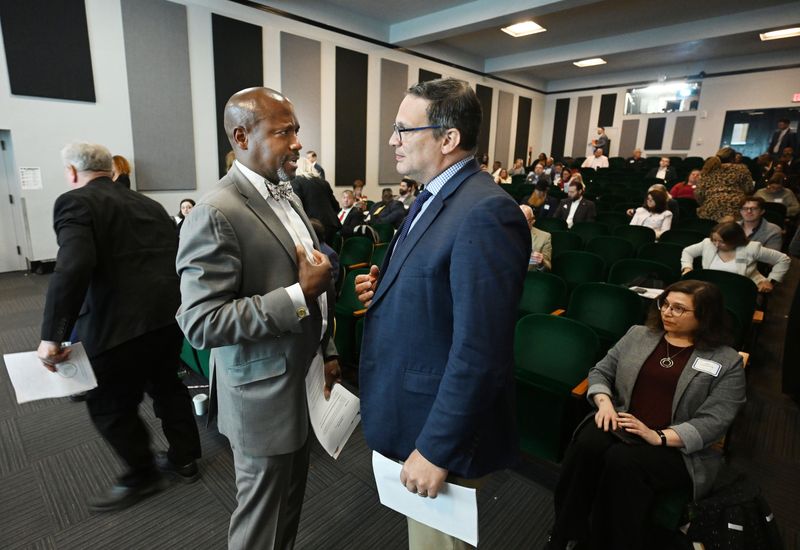
Speaking at this year’s Tri-County Summit for county leaders from Macomb, Oakland and Wayne counties on Friday at the Cranbrook Institute of Science, a panel of experts said data centers are needed, but said local governments can put safeguards in place.

Victor Angry, one of the panelists and a supervisor on the Prince William County Board of Supervisors in Virginia, urged community leaders “to get ahead of it” when it comes to data centers. He said that was advice he got from a supervisor in a neighboring county in his state, which is “ground zero for data centers.”
“No matter what you do, you’re going to have a data center in your community at some point,” Angry said. “So either you get ahead of it now and try to figure out all of what we’re talking about and creating your own solutions to help your citizens, or one day it’s just going … to show up.”
The Tri-County Summit is an annual gathering of county commissioners from Oakland, Macomb and Wayne counties. Other recommendations when it comes to data centers included doing fiscal impact studies on proposed sites, and advising against “by right” approval of data centers. If a certain kind of development is allowed “by right,” it doesn’t need to go before a city council or township board of trustees for approval.
Data centers, proposals for which have popped up all over southeast Michigan, are warehouses of computing equipment that are used to power the internet. Several Metro Detroit communities have passed moratoriums on them to give them time to update their zoning policies.
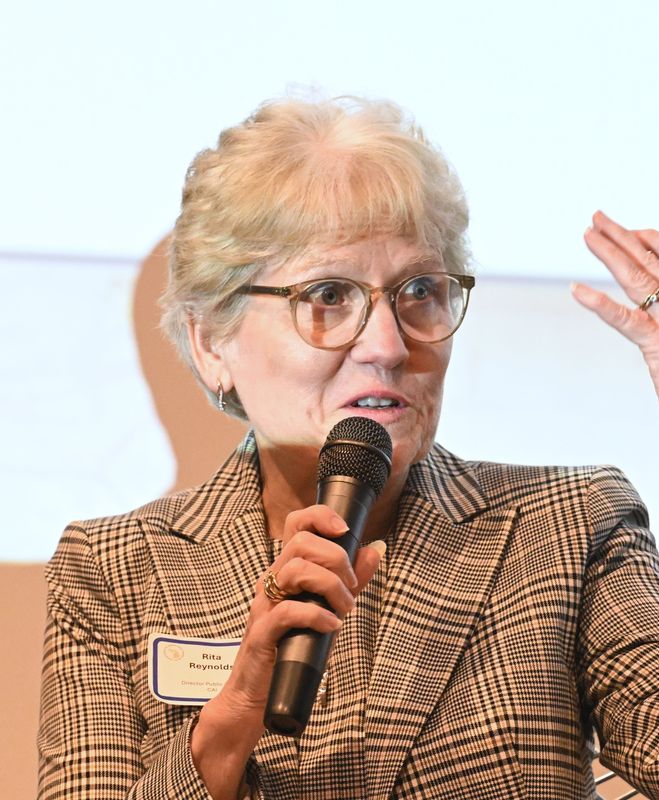
Rita Reynolds, director of public sector for global technology services firm CAI, said people are coming to rely on artificial intelligence “incredibly,” for a number of reasons.
“And we need the computing power,” she said. “We need the data centers.”
County governments don’t approve or disapprove data center proposals in Michigan ― those decisions are left to cities and townships. But Reynolds recommended that county officials still be “actively involved,” as their constituents often are looking at the county “as directly involved.”
“And so the more that the elected officials and others within the county understand what’s happening with the data centers and the proposed data … centers, the better off you are, I will say, learning from others,” she said.
Benefits and drawbacks of the centers
Angry said data centers “do drive your revenue.”
“So if you’re interested in revenue, there it is, right there,” he said. “It’s a revenue generator. And it is a tax relief for your residents.”
Angry is a supervisor in Prince William County, Virginia, where there were 44 completed data center buildings and more than 4 million square feet of additional space under construction as of Jan. 1, 2024, according to a county report.
He said data centers also create construction and operation jobs. But there are “land use tradeoffs” to creating data centers.
“Right now, we have a little bit of rural that’s left in the county, and then a lot of development on one,” Angry said of Prince William County, “so … on one side or the other, we’re trying to figure out how best to go about our land-use policies to incorporate the data center.”
Recommendations for considering data centers
Mike Shriberg, another panelist and the director of the U-M Water Center, thinks data center projects should be required to publicly disclose water use for cooling and electricity demand both before they are approved and on a regular basis while in operation.
He said he thinks communities “should have the right to understand that water usage before making a decision.”
Reynolds, meanwhile, recommended against “by right” approval of data centers. Loudon County, Virginia, which is next to Prince William County, is ending “by right” approval, she said. She is referring to when certain developments don’t have to go before a local government board for approval.
“They can just go ahead and start the proposal and submit it, and it’s accepted,” she told the county commissioners Friday. “And that is a piece everybody should be looking at to make sure that data center proposals cannot just come in without that full review.”
Reynolds also said before a data center is approved, the developer should have to present a decommissioning plan for the center.
“The technology could change so much that these become obsolete far sooner than we think,” Shriberg said, adding that the companies will change too.
Along with discussing data centers, there was also a panel discussion on the future of artificial intelligence for local governments.
asnabes@detroitnews.com
This article originally appeared on The Detroit News: Experts on data centers advise Metro Detroit officials: Get ahead of them
Reporting by Anne Snabes, The Detroit News / The Detroit News
USA TODAY Network via Reuters Connect