By Juveria Tabassum and Alexander Marrow
April 28 (Reuters) – Coca-Cola on Tuesday bucked the trend of consumer goods companies warning of a hit to their annual profits from the fallout of the Iran war and raised its annual earnings target, betting on demand for its sodas and other drinks.

The beverages giant’s shares rose 5% as it topped expectations in the first quarterly report since Henrique Braun took over as CEO from James Quincey.
The surge in energy prices has led to higher input costs, particularly for packaging material such as PET resin and aluminum for consumer goods companies, at a time when they have little room to protect margins by raising prices.
“While many consumers remain resilient, others are under pressure due to persistent inflation, greater macroeconomic uncertainty, and volatility driven by the conflict in the Middle East,” Braun said on a post-earnings call.
HIGHER PACKAGING COSTS LOOM
Coca-Cola operates through local bottlers and distributors to sell its soda concentrates, but it is still directly exposed to higher packaging costs of plastic as well as aluminum for some finished products such as Powerade energy drinks.
“We are working hard with our bottling partners to deal with the implications of the situation … in the Middle East,” CFO John Murphy said in an interview to Reuters.
Coca-Cola, like PepsiCo, hedges on commodities, and Murphy said the company had locked in some lower prices before the start of the current disruption.
Commodity pressures in Coca-Cola’s tea and coffee business partly resulted in a 30-basis-point decline in first-quarter gross margin, executives said, adding that the overall impact on its cost basket was manageable at this time.
Murphy said while pricing was one of the levers in its kitty to deal with higher costs, Coca-Cola would consider overall market dynamics and the consumer environment before raising prices.
“The priority number one is making sure we have supply in all of the package formats,” Murphy said. Coca-Cola last year offered smaller pack sizes to U.S. households that cut back spending to cope with higher cost of living.
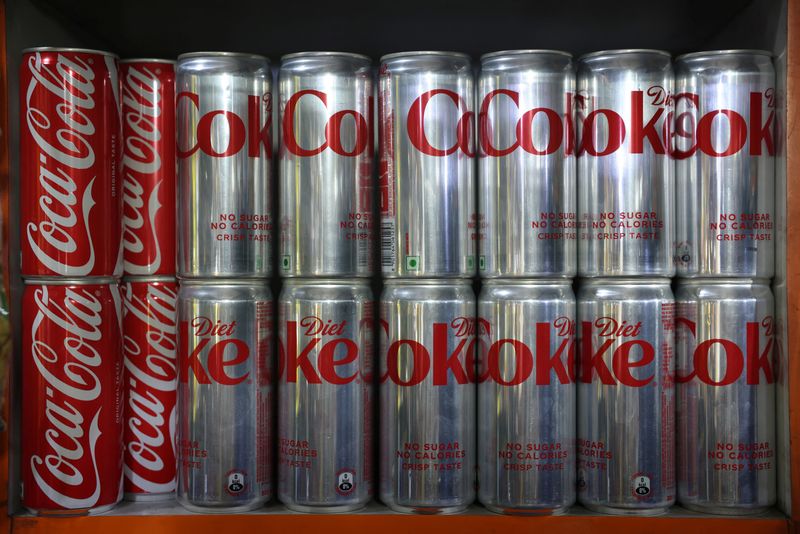
In India, the company is facing a shortage of aluminum cans, which has impacted the supply of Diet Coke because of delayed shipments from the Gulf, Reuters reported earlier this month.
“We have had a disruption in can supply … and have been supporting our system in India to address this issue. I expect that to be resolved in the coming weeks,” Murphy said.
Q1 SETS THE STAGE
In the first quarter, volumes rose across all its four geographical segments, while the overall volume growth of 3% outpaced price of 2%.
Coca-Cola, which stuck to its annual organic revenue growth target, has invested heavily in brands such as Fairlife milk and bottled teas as well as zero sugar and low sugar drinks as consumers move toward healthier alternatives to sugary sodas.
“We see KO as a relative outperformer given that it is more insulated from inflationary cost pressures and has a sophisticated playbook to remain engaged with consumers on both the value and premium end,” said J.P.Morgan analysts in a note.
Earlier this month, rival PepsiCo topped quarterly expectations on resilient demand for diet sodas and its move to cut prices on some key snack brands such as Lay’s.
Coca-Cola now expects annual comparable earnings per share to grow 8% to 9%, compared with a prior view of a 7% to 8% rise.
For the quarter ended April 3, its revenue of $12.47 billion beat estimates of $12.24 billion, according to data compiled by LSEG. The Atlanta-based company earned 86 cents per share on an adjusted basis, exceeding estimates of 81 cents.
(Reporting by Juveria Tabassum in Bengaluru and Alexander Marrow in London; Editing by Arun Koyyur)