By Richa Naidu
LONDON, April 23 (Reuters) – Nestle beat first-quarter sales forecasts and stuck to its annual outlook on Thursday, riding out the impact of the Iran war though it warned about the risk of higher energy and freight costs and a needed turnaround in a tough China market.

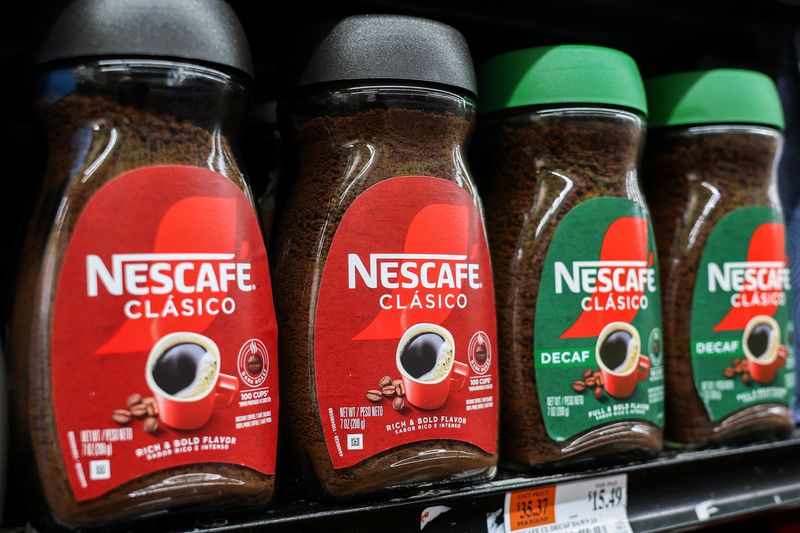
The world’s biggest packaged food company, which makes Maggi seasonings, Nescafe coffee and KitKat chocolate bars, said it had seen “very little impact” so far on its global business from the near two-month war, but had noted consumer behaviour shifts.
CEO Philipp Navratil said a surge in global fuel prices was leading to more shoppers walking rather than driving to stores, and eating at home rather than in restaurants, especially in emerging markets in Asia – helping its food and snack sales.
“We are very well set up because we’re very well distributed in those countries,” Navratil said. “Our portfolio is very well set up for people being more at home – we’ve done very well in emerging markets.”
Nestle’s shares jumped nearly 6% on Thursday, the biggest rise since October 16 when the firm announced 16,000 job cuts.
NESTLE SEEKS A TURNAROUND IN CHINA
Still, China was a sore spot for the company with a 10.6% decline in organic sales driven by a slump in volumes and flat prices. Nestlé has suffered years of declining sales due to intense competition from local brands, oversupply issues, and a general slowdown in consumer spending. The company is overhauling its business in China to improve innovation, distribution and marketing.
“We need to turn China positive and we’re doing exactly that,” Navratil said on a call with journalists, adding that Nestle was “unhappy” with the progress its China business had made on innovation, pricing and logistics.
He said the firm was working to rebuild the distribution model in China, dealing with high inventory and improving marketing, aiming to be done by the end of the second quarter.
“I spent some time in China myself three weeks ago and the team is trying to deliver a model that is back to a growth model and relying on innovation, on investments,” Navratil said.
ORGANIC SALES GROWTH INCREASES
Nestle’s first-quarter organic sales, which exclude the impact of currency movements and acquisitions, grew 3.5%, ahead of analyst expectations of 2.4% as people bought more of its coffee and pet food. Emerging markets grew a faster 4.6%.
The firm said organic growth took a roughly 90 basis-point hit due to a recall of infant formula products during the quarter, adding product availability was now back to normal.
Nestle issued an infant formula recall during the quarter over elevated levels of cereulide toxin, which was detected in ingredients from a supplier in China for many infant formula makers, including Nestle, Danone and Lactalis.
“At the end of the first quarter we were about 10% down on infant formula and we’re seeing that come back nicely as new families come into the brand,” Navratil said. “We expect to be fully back to normal by the end of the year.”
Nestle’s 2.3% first-quarter price increases met average analyst estimates. Real internal growth – or sales volumes – rose 1.2% versus expectations of a 0.1% increase, driven by coffee, food and snacks.
“Nestlé is showing early signs of reigniting volume growth,” Vontobel analyst Jean-Philippe Bertschy said. “This is the kind of reassurance investors were waiting for.”
(Reporting by Richa Naidu; Editing by Adam Jourdan, Barbara Lewis, Elaine Hardcastle)