Lyme disease cases in Michigan nearly quadrupled between 2022 and 2025, according to data from the Michigan Department of Health and Human Services — jumping from 553 in 2022 to 2,167 confirmed cases last year.
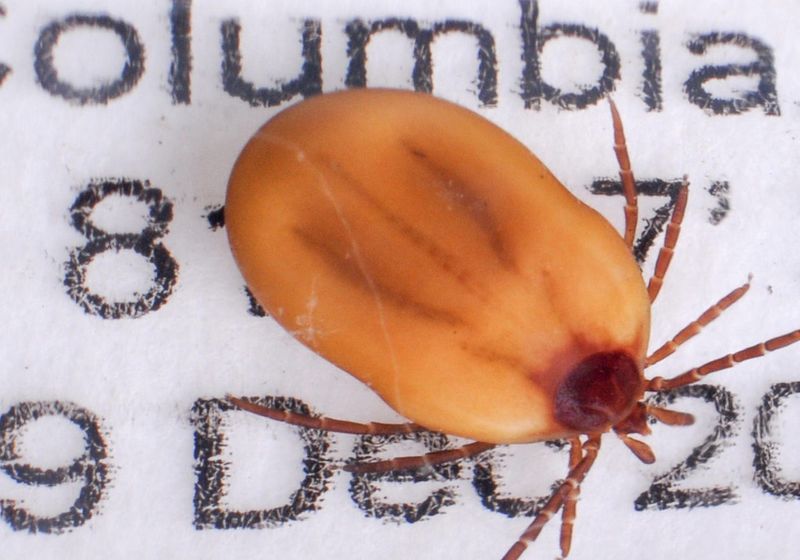
The disease, which is caused by borrelia burgdorferi bacteria, is carried by ticks — small, blood-sucking arachnids — and is spread to humans and animals through tick bites.

The reason for the surge, said Jean Tsao, a professor in the departments of fisheries and wildlife and large animal clinical sciences at Michigan State University, is because ticks are spreading to more suburban and urban areas of the state.
“The ticks have spread,” said Tsao, who also is a disease ecologist and specializes in tick-borne diseases, including Lyme disease. “Their populations are exploding in places where it is more populous with people. We’re seeing a steep increase in the abundance of ticks in much of southern Michigan, and that’s where the most people live.”
That means the risk of contracting Lyme disease and other tick-borne illnesses is higher, she said.
The sharp increase in Lyme disease cases in Michigan also means that for the first time, the state now falls into what the U.S. Centers for Disease Control and Prevention considers a “high-incidence jurisdiction.” That’s a place with more than 10 confirmed cases per 100,000 people for a sustained period of three consecutive years, said Laina Stebbins, a spokesperson for the state health department.
In 2025, Michigan reported 18.83 cases of Lyme disease per 100,000 population, Stebbins said.
Even in the first few months of 2026, when ticks are typically dormant because of colder temperatures, 246 possible new Lyme disease cases were reported in Michigan, according to the state’s latest surveillance data.
Lynn Sutfin, a health department spokesperson, said, however, that those are provisional Lyme disease cases and not all are confirmed. She noted that it also is possible that Michiganders included in that surveillance update contracted the Lyme disease in 2025 but their cases weren’t diagnosed or reported until after the start of the new year.
But with a warming climate, Tsao said, “our winters are shorter and so the ticks have been active. … The students in my lab were collecting ticks the first week of January. … The adults will come out any time it is about 32, 35, 38 degrees.”
And now, with the return of spring, even the younger, nymphal ticks are more likely to be actively seeking hosts and spreading disease, Tsao said. She stressed that it’s important to take precautions to prevent the health risks that come with tick bites.
Here is what you need to know:
What are the symptoms of Lyme disease?
The blacklegged tick is the most common carrier of the bacteria that cases Lyme disease. After its bite, it can take three to 30 days for a person to develop symptoms, according to the CDC. Those symptoms can include:
For people who develop the rash, it usually begins at the site of the tick bite and gradually expands. The redness sometimes can appear like a target or bull’s-eye. It might feel warm but rarely is painful or itchy.
Lyme disease can be successfully treated with antibiotics, and Tsao said it is important to spot ticks and remove them properly.
However, if the symptoms remain untreated, Lyme disease can worsen and affect the joints, heart, and/or nervous system. The CDC reports that chronic Lyme disease can cause:
Do all ticks carry Lyme disease?
No. There are at least 20 different types of ticks in Michigan, according to the state Department of Agriculture and Rural Development. Some are known to carry different pathogens than others. And some don’t carry any disease at all.
Linda Lobes, president of the Michigan Lyme Disease Association, said some ticks may harbor bacteria associated with such illnesses as anaplasmosis, babesiosis, ehrlichiosis, Rocky Mountain spotted fever or other spotted fevers.
Her association helps Michiganders who’d like more information about Lyme disease, learn about ways to prevent it and treat it, and assist those who would like to test the ticks that have bitten them for infectious diseases.
“It’s not 100%,” said Lobes, who contracted Lyme disease herself in 1989. “Just because you got bitten by a tick that’s infected doesn’t mean that you’re going to get the disease. But it’s another tool in the toolbox for people.”
What should I do if I am bitten by a tick?
Removing the tick quickly is key, said Tsao, noting that the risk of contracting lyme disease and other tick-borne illnesses is lower if it can be properly removed within 24 hours.
“Pull them off sooner rather than later. It reduces the chance you will get infected,” she said. “And that’s when you can get prophylaxis — one dose of antibiotics. Just like with anything, the shorter time it feeds, the lower the risk … of infection.”
Lobes said it’s important not to agitate the tick by using ineffective home remedies like nail polish, gasoline, petroleum jelly or the flame of a match to try to force the tick to drop off its host.
Those efforts don’t work, she said, and can make the situation worse.
“If a tick gets agitated while it’s attached, it regurgitates,” Lobes said. “If that tick is irritated, its stomach contents will now potentially be inside of you and that puts people at higher risk of infection if the tick is carrying disease.”
Instead, she said, use a pair of fine-point tweezers and get as close to the skin as possible before trying to extract the tick.
“It might take two or three times — sometimes even four pulls,” Lobes said. “Just keep tugging. You don’t want to squeeze the tick. Keep tugging, and it will let loose.”
Then, she recommended putting the tick in a sealable plastic baggie. The tick can be tested by an independent lab. To learn more about testing or to get help from the association, call 888-784-5963 or check out its website at https://mlda.org/.
The state health department offers tick identification based on photos at no cost for Michigan residents. Different types of ticks are known to harbor different types of pathogens. To submit a photo of a tick, email it to MDHHS-Bugs@michigan.gov and follow these instructions.
MDHHS advises Michiganders who are bitten by a tick to monitor for symptoms such as rash, fatigue, fever, headache, muscle pain, or joint swelling/pain occurring within 30 days of the latest tick bite and/or visiting an area with ticks.
The agency acknowledges that some Lyme disease patients do not recall seeing a tick bite and urges prompt medical attention for anyone who develops Lyme disease symptoms.
What are the other diseases that can be caused by a tick bite?
In addition to Lyme disease, the CDC reports that ticks also can carry pathogens that can cause the following diseases:
In addition, cases of Alpha-gal syndrome, which is serious a red meat allergy that can develop after a tick bite — most commonly from the bite of the lone star tick — are on the rise.
Is there a vaccine to prevent Lyme disease?
There is no vaccine currently available to prevent Lyme disease.
However, pharmaceutical giant Pfizer is working with vaccine manufacturer Valneva to test an investigational vaccine in areas of the U.S., Canada and Europe with high rates of Lyme disease.
Pfizer reported data in March from its controlled, randomized Phase 3 Valor clinical trials that suggest four doses of the investigational vaccine provide more than 70% protection from the bacterial infection that causes Lyme disease.
STAT News reported that the companies plan to submit their findings to the U.S. Food and Drug Administration, seeking approval.
STAT also noted that GSK, which was formerly known as GlaxoSmithKline, marketed a Lyme disease vaccine between 1998 and 2003 that was withdrawn. Clinical studies of that vaccine showed a 76% efficacy rate, but it was linked to unverified reports of arthritis and other side effects.
How to prevent tick bites
When you go outdoors, the Washtenaw County Health Department advises:
After you or your children come in from outdoors, do a full-body check for ticks — looking under the arms, in and around ears, belly button, behind knees, between the legs, waist and in the hair. Also, consider:
In addition, MDARD recommends taking the following measures to reduce the risk of tick-borne disease:
Contact Kristen Shamus: kshamus@freepress.com. Subscribe to the Detroit Free Press.
This article originally appeared on Detroit Free Press: Lyme disease cases quadruple in Michigan as tick populations explode
Reporting by Kristen Jordan Shamus, Detroit Free Press / Detroit Free Press
USA TODAY Network via Reuters Connect