By Valerie Volcovici
WASHINGTON, April 16 (Reuters) – The Department of Energy will retain funding for major carbon direct air capture awarded under the Biden administration after targeting them for fund cancellation last year, according to a list of projects identified by the agency that it sent to Congress this week seen by Reuters.

Last October, the DOE considered cancelling billions of dollars in funding for clean energy programs, including awards for auto manufacturing, hydrogen and carbon capture.
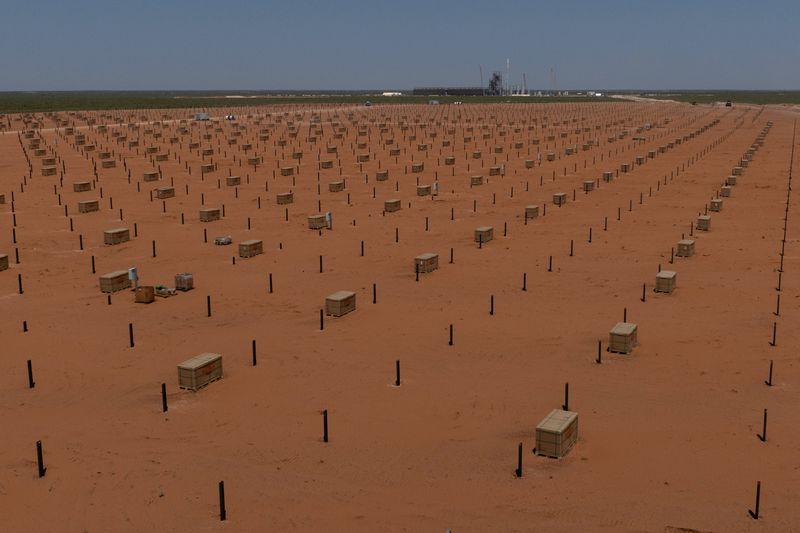
Projects slated for cancellation included two major direct air capture hubs that received $1.2 billion awards from former President Joe Biden’s administration, including one that involves oil company Occidental (OXY.N) in Texas and another in Louisiana.
The Energy Department had said last October it was conducting an “individualized and thorough review of financial awards made by the previous administration.”
The DOE confirmed that the South Texas DAC Hub and Louisiana’s Project Cypress were on the list of nearly 2,000 projects that would retain their funding.
On Thursday, Energy Secretary Chris Wright told a congressional hearing that the DOE reviewed the list of projects and backed those it said “had a credible way to be helpful.”
“We’ve had hundreds of dialogues with applicants, back and forth,” Wright said.
DAC hubs had been part of the Biden administration’s effort to slash U.S. greenhouse gas emissions by scaling up nascent carbon removal technology. At full operation, the two hubs could remove more than 2 million metric tons of carbon emissions per year directly from the air.
Project Cypress and South Texas were awarded $550 million and $500 million respectively under Biden, but had only received their first tranche of $50 million each.
The DOE’s Hydrocarbons Geothermal and Energy Office (HGEO) will be involved in the next steps of deploying those hubs and unlocking the appropriated and obligated funds.
Some of the captured carbon will be used as a feedstock to produce jet fuel and other fuels at a time that the global fuel supply chain is under strain due to the war in Iran.
(Reporting by Valerie Volcovici; additional reporting by Timothy Gardner and Edward Tobin)