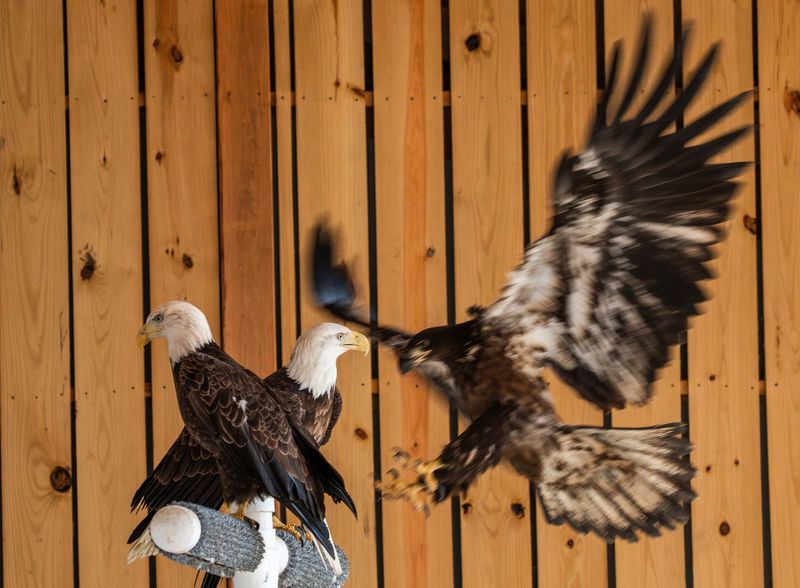
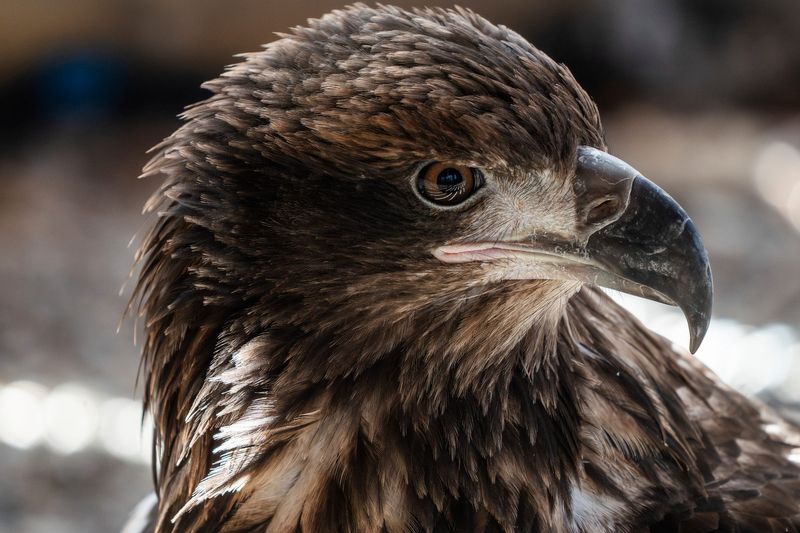
The bald eagle needed to be killed. Euthanized. All signs pointed to it.
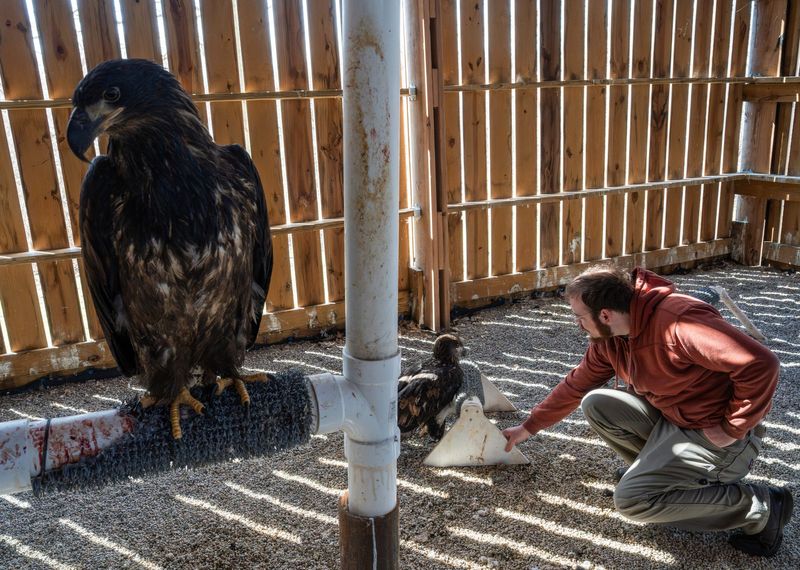
But Alysha Albrecht, a rehabilitator who runs the Raptor Center of Southeast Michigan out of her Lapeer home, hesitated. She moved deliberately and sought consultation from veterinarians, state officials and other rehabbers.

The adult male eagle was brought to Albrecht earlier this month by a Michigan Department of Natural Resources conservation officer. The bird couldn’t fly and appeared somewhat disoriented. Albrecht sent away blood samples to test for lead, and when the results came back, the levels were astronomical: 13,160 parts per billion. Any amount of lead is hazardous for the raptors, and over 600 parts per billion is considered “extremely excessive,” Albrecht said.
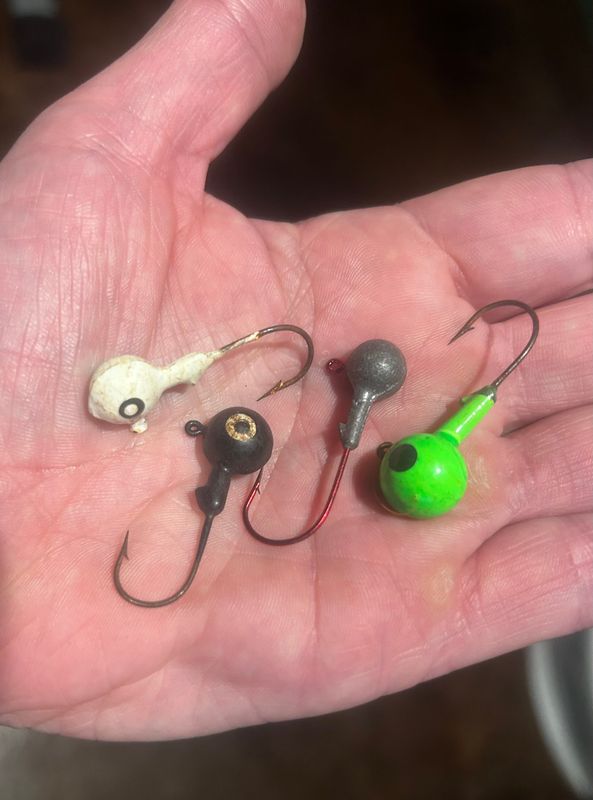
Lead poisoning in eagles and other raptors is a problem throughout Michigan and the United States because the lead they are ingesting, left in the wild by hunters and shooters through use of lead ammunition and from anglers’ lead sinkers and other fishing tackle, is so pervasive. The Free Press spoke with five raptor rehabilitators from different parts of the state. All reported regularly encountering lead-contaminated eagles, sometimes at startling levels. An Eaton Rapids raptor rehabilitator had three bald eagles die from lead poisoning in her care within the last four weeks.
The bald eagle being treated by Albrecht also tested “not negative” for highly pathogenic avian influenza, “which means a low positive,” she said. Protocols require informing the state, and, typically, euthanizing the eagle. But the bird was proving resilient. Despite the huge lead levels and the virus load, it was still standing a week later, “very alert and very aggressive,” Albrecht said.
She sought confirmation on the avian influenza from a national laboratory and kept talking with colleagues, in an effort to potentially save the eagle.
“Technically, we do have to euthanize him because he is (avian influenza) positive, but we really want to just wait for those tests from the national laboratory to try to figure out, can he fight the avian influenza and then start fighting the lead? Or is it just a dead-end street?
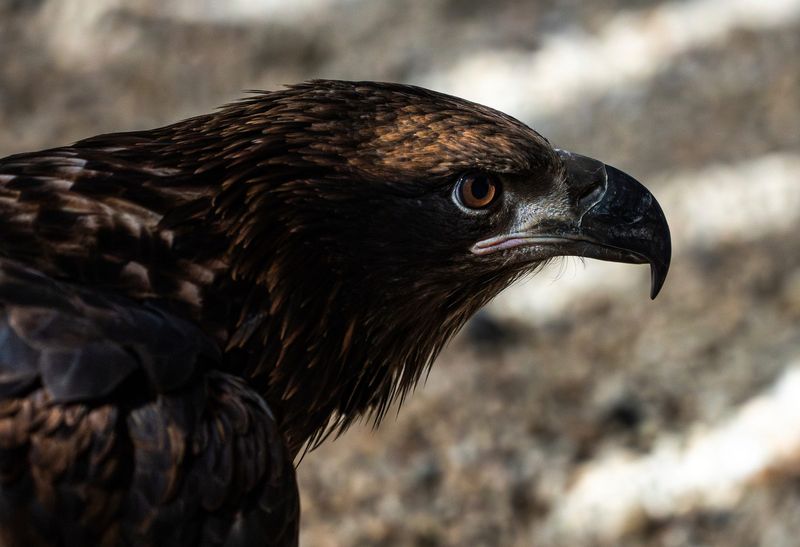
“There is a lot of discussion going back and forth about this eagle. And it’s an adult — that’s the hardest part. Only 20% of hatched raptors actually survive into adulthood. So when we have adults come in like this, that makes it even harder for us, because they figured it out. They figured out how to be a great parent. They figured out how to hunt, and they’ve been doing it out there.”
No. 1 cause of death after trauma
The leading cause of death for bald eagles in Michigan is being struck by motor vehicles, according to the DNR. But lead poisoning is the top cause of mortality not involving traumatic injuries. Eagles’ exposure to lead comes from its use in hunting and fishing: lead sinkers and jig heads used by anglers, lead ammunition by hunters.
“Eagles are scavengers — they fish, obviously, but they will eat a dead duck that’s in a marsh,” said Kevin Smyth, a veterinarian and raptor rehabilitator who operates Raptor Rescue of Michigan in Plymouth.
“They will eat a deer that was shot and got away. You see them sometimes on the side of the road, eating a deer that got hit by a car.
“Eagles cannot get lead poisoning from being shot. It has to go into the gastrointestinal tract; they have to eat it. So it’s almost always from lead shot.”
A lead fragment the size of a grain of rice is lethal to a mature bald eagle, meaning a standard 150-grain lead bullet can poison 10 eagles, according to the American Eagle Foundation, a Tennessee-based nonprofit organization dedicated to the protection of bald eagles and other birds of prey.
The threat to eagles, raptors and waterfowl is almost everywhere because the lead problem is as well. The U.S. Environmental Protection Agency estimates that about 70,000 tons of lead are deposited at shooting ranges each year. A nationwide ban on lead shot for hunting waterfowl (ducks, geese, and coots) in the United States went into effect in 1991, but it’s estimated that more than 2,700 tons of lead shot were deposited in wetlands each year prior to that, Oklahoma State University Extension reported. On the fishing side, more than 4,000 tons of lead sinkers are purchased in the United States each year. Lead takes 100 to 300 years to break down in the environment.
“I can confidently say that 100% of the eagles that we admitted in 2025 had some level of lead, and approximately 60% of the other larger birds as well — the great horned owls and red-tailed hawks are also coming in positive,” said Kaitlyn Bohnet, a raptor rehabilitator who operates North Sky Raptor Sanctuary in Grand Traverse County. Increased in-house capability to test for lead is exposing the problem more clearly, she added.
At Wildside Rehabilitation and Education Center in Eaton Rapids, three bald eagles were killed by lead poisoning in the past four weeks, with a fourth eagle that had to be euthanized for a damaged wing also showing elevated lead levels.
“Pretty much all the bald eagles are coming in positive for lead,” Wildside operator Louise Sagaert said. “Out of the last four bald eagles we have taken in, two of them were higher than 600 parts per billion. And before that, I would say probably a half a dozen have come in in the last six months with that high of a lead level.”
On the rehabilitators’ blood screening machines, a lead reading of 600 parts per billion or higher doesn’t even record as a number; the meter just reads, “HIGH.”
“Most birds don’t survive with that kind of lead level,” Sagaert said.
‘Neurological hell’
Acute lead poisoning, as it does in humans and other animals, causes neurological impacts in bald eagles.
“Symptoms include spinning around in tight circles when stressed; open-mouth breathing when stressed,” Albrecht said.
Added Dave Hogan, a raptor rehabilitator in Monroe, “They have trouble standing and walking; they try to fly, and just kind of beat their wings. It’s a really unhappy thing to see these big eagles that are just going through neurological hell.”
Lead-sickened eagles have difficulty hunting and processing food, so they are often emaciated to the point that they die from starvation.
“They have neurological symptoms — their head is usually down; they will kind of bobble their head back and forth. They are depressed; they just look like they don’t feel well. Sometimes they have lost vision in one eye or both eyes, and they haven’t been able to hunt. Sometimes that vision comes back; sometimes it doesn’t.”
Treatment involves chelation, medicines that bind with the toxic lead and form a stable compound. The chelation medicines are very expensive.
“Face value, if we were to order it from a local pharmacy, it’s $5,400 a bottle — and eagles can take up to three bottles for a round of chelation,” Bohnet said.
The nonprofit raptor rehabilitation organizations rely on grants and donations to help offset the costs — and dig deep into their own pockets.
“I’m a full-time special ed teacher; I’ve been doing that 40 years,” Sagaert said. “So my salary pays for a lot of it.”
DNR: ‘Stop using lead’
The DNR recommends that sportsmen and women consider using alternatives to lead in hunting and fishing, such as copper and steel ammunition, and tungsten or tin sinkers. But adoption has been slow and resistance strong. The alternatives are often more expensive, and many hunters believe non-lead ammunition is less reliable.
The U.S. House on March 18 passed H.R. 556, the Protecting Access for Hunters and Anglers Act, prohibiting bans on lead ammunition and tackle use on federal lands or waters except where supported by site-specific, population-level data.
“Hunters and anglers shouldn’t have to worry about red tape while enjoying the great outdoors,” said U.S. Rep. Bruce Westerman, an Arkansas Republican and chairman of the House Committee on Natural Resources, in a statement.
U.S. Rep. Rob Whittman, a Republican from Virginia, is vice-chair of that committee and sponsored the bill.
“By preventing executive overreach in the future, this legislation is critical to preserving access for sportsmen and women who rely on traditional lead fishing tackle and ammunition, and it reinforces the use of sound science in decision-making,” he said in a statement.
Bohnet said she and her staff at North Sky Raptor Sanctuary are pro-hunting and fishing. But for people who can afford the price difference, changing from lead ammunition is an appropriate thing to do for the nature we all enjoy, she said.
“The eagle is a representation of our country. They are such amazing creatures,” she said. “The difference between $2,000 and $5,000 for treatment (of a lead-sickened eagle) versus $10 more for a different box of ammunition, it’s a no-brainer for me.”
A success story, and a tragic failure
Smyth recalled receiving a sick bald eagle from the DNR with “pretty sky-high” lead levels.
“It was (seizing) in the carrier; it was blind,” he said. “It was November, so I knew it wasn’t something like West Nile virus. So I started treating it for lead.”
Smyth didn’t have the expensive chelation medicines on hand.
“I called the University of Michigan, and they had one that had just expired, so they gave it to me,” he said.
After three days of treatment in his home, Smyth was holding the eagle’s feet as his wife attempted to feed it some fish strips. As he went to grab the eagle’s head, it tried to bite his hand.
“I’m like, ‘oh my God, she can see.’ And she was totally blind before that. And she hadn’t had seizures for a day or two,” Smyth said.
“After that, it was like I had a dragon in my basement. She could see me coming all the time.”
As the eagle’s health improved, she was transferred to a larger raptor rehabilitation facility and released back to the wild about a month later.
For Albrecht’s sick bald eagle, however, there were no happy endings. She informed the Free Press on March 19 that she’d had to euthanize the bird.
“After consulting with my vet and the vet at the University of Minnesota, it was made clear that his extreme lead levels were too detrimental to recover from,” she said.
Seeing the ravages of lead toxicity on the eagles is difficult, Sagaert said. But she often sees more.
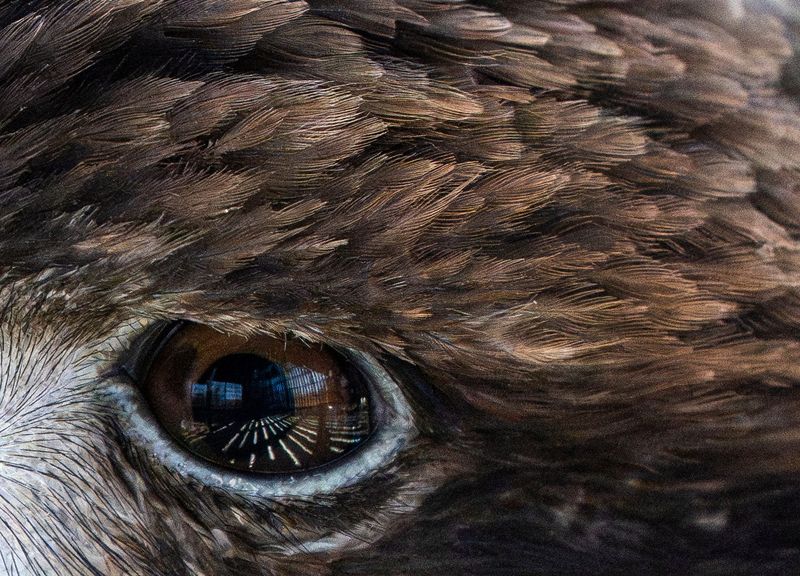
“We often are seeing that they have exhausted themselves to the point that they have no fight left,” she said. “You can look into an eagle’s eyes, though, and tell that there’s something there that says to me, ‘I want to live.’
“That’s why we always try. Even though the literature says if it’s over 600 (parts per billion) most of the time they are not going to make it. Well, most of the time is not all of the time, so that’s why we try. That’s why when you see that light and that fire in their eyes, but you are still not seeing it in their body, we still try.”
The Raptor Center of Southeast Michigan will hold a fundraiser from 1-3 p.m. on Saturday, April 25, at Five Solas Farm, 49875 Willow Road, Belleville, that will include a raptor rehabilitation presentation. For more information, go to RaptorCenterMi.org or email raptorcentermi@gmail.com.
Contact Keith Matheny: kmatheny@freepress.com.
This article originally appeared on Detroit Free Press: Lead-sickened bald eagles being found throughout Michigan
Reporting by Keith Matheny, Detroit Free Press / Detroit Free Press
USA TODAY Network via Reuters Connect