By Diego Oré and Raul Cortes
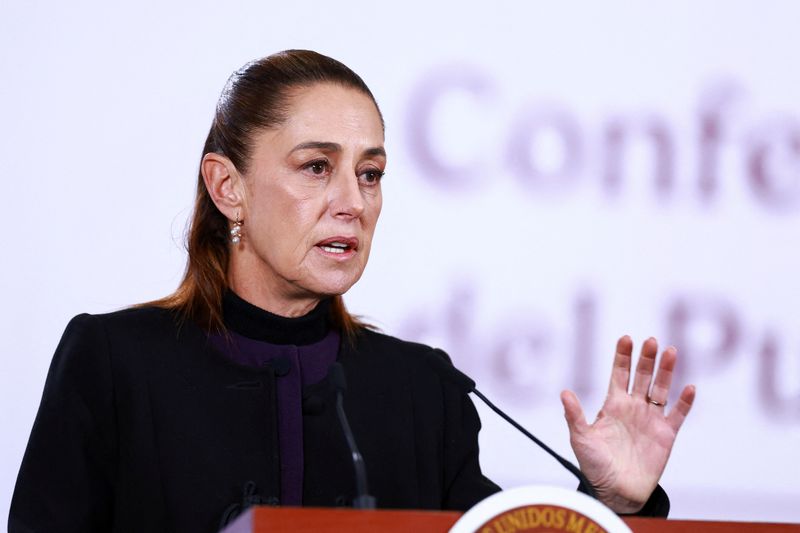
MEXICO CITY, March 11 (Reuters) – An electoral reform proposed by Mexican President Claudia Sheinbaum was rejected on Wednesday by lawmakers who criticized the bill as a bid by the ruling party to concentrate power.

The bill in the lower house of Congress fell short of the required supermajority because Sheinbaum’s usual allies from the Green Party (PVEM) and the Labor Party (PT) withheld their support, even as it secured 259 votes in favor and 234 against, with one abstention.
The setback marks a rare rift in the coalition between the ruling Morena party and its partners, a bloc that has been essential for passing constitutional reforms since 2021.
Sheinbaum introduced the initiative in late February, arguing that it would strengthen democracy, increase citizen participation and cut electoral costs by a quarter. The proposal included a reduction in Senate seats and increased oversight of electoral bodies.
Pablo Gomez, head of the electoral reform commission, said in late February that Mexico’s electoral system costs reached $3.55 billion in 2024.
Despite the defeat, Sheinbaum this week suggested a “Plan B” that would involve modifying secondary laws rather than the constitution. Such a move would only require a simple majority to pass.
According to electoral experts, this alternative path could allow for cuts to the National Electoral Institute (INE), changes to proportional representation, and new regulations on the use of artificial intelligence in political campaigns.
(Reporting by Raul Cortes, Diego Ore and Natalia Siniawski; Editing by Daina Beth Solomon and David Gregorio)