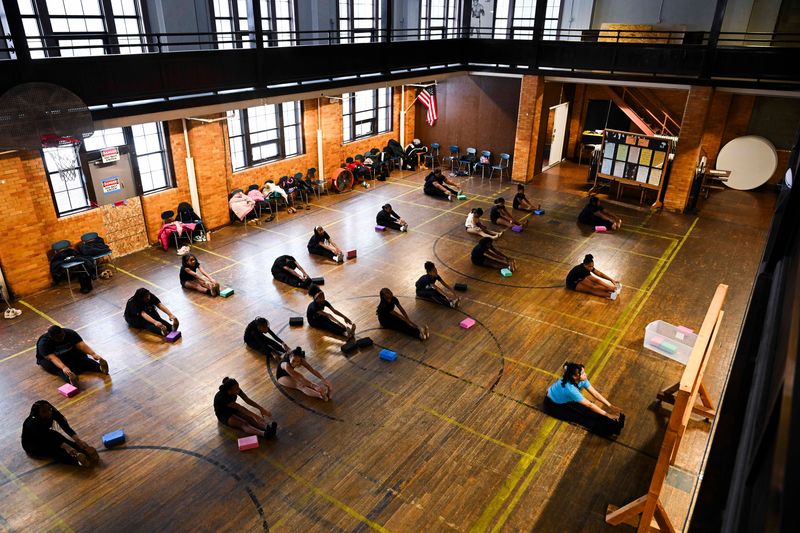
Washington — Almost $325 million will be headed to Michigan soon for nearly 250 local projects as part of spending legislation for fiscal 2026 adopted by Congress and signed by President Donald Trump, with the funding earmarked for everything from fire station upgrades to bridge replacements to workforce training at Detroit schools.

The latest package signed into law this month included five full-year spending bills with $157 million for Michigan projects like the Michigan Central Station passenger rail and transit center in Detroit ($3 million); lead service line replacements in Redford Charter Township ($2 million); infrastructure upgrades at the Port of Monroe ($3.6 million); and construction of a health clinic in Pontiac ($5.5 million).
The earmarked funding for 2026 overall includes $20 million for infrastructure upgrades to accommodate new fighter jets at Selfridge Air National Guard Base in Harrison Township ― the largest grants among the bunch and requested by Democratic Sens. Gary Peters and Elissa Slotkin and U.S. Rep. John James, R-Shelby Township.
The other top-dollar Michigan earmarks incorporated in the spending bills are $8.75 million toward the $100 million reconstruction of Mound Road in Warren from Eight Mile to the I-696 interchange; $7 million for a non-motorized pathway connecting two state parks on the lakeshore in Fruitland Township; and $6.3 million for the expansion of the Berston Field House, a sports and recreation center that’s long been a community institution in Flint.
The legislation also allocated $9 million to the U.S. Army Corps of Engineers to replace lead service lines throughout the city of Detroit, as requested by Peters and Slotkin. In another get for the Army Corps, Rep. John Moolenaar, R-Caledonia, secured $1.65 million to boost the amount of money available for dredging the Pentwater Harbor channel to better maintain access for boating, fishing and charter vessel traffic in the Lake Michigan town.
Another large grant, $7.8 million, would fund six new jet bridges for passenger boarding at the Capital Region International Airport in Lansing. Five of the current bridges are in constant need of repair, and one is inoperable, according to the office of Rep. Tom Barrett, R-Charlotte, who requested the funding with both senators.
Other airports around Michigan also benefit from the earmarks. Gerald R. Ford International Airport in Grand Rapids is getting $1.6 million to install the second of two baggage claim devices and for the replacement of taxiway lighting. The City of Detroit Airport (Coleman A. Young Airport), Chippewa County International Airport and Jackson County Airport are also supposed to get funding.
About $5 million each is allocated to road improvement projects in Houghton and St. Joseph counties, as requested by Reps. Jack Bergman, R-Watersmeet, and Tim Walberg, R-Tipton, respectively. About $3 million will go to a road resurfacing project in Lapeer County, requested by Rep. Lisa McClain, R-Bruce Township.
“These investments will strengthen our local communities, improve critical infrastructure and support economic growth across the district,” said McClain of her $22 million in local project funding. “I am proud to champion projects that were identified by local leaders and will have a meaningful, long-term impact for the people I represent.”
Slotkin secured more than $1.6 million for column rehabilitation and other roadway infrastructure upgrades at the Detroit-Windsor Tunnel. The senator also got $125,000 for the Detroit Historical Society to collect Detroiters’ oral histories and $2 million for the Michigan AFL–CIO’s Workforce Development Institute in Lansing.
Just one Michigan House Democrat scored $3 million or more for a community project: Rep. Rashida Tlaib, D-Detroit, got $3.15 million for a Southfield program offering home repairs to low-income seniors.
Rep. Bill Huizenga, R-Holland, is the only Michigan lawmaker who didn’t request earmarks for 2026. He hasn’t participated in the process since earmarks were revived in 2021, arguing that Congress should not use earmarks to increase spending and that the system remains open to abuse.
“Never have. And I won’t,” Huizenga said after the spending bills were drafted last summer. “That won’t make some people happy. You can call it whatever you want ― ‘congressionally directed community spending’ ― it’s still quacks like a duck, walks like a duck.”
Taking credit for earmarks after voting no
Other elements of the spending bills that benefit Michigan are separate from the earmarking process.
Peters, who sits on the Senate Appropriations panel, said he secured $176.6 million in the energy and water funding bill for the massive $2.6 billion project to build a modern shipping lock at the Soo Locks complex in Sault Ste. Marie. The new lock is expected to be complete in 2030.
The package also provides $110 million for operations at the Facility for Rare Isotope Beams — a physics research center at Michigan State University known as FRIB ― and $15 million for the construction of the High Rigidity Spectrometer that is the first major addition to FRIB’s experimental facilities.
The spending bills also have $3 million for the Army Corps to continue conducting its Great Lakes Coastal Resiliency Study to develop a coordinated strategy to protect thousands of miles of Great Lakes coastline from flooding and erosion.
Also funded is the Flint Lead Exposure Registry, which got $5 million to keep operating. The registry was created in response to the Flint water crisis and helps track residents who were exposed to lead and links them up with resources including social and health care services.
The inclusion of millions for local projects around Michigan is a relief for community groups and municipalities after fiscal 2025 when the Congress dropped all earmarks from the funding bills. That was the first disruption for the practice since earmarks returned in 2021 under the Democratic House leadership following a decade-long ban under GOP control.
This cycle, Michigan Republican lawmakers, whose party controls the House majority, secured nearly $148 million in earmarked funding compared with about $83 million secured by Michigan House Democrats, according to a Detroit News analysis.
The senators, who co-sponsored several projects together or with House members, secured $171 million in earmarks.
In many cases, lawmakers this year did not get the total amount they sought for a specific project. Some projects received no funding. For instance, James, Slotkin and Peters had requested millions more dollars for Selfridge upgrades ― $200 million by the senators and $90 million by James.
Several Michigan Democrats, who are in the minority party in Congress, received significantly less than they had hoped.
Rep. Haley Stevens, a Birmingham Democrat running for the U.S. Senate, requested $7 million to build a Pontiac youth center. She got $2 million. Dingell wanted $10.5 million for two bridge replacements in Ypsilanti, but received $250,000.
Multiple Michigan Democrats voted no on the spending bills, even though millions of their earmarks were baked into the legislation. Some of them later claimed credit for the funding that they opposed.
That includes first-term U.S. Rep. Kristen McDonald Rivet, D-Bay City, who celebrated the inclusion of the Flint registry funding in a news release last week and has also touted projects that she requested funding for.
McDonald Rivet last month held a news conference at the Bridgeport Fire Department to celebrate $866,000 for station upgrades included in a 2026 funding bill that she had voted against last fall, citing its lack of action on lowering health care costs.
The congresswoman did lobby her colleagues for the inclusion of the Flint registry funding, as well $13 million in earmarked funding for projects in her Tri-Cities district. She voted against the latest funding package on Feb. 3 that had the Flint money because it contained money for U.S. Immigration and Customs Enforcement without guardrails to rein in its aggressive tactics, she said.
“I am glad to see five of the six funding bills in the package move forward ― they were negotiated in a bipartisan manner and have important measures I fully support, including a pay raise for our troops, funding for Head Start, and support for local mid-Michigan projects,” she said in a statement.
“However, as I have said over recent weeks, I will not vote to send additional funds to the current version of ICE that is making communities less safe and is in dire need of reform.”
Tlaib also claimed credit for securing $15.7 million after voting against the appropriations bills. One of her earmarks sets aside $1 million for the redevelopment of Detroit’s Cooley High School to create space for both indoor and outdoor sports fields and $880,000 for a water main replacement in Lathrup Village.
“My team and I worked incredibly hard to get this $15.7 million included in the appropriations bills to make sure our communities get their fair share of resources,” Tlaib said in a statement. “Especially at a time when our neighbors are facing an affordability crisis, I will never stop fighting for the investments they deserve.”
Some roads ‘past their expected life’
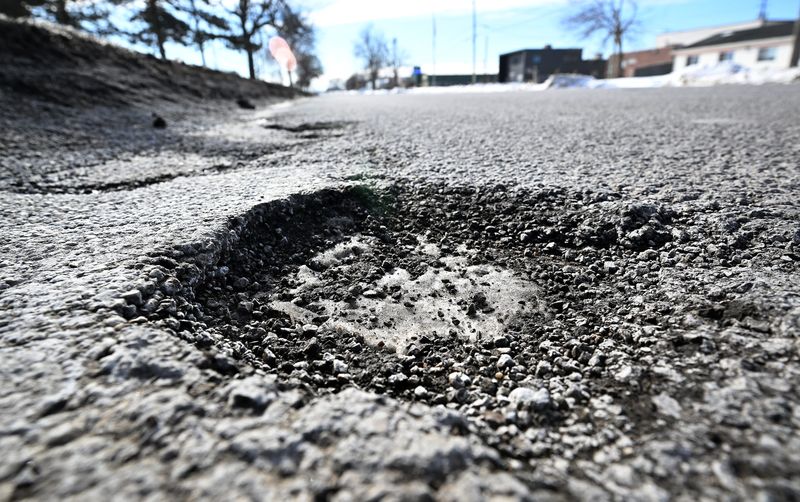
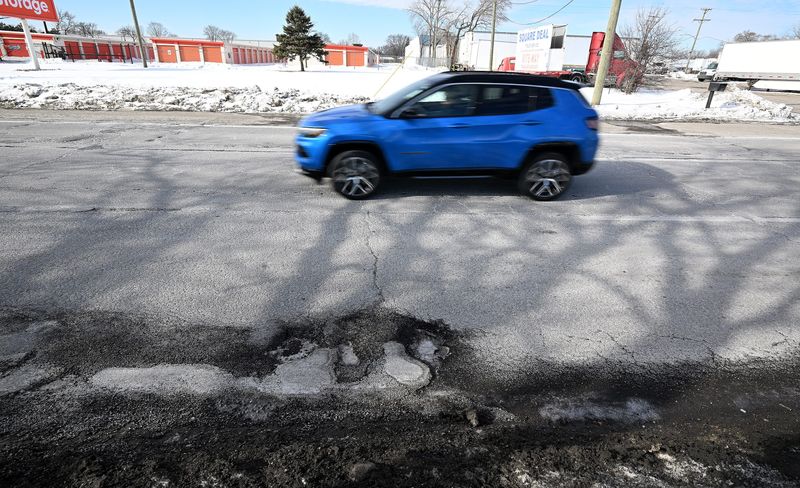
Now that the spending blueprint has passed, Macomb County is anticipating the arrival of $8.75 million for the reconstruction of the pothole-laden Mound Road from Eight Mile to I-696 in Warren ― a major transportation corridor for the automotive and defense manufacturing industries in Macomb County. James secured $8 million of the Mound Road money for his district, while Peters was able to get $750,000 in the Senate for the project.
Macomb County is still working to secure more grant funding for the $100 million project that would involve putting down new pavement and updating the drainage, curbs and gutter facilities and intersections, said Eric Dimoff, spokesman for the Macomb County Department of Roads.
“Like a lot of roadways in Michigan overall, while we perform maintenance year-round, some roadways are just past their expected life,” Dimoff said. “That portion of Mound Road one of those that is in rough shape and needs to be completely reconstructed.”
Federal funding was used to help pay for the previous segment of Mount Road that was reconstructed between I-696 and M-59.
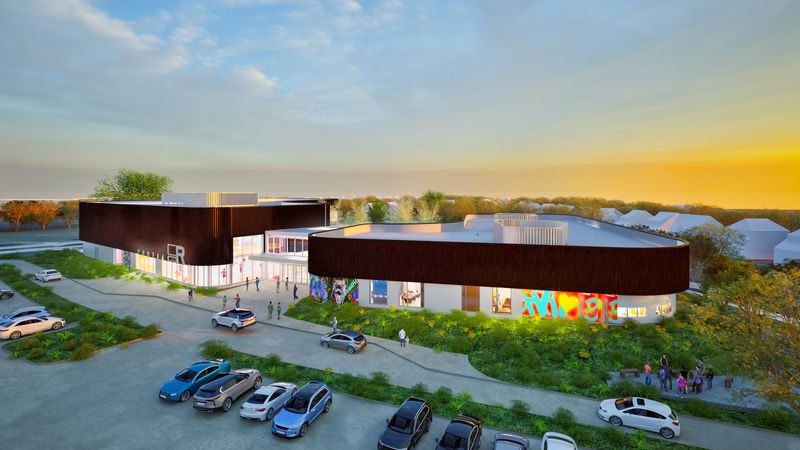
In Flint, the storied Berston Field House ― where Olympic boxer Claressa Shields and the Pistons’ Justus Thigpen once trained ― is looking forward to the $6.32 million requested by both Slotkin and Peters that will go toward the community center’s expansion after construction was paused in May due to a lack of funding.
Berston has raised $23.7 million toward its expansion and will still need about $11 million more, once the federal funding is in hand, leaders said. Plans include tripling the size of the facility to 80,000 square feet to feature an NBA-regulation basketball court, bleacher seating for 1,200, an indoor track, fitness center, pickleball courts, and other fields for sports.
Berston’s boosters had been counting on a $10 million earmark to come through via the now-retired Sen. Debbie Stabenow of Lansing for fiscal 2025, but that was never funded, said James Avery, executive director of Berston Field House.
“We had to pump the brakes,” he said.
“Our congressional leaders all championed us. We’re so thankful about the federal money because you know that that lump sum of money is very difficult to raise within a short span,” Avery added.
“My goal is to hope we have major completion by post-summer, early fall, though that depends on weather and when we receive those dollars.”
‘This should cover it all’
In west Michigan, Fruitland Township in Muskegon County will receive over $9 million nominated by Moolenaar to construct a nearly 6-mile-long recreational pathway for pedestrians and cyclists next to Lake Michigan along North Scenic Drive that would connect Duck Lake State Park, Muskegon State Park and Pioneer County Park for cyclists and pedestrians.
The grant is expected to cover the entire project cost. Public safety for those who want to walk and bike is the main driver behind the effort, Fruitland Township Supervisor Jeff Marcinkowski said.
“There are no shoulders on the road, so anybody that wants to bike on the road or wants to walk their dogs or just take an exercise walk because of its scenic beauty, you have to get off of the road to let cars pass,” Marcinkowski said.
“When Congressman Moolenaar came out here two years ago and took a trolley ride with us up and down that road, he saw what the road was like. … He realized that there was an issue.”
Grand Haven is getting just over $1 million to remediate contamination on an island in the middle of its harbor that is host to an “orphaned” electricity plant.
The city told the office of U.S. Rep. Hillary Scholten, D-Grand Rapids, that the money would be used for hazardous material removal, groundwater protection and site restoration with the goal of guarding drinking water sources and preventing PFAS pollution of the Great Lakes.
Across the state, 15 projects got funding that would revamp or replace fire halls or fire trucks. This includes $2.25 million for refurbishing and expanding Armada Township’s fire station, as requested by Rep. Lisa McClain, R-Bruce Township.
The current space was built for two but needs to expand to house five staffers a day with full-time fire and ambulance response for everything from hazmat, wilderness issues and farm emergencies, Supervisor Chris Krotche said.
“We’re extremely grateful. We have a shoe-string budget, so doing this would not be possible without going to a tax, which is not the favorable thing to do,” Krotche said last fall. “This should cover all it.”
mburke@detroitnews.com
This article originally appeared on The Detroit News: What $325M in earmarks from Congress will fund in Michigan
Reporting by Melissa Nann Burke, The Detroit News / The Detroit News
USA TODAY Network via Reuters Connect