Remember when the world – the sporting world – felt aligned against Russia for its warmongering with Ukraine, and against Qatar for its human rights violations against its own people? Brought us together, in a way very few things can.
In tennis, Wimbledon banned Russian players in 2022. In men’s soccer, boycotts were considered, discussed – raising awareness about what was happening at the highest levels of the Russian and Qatar governments – for the 2018 World Cup in Russia and the 2022 World Cup in Qatar. The boycotts didn’t come to fruition, but awareness was raised. Messages were sent, whether the leaders of Russia and Qatar cared or not.

And they did not.
The world – the sporting world – feels aligned again these days, bringing together countries like France and Germany and the Netherlands. People there are considering, discussing, a boycott of the 2026 World Cup.
You know where the 2026 World Cup will be held, right?
They’re talking about us.
European boycott of 2026 World Cup?
Around here, of course, almost nobody’s talking about a boycott. And by here, I mean the contiguous, carnivorous United States of America, where we’ve grown comfortable with blood on our hands – the color doesn’t bother us – and have decided, in large numbers, that everyone else is wrong.
Well, some people in America are talking about a boycott. The Los Angeles Times has written extensively on the topic, up to and including this week, and suggested an international boycott is the only way to get President Trump’s attention.
“To show that ICE’s ongoing activity is truly beyond the pale,” one L.A. Times story argues, “international soccer organizations should refuse to send their delegations to the U.S. for this summer’s World Cup.
“Latinx people and immigrants have been the lifeblood of the soccer fan base within the U.S. It doesn’t seem like a stretch to believe that ICE agents will be ever present at World Cup matches within (and maybe outside) the U.S. Because of that, fans will have to live in fear of harassment, abduction or worse when going out to watch a match.”
The noise is louder beyond our borders. Residents of long-time allies Germany, France and Holland – soccer-obsessed countries – have discussed the idea of a boycott of the 2026 World Cup. The United States is co-hosting the World Cup with Canada and Mexico from June 11-July 19.
In other times, better times, discussions in other countries of boycotting, well, us might get our attention. We’d wonder: Wait, what? Are we doing something wrong?
Are we?
These are not those times. We are right, at all times, because we are … well, we’re us. So when we get fired up in America about possible Russian war crimes or Qatari civil right violations, that’s not about us. That’s a them thing. And when folks elsewhere get fired up about possible U.S. war crimes or civil rights violations, that’s not about us, either. That’s also a them thing.
If you’ve read this far without feeling the slightest bit troubled, well, God bless your untroubled heart. As a country we’ve threatened to take Greenland by force, never mind that Greenland is a part of Denmark. We’ve sunk Venezuelan ships off the coast of Venezuela. That’s an act of war, if Venezuela had the gumption to attack back. Which it doesn’t.
Here on domestic soil, President Donald Trump’s federal government has sent the National Guard into cities and states that don’t typically vote for him or his policies. Human beings – some here illegally, some not – have been rounded up and treated like criminals. Other people, including two U.S. citizens, have been shot dead by U.S. immigration officials. Journalists have been arrested or had their homes searched.
Not in China or North Korea or Russia.
Here.
Elsewhere, and some of you aren’t going to believe this, they’ve noticed.
What they’re saying in Europe about World Cup boycott
It’s not just a silly petition, though, yeah. It’s one of those.
People around the world look at what the United States is doing – at what we’re becoming – and they see the 2026 World Cup approaching on U.S. soil and they hope, well, maybe this will get America’s attention. Or at least, get enough of the American public’s attention that, together, we will use our voices to stop what is happening here.
Understand, even though a petition to boycott the 2026 World Cup has received almost 170,000 signatures in the Netherlands, nobody thinks Holland would actually do that – not you, not me, probably not even the folks who signed the petition. But they’re doing what they can, to get our attention.
Do they have yours?
In France, French parliament member Eric Coquerel, has said: “Seriously, can we imagine playing the World Cup in a country that attacks its neighbors, threatened to invade Greenland, disregards international law, wants to undermine the U.N. (and) establishes a fascist and racist militia in its own country?”
Does that have your attention?
In Hungary, when the U.S.-Greenland rhetoric was reaching an apex, the heads of nearly 20 European football associations reportedly discussed how the sport could respond with the World Cup approaching. According to the Guardian, “Talks about the Greenland crisis were held informally on the sidelines of an event organized to celebrate the Hungarian football federation’s 125th anniversary, in the knowledge that a unified European response may be required should Trump seek to escalate the situation.”
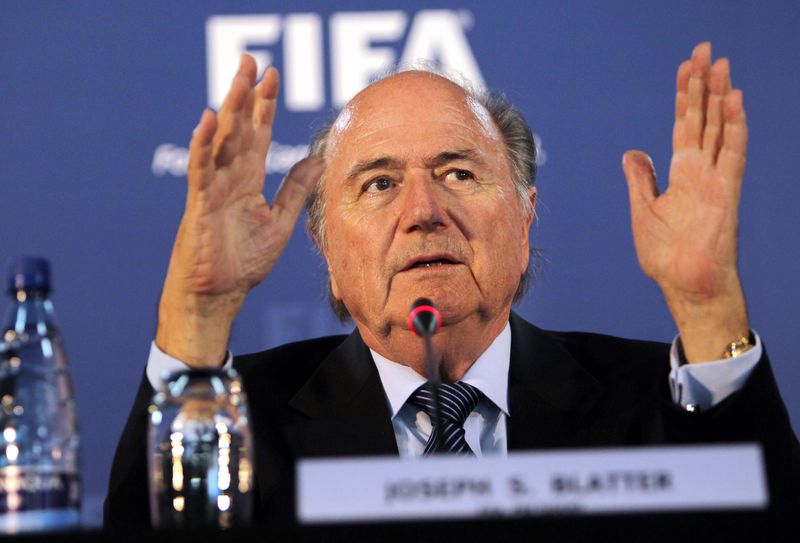
In Switzerland, attorney Mark Pieth, who chaired the oversight of FIFA reform a decade ago, told newspaper Der Bund: “There’s only one piece of advice for fans: Stay away from the USA. You’ll see it better on TV anyway. And upon arrival, fans should expect that if they don’t please the officials, they’ll be put straight on the next flight home. If they’re lucky.” That was seconded by former FIFA president Sepp Blatter, who added on social media: “I think Mark Pieth is right to question this World Cup.”
In Lebanon, Patriotic Vision executive director Mohamed Safa – PVA calls itself a non-government organization with special consultative status with the United Nations – said on Twitter earlier this year: “The World Cup must not be held in a police state that shoot innocent people in the streets.”
In Germany, a poll in the tabloid Bild showed 47% of the German public approving of a boycott had the U.S. annexed Greenland – and even with that threat gone, German soccer federation vice president Oke Göttlich recently told a local newspaper: “The time has come (to) seriously consider and discuss this. What were the justifications for the boycotts of the Olympic Games in the 1980s? By my reckoning, the potential threat is greater now than it was then. We need to have this discussion.”
This is what people in other countries are doing as the cyclonic U.S. government spins in new directions. This is what they’re saying.
Does any of it have your attention?
More: Join the text conversation with sports columnist Gregg Doyel for insights, reader questions and Doyel’s peeks behind the curtain.
Find IndyStar columnist Gregg Doyel on Threads, or on BlueSky and Twitter at @GreggDoyelStar, or at www.facebook.com/greggdoyelstar. Subscribe to the free weekly Doyel on Demand newsletter.
This article originally appeared on Indianapolis Star: Doyel: Sporting world has discussed boycotting 2026 World Cup. Which means, well, us.
Reporting by Gregg Doyel, Indianapolis Star / Indianapolis Star
USA TODAY Network via Reuters Connect