When an Immigration and Customs Enforcement agent shot and killed 37-year-old woman on Jan. 7 in Minneapolis, many people in the immediate area were recording the incident on phones and other devices, which is legal for Americans to do, according to legal experts.
“Make no mistake, what happened in Minnesota is not about free-speech niceties,” Ken Paulson, director of the Free Speech Center at Middle Tennessee State University told USA Today. “If they disobey the police officer, they can be arrested, but under no circumstances can they be shot. … This is less about free speech than the exercise of power.”

Since the killing, President Donald Trump has defended the ICE agent involved in the shooting and cast blame on the “Radical Left.” U.S. Department of Homeland Security officials and the Trump administration said the shooting was in self-defense.
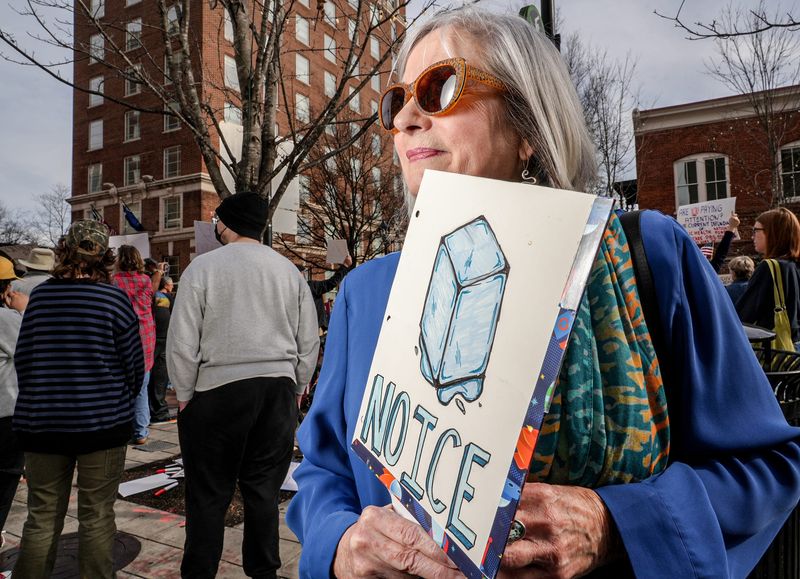
Protests have sprung up across the country including in Detroit where about 50 protesters gathered on Wednesday night, Jan. 7, to “Stop supporting ICE’s crimes,” they chanted.
Recording ICE agents and other law enforcement personnel has become a hot-button issue across the U.S., but legal experts say the public always has a right to record ICE in public.
“The First Amendment protects the right to record and disseminate footage of law enforcement officers carrying out their official duties in public — that includes ICE, CBP and any other officers engaged in immigration enforcement activity. Yet in an apparent attempt to cover up their abuses, DHS is systematically attacking the right to record their agents at work,” The American Civil Liberties Union’s Byul Yoon wrote in a recent article.
However, DHS Secretary Kristi Noem claimed in July 2025, according to CBS12, that videotaping agents and posting it online could be considered “doxing” and therefore violence against officers.
“We will prosecute those who dox ICE agents to the fullest extent of the law. These criminals are taking the side of vicious cartels and human traffickers,” Noem said in a July 11, 2025, statement. “We won’t allow it in America.”
Here’s what rights Americans have to observe ICE agents, other law enforcement.
Can I take photos and videos of law enforcement?
When in a public space, people have the right to photograph anything in plain view, including federal buildings and police, according to Michigan’s ACLU.
On private property, property owners may set their own rules.
Police may only order citizens to stop recording if they are “truly interfering with legitimate law enforcement operations, but video recording from a safe distance is not interfering,” according to the ACLU.
Police may not confiscate or demand to view photos or videos without a warrant. They may not delete data under any circumstances, according to the ACLU.
The Cato Institute’s Walter Olson wrote that while the Supreme Court itself hasn’t yet faced the issue squarely, the seven federal circuits that have done so — the 1st, 3rd, 5th, 7th, 9th, 10th, and 11th — all agree that the First Amendment protects the right to record police performing their duties in public.
Where can I gather to protest?
Public areas, like streets, sidewalks and in front of government buildings are open to protests as long you are not blocking access or interfering with operations, the ACLU website says.
Can I take photos at a protest?
In any public space, you have the right to photograph anything in plain view, the ACLU says.
Police officers need a warrant to confiscate or view photographs and videos. Additionally, they cannot delete data from your phone.
Officers can, however, order citizens to “cease activities,” including recording when protestors are interfering with legitimate law enforcement operations. To avoid such orders, consider recording from a safe distance.
What is a legal observer?
Legal observers are typically citizens who record and document interactions between police and protesters.
Free Press reporters Natalie Davies and Darcie Moran contributed.
Jalen Williams is a trending reporter at the Detroit Free Press. Contact him at jawilliams1@freepress.com.
This article originally appeared on Detroit Free Press: Can I record ICE agents in Michigan? What’s legal
Reporting by Jalen Williams, Detroit Free Press / Detroit Free Press
USA TODAY Network via Reuters Connect