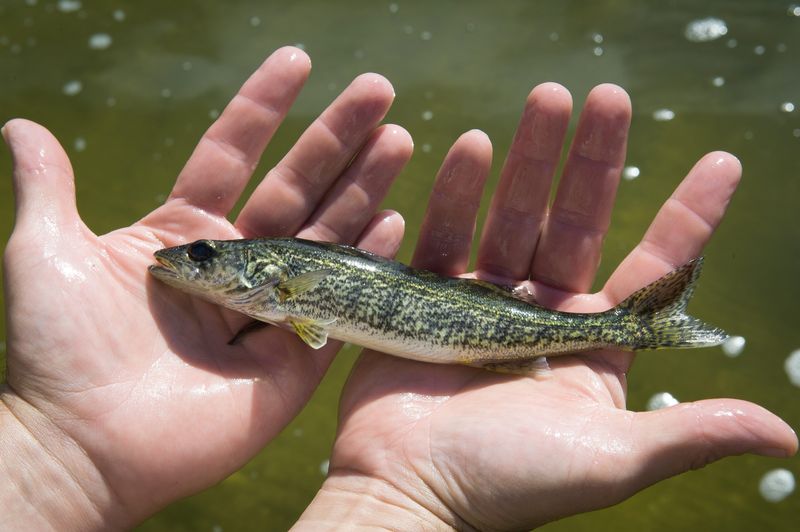
This past fall, the Michigan Department of Natural Resources stocked more than 600,000 fish across Michigan while wrapping up 2025 operations that put more than 19 million fingerlings in state waters.
DNR crews stock seven different species at 76 locations throughout the state: 648,557 fish, weighing in at a total of 8.6 tons.

“This was another exceptional fall fish stocking season, enhancing fishing opportunities throughout Michigan,” DNR fish production manager Aaron Switzer said in a release. “Combined with successful spring and summer stocking efforts, the 2025 total reached nearly 19.5 million fish stocked in Michigan’s waters.”
The number and type of fish stocked vary by hatchery, the DNR said because each facility’s ability to rear fish differs due to water supply and temperature.
In Michigan, there are six state and three cooperative fish hatcheries that work together to produce the species, strains and sizes of fish needed by fisheries managers. Fish must be delivered at specific times and locations for stocking to ensure that they thrive, the DNR said.
What to know.
How long does it take to raise fish for stocking?
In general, fish are reared in Michigan’s state fish hatcheries from one month to 1.5 years before they are stocked.
When does the DNR usually stock fish?
Most fish in Michigan are stocked in the spring, but some fish are stocked in the fall because they require less time and fewer resources to rear in hatcheries. Fall-stocked fish also may adjust better to new environments as they are younger and more adaptable to change, the DNR added.
What fish were stocked in the fall?
Seven species were stocked this fall: Atlantic salmon, brook trout, brown trout, lake trout, rainbow trout (Eagle Lake and steelhead strains), walleye and muskellunge.
Where did the fall stock fish come from?
There are six hatcheries in Michigan, including:
How many fish did each hatchery provide this fall?
The number of fish from each hatchery depends on the species and requirements.
Did the DNR stock any walleye in Michigan?
DNR fisheries management units also stocked fall fingerling walleye this year, including:
How does the state transport fish to waterways?
The DNR has a variety of vehicles that have the ability to carry fish in freshwater tanks.
“We have invested a significant amount of time and funds, nearly $1.7 million, into the unique vehicles that transport this multi-million dollar product from our hatcheries and rearing ponds (and also some out-of-state locations) to stock almost anywhere,” the DNR said. “The only unwritten ‘rules’ of fish transportation are that the fish absolutely must be delivered alive and in stocking condition.”
Does the DNR stock fish every year?
Yes, in 2024, state department said it released 590,504 fish in the fall and more than 9.7 million fish into Michigan lakes and streams overall.
Where does the DNR obtain immature fish for stocking?
The DNR collects eggs in an organized effort to create a new generation of fish.
“An egg-take occurs under controlled conditions ensuring that the maximum number of eggs become fertilized. In addition, the fertilized eggs are disinfected and transferred to a hatchery for rearing,” the DNR said. Broodstock are adult fish that are reproductively mature. At weirs they are “wild broodstock” and “captive broodstock” remain at hatcheries, such as the trout species at Oden and Marquette state fish hatcheries, the DNR said.
Can I tour a fish hatchery?
The DNR welcomes visitors to its state fish hatcheries and interpretive centers to see the fish rearing process and to learn about Michigan’s waters. For more information, visit Michigan.gov/Hatcheries.
Can I see all the places the DNR stocked fish?
The DNR maintains an online fish stocking database. You can find out if any fish were stocked in your favorite fishing spots by visiting michigandnr.com/fishstock/.
This article originally appeared on Lansing State Journal: DNR stocks 640,000 fish in fall. Where they ended up in 2025
Reporting by Dan Basso, Lansing State Journal / Lansing State Journal
USA TODAY Network via Reuters Connect