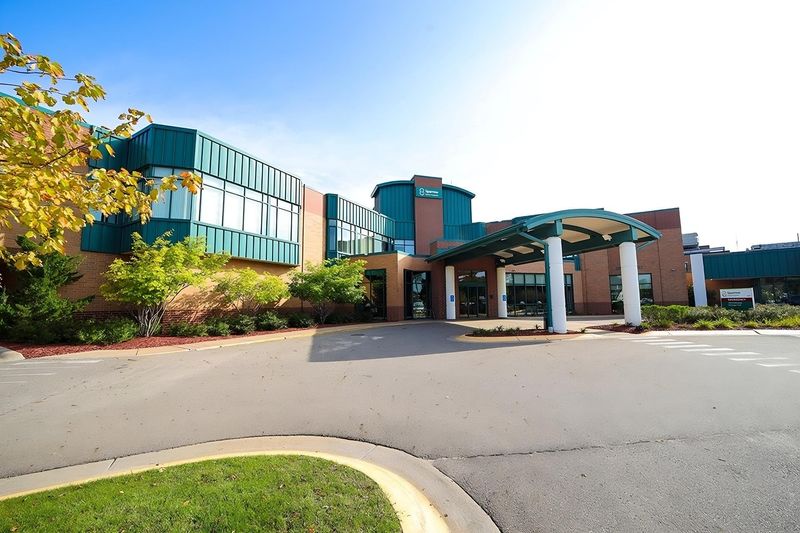
In 2016, Sparrow Health System and Hayes Green Beach Memorial agreed to make the small Eaton County hospital part of Sparrow’s growing system.
Executives said the merger, which included a $10 million investment from Sparrow, would combine resources and “leverage the strength of HGB while assuring long-term sustainability of care close to home.”

By the time the deal closed, in October 2019, Sparrow was already down a path toward another deal. Only this time, it was the target.
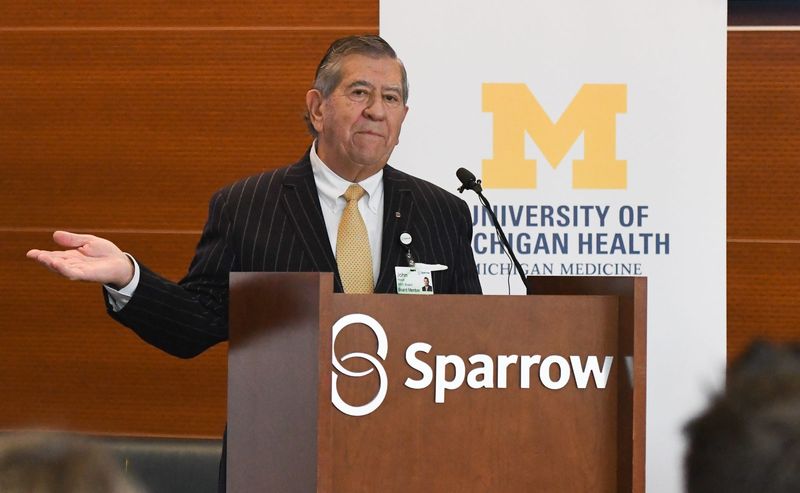
In early December 2022, the University of Michigan announced it was acquiring the Sparrow system for an $800 million investment that would “expand” services and provide access to high-level to care while starting “a new chapter in Sparrow’s storied history.”
The announcement’s final sentence said the deal created a $7 billion organization. It’s one of the largest mergers of tax-exempt, nonprofit hospital systems in the country since 2021.
Hospital mergers aren’t new, but numerous studies have found no definitive evidence they improve patient care. Study after study has found, however, that they increase patient costs. And they aid tax-exempt systems – like UM Health-Sparrow and McLaren Health Care – in accruing billions in cash and assets that can be used to expand further.
There’s little Michigan can do to slow consolidation of its hospitals. An estimated 91% are already nonprofits – limiting some of the state attorney general’s oversight – and systems can structure transactions to avoid altering direct ownership so as not to require a review and approval from the Department of Health and Human Services, as UM Health-Sparrow did in both of its recent deals.
In 2021, the state’s nonprofit hospitals saw a collective $1.3 billion benefit from the taxes they didn’t have to pay, with about 70% of that attributed to their exemptions from Michigan property, sales and income tax, researchers found.
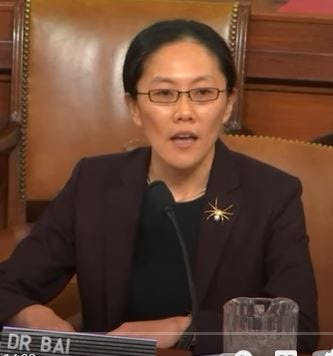
Ge Bai is a Johns Hopkins University expert in hospitals and co-author of that research. She, like other experts, said the line separating nonprofit and for-profit hospitals is getting blurrier.
And since the tax-exempt systems have no investors or tax collectors to be concerned with, Bai said they have an advantage over their for-profit competition.
“It creates an incentive for them to just build an empire,” she said.
Lansing’s hospital systems are worth billions.
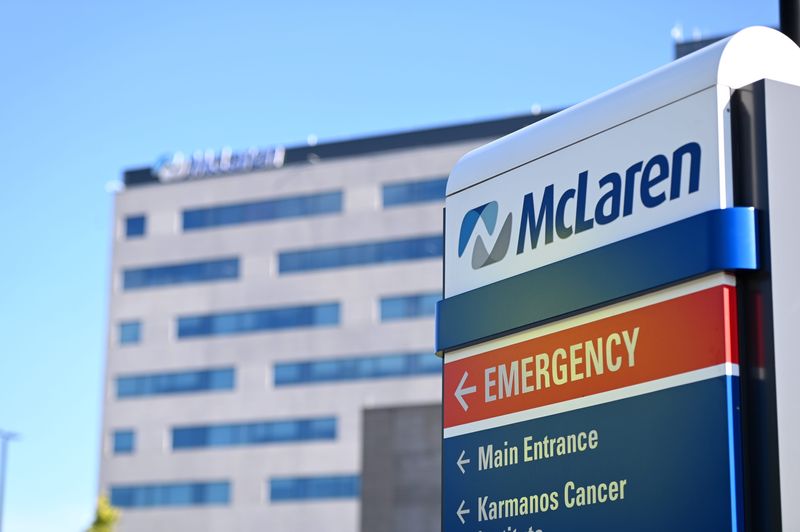
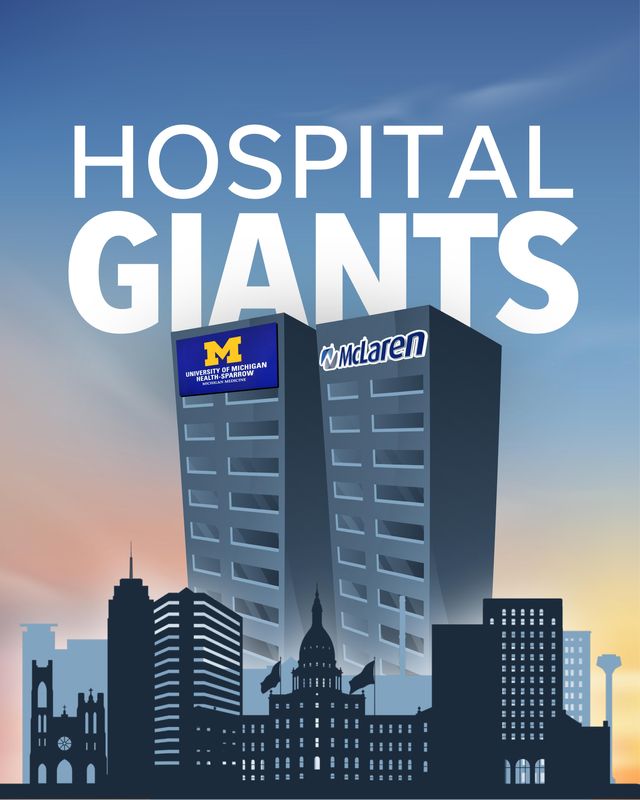
McLaren Heath Care, with its 12 hospitals across Michigan, is a $7.3 billion organization. In 2023, UM Health-Sparrow’s six area hospitals, part of the $7 billion UM Health organization, had about $1.1 billion in assets.
The State Journal requested interviews with UM Health-Sparrow President Margaret Dimond, McLaren Health Care CEO Philip Incarnati, McLaren Greater Lansing CEO Kirk Ray and other employees in each system who could answer questions about their respective community benefit spending, debt collection policies and business strategies.
Dimond, Incarnati and Ray declined interviews through spokespeople. Other executives were not made available.
Maanasa Kona is a researcher in Georgetown University’s Center on Health Insurance Reforms. Her expertise is community benefit spending. She said the evidence collected about hospital mergers over the decades has yet to confirm the benefits that systems claim they provide.
UM Health-Sparrow hospitals told the IRS in their most recent reports that about 4.3% of their collective expenses went to programs to improve the community’s health, after offsetting revenue. McLaren’s hospitals reported using about 4.5% of expenses on this kind of work.
“The only thing that’s really happening,” Kona said of expanding hospital systems, “is that they’re increasing their clout and demanding increased payments from insurers and then, of course, from patients in the downstream.”
UM-Sparrow, McLaren collect patient debt differently
In a statement, UM Health-Sparrow Spokesperson John Foren said the system improves the lives of its patients every day and has been “a linchpin” in the Lansing-area economy for 129 years.
“As the area’s largest private employer,” he continued, “we support families with paychecks that provide the financial backbone of the community – in 2024 alone, UM Health-Sparrow paid $856.6 million in wages, salary and benefits to our team members.”
And at least three times since 2019 the hospital system sued one of those employees.
In June 2023, less than three months after U-M officially took control, it filed a lawsuit against an employee of more than a decade who was insured through the hospital system. She owed $938.
The woman was confused when she got a summons and called the court, records show.
“After hearing what the paper meant, I was in total shock!” she wrote to the court. The lawsuit, she added, was the first she’d learned of the debt.
The lawsuit isn’t an outlier.
From 2019 through 2024, the UM Health-Sparrow filed more than 3,000 lawsuits in Ingham, Eaton and Clinton counties, a rate of 1½ a day, seeking as little as $290.
The State Journal reviewed a random sample of 10% of district court lawsuits, 334 in all, and found UM Health-Sparrow sought, on average, $2,502 in debt. Thirty-eight lawsuits sought more than $5,000 and 120 less than $1,000.
UM Health-Sparrow also filed 25 lawsuits in area circuit courts to collect money, where it can seek more than $25,000.
When the system won, which the State Journal found it usually did without facing opposition, UM Health-Sparrow then used the courts to take a portion of wages people earned from jobs at General Motors, local school districts and the National Guard. The system also garnished patients’ tax returns.
The State Journal found no McLaren lawsuits. Its financial assistance policy says that it can offer a payment plan, waive charges or will send debt to collection agencies.
In a statement, McLaren spokesperson Dave Jones said the system doesn’t sell debt, but instead “may utilize outside vendors to assist with collecting outstanding balances for care that has been provided to those who do not qualify for charity care.”
Jones did not answer questions about how often McLaren enlists collection agencies or how much it receives.
U-M’s Michigan Medicine system, UM Health-Sparrow’s parent company, uses collection agencies to recoup what patients owe, according to its website.
The State Journal asked UM Health-Sparrow whether it plans to change its debt collection practices from local courts to collection agencies like Michigan Medicine. Spokesperson Corey Alexander did not answer the question.
Expert: Nonprofit systems too big for IRS to audit
To keep their tax-exempt statuses, nonprofit hospitals must report financial information to the IRS in a Form 990, often simply called a 990. They must also study their community’s health needs once every three years and adopt plans to address those needs.
Each hospital is allowed to set its own threshold for who’s eligible for free or reduced care – UM Health-Sparrow and McLaren have different levels – and decide whether to exceed that budget.
The state of Michigan sets no minimum for how much its tax-exempt hospitals must spend on charity care or other community benefit programs.
Phil Hackney, a tax expert at the University of Pittsburgh School of Law, said nonprofit systems are too big for the IRS to audit and many now simply operate like for-profits.
As a result, he believes using the tax code and its exemptions as the main tools to govern how nonprofit hospitals use their money no longer makes sense.
“It’s assuming that charity is going to somehow lead us to goodness by just randomness,” he said. “And to me that’s just ludicrous.”
The nearly 3,000 nonprofit hospitals across the country shared a collective $37.4 billion tax benefit in 2021, Bai and other researchers found, but the benefit was not uniformly spread. Larger hospitals, teaching hospitals and urban hospitals saw disproportionately higher tax benefits.
At least 70% of the estimated $1.3 billion tax benefit for Michigan’s nonprofit hospitals came from state and local taxes they didn’t have to pay. The property tax exemption alone, researchers estimated, saved the state’s nonprofit hospitals $549 million in 2021.
In a statement, McLaren said its system spent $412 million on community benefit programs in 2023. However, the records its hospitals sent the IRS show $128 million in spending after offsets from grants or revenue generated from the programs.
UM Health-Sparrow said it spent $137 million on community benefit programs in 2022, the last full year before U-M took over. Tax records show its six hospitals dedicated $97.7 million for community benefits in 2022, after revenue offsets.
Bai said transparency and public awareness are best started close to home because for many nonprofit hospitals their biggest tax benefit is their exemption from state and local taxes.
In 2023, researchers at Johns Hopkins University found that nonprofit hospitals in states with required spending reports spent more on community benefits programs.
Maryland is one of the states with a reporting requirement.
In 1971, lawmakers there created the Health Services Cost Review Commission. The goal today is to help slow the growth in hospital prices, increase the fairness of hospital financing and ensure the state’s hospitals “have the financial ability to provide efficient, high quality services to all Marylanders.”
Hospitals in Maryland are required to submit their community benefit spending data to the state.
The spending data, analyzed for the state by the nonpartisan Hilltop Institute at the University of Maryland-Baltimore County, and other information about hospital systems are made available in one place. The legislation also created an oversight body with seven commissioners the governor appoints.
“The hospitals want to look good in front of those people,” said Alice Middleton, the institute’s interim executive director. “And so I think that just makes a difference. Having somebody watching makes a difference.”
‘They ensure our health’
Hackney and other experts interviewed, while often critical of the business side’s impact on patient care and costs, also stressed how important the hospital systems are to their communities.
“They ensure our health,” Hackney said. “They’re key to our day-to-day health.”
In responding to some of the State Journal’s questions, Jones wrote that McLaren wants to “increase opportunities for care, not create barriers” and added that the system takes “very seriously” its responsibility to improve the community’s health.
“Hospitals and health systems are the lifeblood of so many communities – providing care close to home, creating well-paying jobs and building or supporting critical social services like free medical clinics, food banks and education programs,” Jones said.
In 2022, McLaren opened its new $600 million hospital in Lansing, which is nearly 1 million square feet and sits on 53 acres. Last year the system announced plans for a $40 million emergency department and medical office near Grand Ledge.
The 2010 Affordable Care Act require tax-exempt hospitals like UM Health-Sparrow and McLaren to conduct community health needs assessments once every three years and come up with implementation plans for how they can address those needs. The idea, experts said, is that addressing health concerns in the community leads to a healthier community with fewer people who need to go to the hospital, avoiding medical costs they can’t afford.
The ACA also requires that hospitals make their health needs assessment reports widely available to the public. The implementation reports must be written plans to address the significant needs that were identified.
McLaren’s website has a mix of both reports by year.
UM Health-Sparrow’s website, as of Feb. 21, only had the assessment reports. And all but one – Hayes Green Beach’s final report before the Sparrow acquisition – include the same sentence: “A separate Implementation Strategy document will be written for each hospital to address the above mentioned health priorities.”
It’s not clear whether those reports are publicly available. The State Journal asked UM Health-Sparrow to provide a link to where the implementation reports are posted online. Alexander, the spokesperson, didn’t respond to the request.
The Lown Institute, a think tank focused on health care reform, analyzed 2021 financial data and found that 97% of Michigan nonprofit hospitals spent less on improving community health than they benefited from their tax-exempt status, falling a combined $1.4 billion short.
Michigan was among the worst in the country for both the number of hospitals that fell short and their collective deficit.
‘The bigger they are the more powerful they are’
Researcher Bai said the tax benefits coupled with a regulatory environment that’s “very favorable and encouraging for mergers and acquisitions” has helped fuel the consolidation of hospital systems across the country.
“The bigger they are the more powerful they are,” she said.
From 2017 to 2021, a stretch that included the Sparrow-HGB merger, inpatient hospital prices in the Lansing area increased by 12% while patients also had fewer hospital options, according to the Health Care Cost Institute, a nonprofit research group.
Lansing wasn’t alone. The Institute’s researchers found that 70% of areas studied saw further consolidation and nearly all faced price increases.
“(When) negotiating with health insurance companies, it is better to be bigger,” said Christine Monahan, a researcher at Georgetown University’s Center on Health Insurance Reforms.
And it’s not just having the most patients or the most-prestigious hospitals, but also a network of physician practices.
“If you are more involved across the different layers of the health care system,” she said, “you have just a lot more negotiating power when it comes to working with the health insurance company and saying, ‘Take it or leave it.'”
More expensive care can quickly become less accessible care.
A 2023 survey funded by the Commonwealth Fund, which supports independent research on health care issues, found that nearly a third of respondents said they or someone they lived with was paying off medical debt. And more than a third of those people said it caused them or family to delay or skip medical care or prescription medications.
And nearly 20% of respondents said medical debt forced them to cut back on food, heat or rent, and 25% said they worked more hours or took on a second job.
The UM Health-Sparrow system, even before UM was involved, extended far beyond its six acute-care hospitals. There’s a standalone emergency room in Okemos, primary care practices, a sleep center, sports medicine doctors, a neurologic care network and 18 laboratory teams, among others.
In 2011, it began filling the role of medical examiner for Ingham County and now handles that work for Eaton, Clinton and four other counties. Those agreements were threatened in 2017 when the system sought to increase its rates.
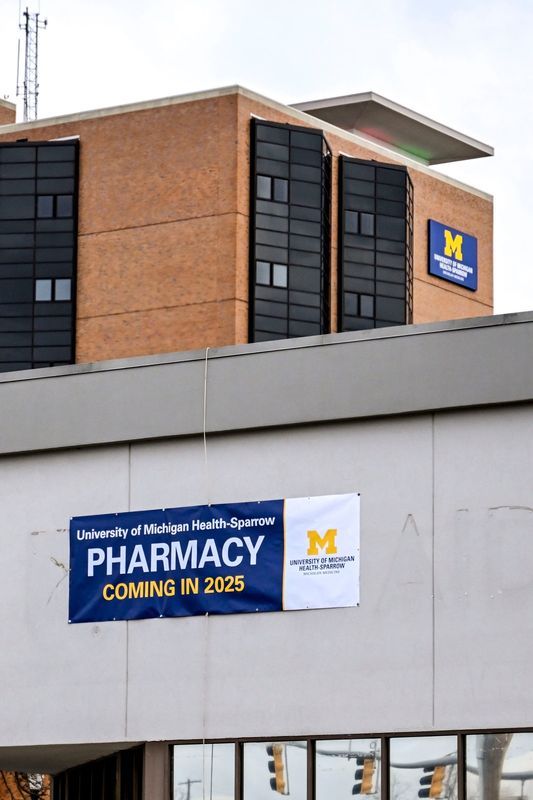
And in December, UM Health-Sparrow announced plans to lease the former Rite Aid store across from its Lansing hospital to add pharmacy, urgent care and occupational health services. It’s also planning a new $32 million medical clinic in Grand Ledge and a $97.2 million psychiatric facility at the former Lansing Eastern High School site next to its Lansing hospital.
Attorneys general do investigate in some states
UM Health-Sparrow said it’s facing “strong financial headwinds that have negatively impacted” its operating income, adding that in 2024, its most recent fiscal year, the Lansing hospital lost almost $13 million.
“While not providing any direct funding to UM Health-Sparrow, University of Michigan Health does provide the financial backing to embark on capital projects that will greatly expand our footprint and the health care services we provide to Mid-Michigan,” said Foren, a spokesperson.
UM Health-Sparrow told the State Journal that its investment portfolio – $594.2 million as of June 30, 2023 – will be its “primary funding source for strategic projects.”
The 2024 fiscal years were not included in the State Journal’s analysis as they were not available. The newspaper asked the system to provide 990s for 2024 or documents that contain similar financial information. Alexander, a spokesperson, didn’t provide either.
State attorneys general often have authority to investigate or weigh in when systems or hospitals combine. Experts told the State Journal, however, that doing so comes with the risk of being seen as going after the local hospital, which is even more politically risky if the health system is a nonprofit.
But some still do.
In March 2024, the Minnesota attorney general reached an oversight agreement with Wisconsin-based Aspirus Health that allowed its acquisition of Duluth-based St. Luke’s Hospital to proceed. The agreement requires, among other things, that the system maintain its community benefit spending and give the AG status reports on the commitments it made.
Aspirus, at the time of the merger, faced a federal lawsuit in its home state over claims it uses its dominant market position to fix prices. The lawsuit, filed in October 2022, is ongoing.
Aspirus also operates three hospice and home care medical centers in the Upper Peninsula and since 2019 has twice faced federal lawsuits in Michigan.
The Department of Health and Human Services has some oversight of hospital deals in Michigan, but there are loopholes.
Because both transactions involving Sparrow − Hayes Green Beach and later U-M − “(did) not constitute a change in ownership” they did not require DHHS “review and approval.”
The waiver letter the department sent to UM Health-Sparrow officials confirmed the corporate structure: Sparrow Health System is the “parent company” for the hospitals and “UM Health will be the parent of SHS and (the University of Michigan) will be the ultimate parent.”
UM Health-Sparrow did not answer the State Journal’s questions about why the U-M and HGB deals were structured that way.
Michigan Attorney General Dana Nessel’s office also has some oversight of hospital transactions. The department declined to make anyone available to answer the State Journal’s questions, but sent a statement.
The office said it “reviewed to some extent around 20 transactions since 2019” but only one, which was later abandoned, would have required its approval because it involved a for-profit acquiring a nonprofit. A transaction involving two nonprofit hospitals or systems – an estimated 91% of the state’s hospitals are nonprofits – doesn’t need AG approval prior to closing.
The office can, however, file a lawsuit to block a proposed merger on antitrust grounds. Spokesperson Danny Wimmer said the office has not done so since 2019.
In April 2023, U-M said it got final approval for the Sparrow deal, saving the smaller system from the “strong financial headwinds” it said it faced.
“This is an incredibly proud moment for Sparrow as joining University of Michigan Health enables us to accelerate our expansion of services, build greater breadth and depth of clinical expertise and seamlessly integrate leading-edge technology and other updates into our facilities,” its then President and CEO James Dover said in a news release.
U-M also reiterated its promise to invest $800 million into the $7 billion tax-exempt organization it owned.
Exactly how the expanded system will affect patient care and costs remains to be seen.
Contact reporter Matt Mencarini at mjmencarini@lsj.com.
This article originally appeared on Lansing State Journal: UM-Sparrow, McLaren health systems are worth billions. Is bigger better for patients?
Reporting by Matt Mencarini, Lansing State Journal / Lansing State Journal
USA TODAY Network via Reuters Connect