While yellow jackets are active throughout the summer in Michigan, fall is often when they become the most annoying as they pester you for your apple, or cinnamon and sugar doughnut at the farmer’s market.
Yellow jackets, which often nest in the ground, are often the most aggressive at this time of year as they seek food, particularly sugar — and that can mean a dangerous nuisance.

“Yellow jackets are the most troublesome wasp pests in Michigan because they nest in and around homes and other structures, and because they are attracted to many of the foods we enjoy eating outdoors,” the Michigan State University Extension said.
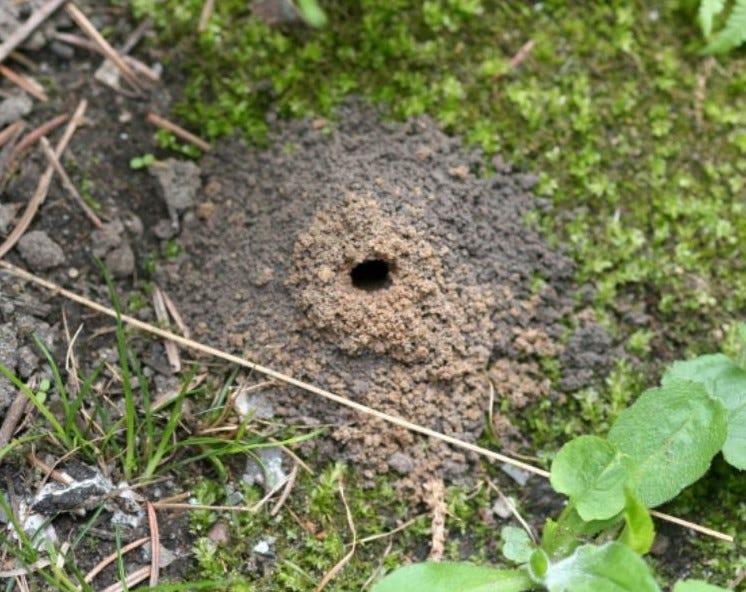
In Michigan, there are several species of bees and wasps that burrow underground leaving behind visible yet small dirt piles in yards or gardens.
“Their nest entrances are small mounds of soil a few inches across,” New Garden Landscaping and Nursey said. “While they may briefly detract from the aesthetics of a well-tended lawn, they do absolutely no harm to the grass or soil — even improving it as their nests function as aeration holes, improving the penetration of water and nutrients.”
However, bees, wasps and yellow jackets swarming around your house, especially species that are aggressive, like yellow jackets, can become a nuisance.
“Yellow jackets seem to enjoy stinging folks and unlike honeybees that can only sting once, yellow jackets can sting repeatedly,” MSU Extension warned. “Hornet and Wasp sprays are effective in killing individual wasps and much like shooting skeet, they also provide a certain amount of recreation. However, serious wasp control requires that the nest be located and treated directly.”
There are natural ways to tend your yard that are nonoptimal for ground bees to nest, including using natural repellents or frequently watering the grass.
Here’s more on ground bees in Michigan and ways to rid or preserve their underground nests:
What bees live underground in Michigan?
Ground bees is a blanket term to include many species that burrow. They can also be referred to as the following: mining bees, cellophane bees, digger bees, plasterer bees, sweat bees, leafcutter bees and mason bees, according to Michigan State University’s Extension.
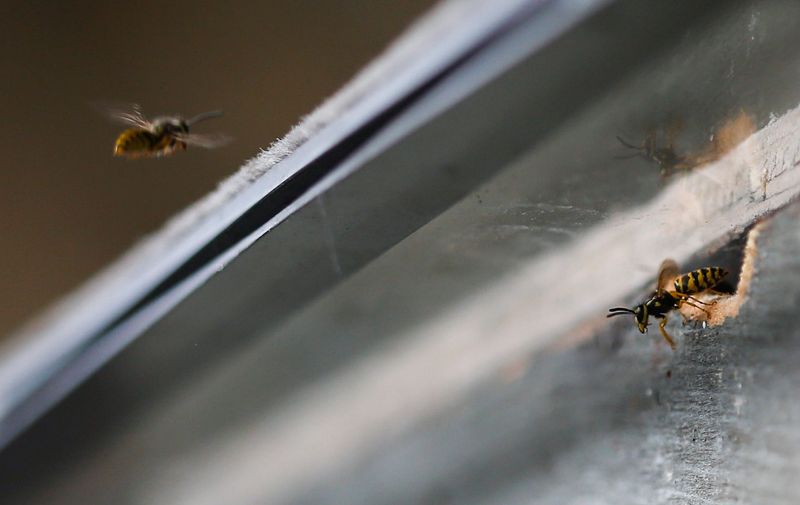
Yellow jackets also build nests underground or in the walls of homes, and the insects are particularly territorial and can become aggressive and dangerous to people nearby — especially those who are allergic to bee stings.
What is the difference between ground bees and yellow jackets?
The main differences between a ground bee and a yellow jacket is found in their behavior and appearance. Ground bees are much less aggressive than yellow jackets; and they are more solitary than yellow jackets, according to the American Pest company.
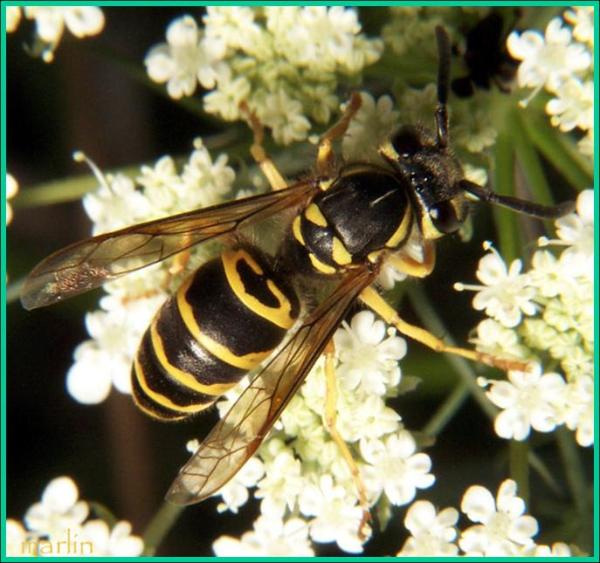
Most species of ground bees are relatively small (0.5-0.75 inches) and have darker, hairy bodies while yellow jackets are larger with prominent, bright yellow and black stripes with no hair.
In addition, yellow jackets are predators and eat pollen, nectar and other insects like spiders, caterpillars or flies, according to Zunex Pest Control, while bees mainly eat nectar and pollen.
Each type of insect is vital in Michigan’s ecosystems.
“Realizing the ecological value of ground bees, and their non-threatening characteristic, the preferable choice is to leave them alone,” American Pest said.
How do I know if I have yellow jackets buzzing around?
The German yellow jacket, Vespula germanica, is a species that commonly nests in wall voids, attics, crawlspaces and other enclosed cavities, MSU said.
The Eastern yellow jacket, Vespula maculifrons, and most other yellow jackets build their nests underground that are usually started in an abandoned mammal burrow.
Yellow jackets feed primarily on live prey such as flies, caterpillars, and other insects. Some species like the German and eastern yellow jackets will forage for meat from carcasses, garbage and picnic tables. They will also forage for sugars such as beer, fruit, sweet beverages, and the honeydew produced by aphids and scale insects. Sugars are particularly important to the new developing queens in late summer.
How can I get rid of bees living in my lawn?
Ridding ground bees from your yard can be done with natural remedies in substitution of harmful insecticide, and here’s how, according to Better Homes and Gardens:
In addition, laying down mulch (or landscaping fabric) around your garden will make it difficult for ground bees to burrow, according to The Spruce, a gardening and home improvement website.
How can I safely get rid of yellow jackets?
Since this species is aggressive, there are recommendations on how to stay safe when removing their nest, especially when thousands of them could be living underground.
According to WITT Pest Management, residents should contact a professional to remove a yellow jacket’s nest, however, if you do it on your own here’s how to stay safe:
Yellow jackets are innately aggressive because they are social insects wired to defend their nest regardless of the predator’s size, similar to fire ants or termites, the pest control company said.
Can I just plug a hole in the wall where yellow jackets are living?
Under no circumstance should a nest opening in an outside wall of house be plugged; this will only force the wasps to chew their way into the living area, MSU Extension said.
The nest opening should be caulked shut in the following spring — since yellow jackets don’t reuse nests — to prevent wasps from returning and building a new nest in this same area.
Protecting pollinators: How can I help a ground bee?
To preserve bee habitats, here are some ways to help their underground nests:
Contact Sarah Moore @smoore@lsj.com
This article originally appeared on Lansing State Journal: Yellow jackets are after your food. Here’s why and how to fight back
Reporting by Sarah Moore, Lansing State Journal / Lansing State Journal
USA TODAY Network via Reuters Connect