

By Jim Bloch

Today, the average person has less than three minutes to escape when their house catches on fire. Forty years ago, their parents or grandparents may have had 17 minutes.
Unlike homes a generation or two ago, contemporary homes are filled with synthetic materials that ignite almost instantaneously, filling the house with toxic gases and generating temperatures of 1,000 degrees Fahrenheit.

The so-called legacy homes of our parents or grandparents featured solid wood, natural cotton, wool, leather and metals that burned more slowly.
What kind of materials are we talking about?
To quote John Vaillant in his 2023 book Fire Weather, our houses are “built from petroleum products and related chemicals: shingled with tar, clad with vinyl siding, illuminated by vinyl windows, the wood itself is impregnated with glues and resins, the floors covered in linoleum, polypropylene carpeting or highly flammable laminates, lacquers or varnishes; the appliances, furnishings, clothes, toys, recreational equipment, garden furnishings, bedding and food packing – virtually all petroleum based.”
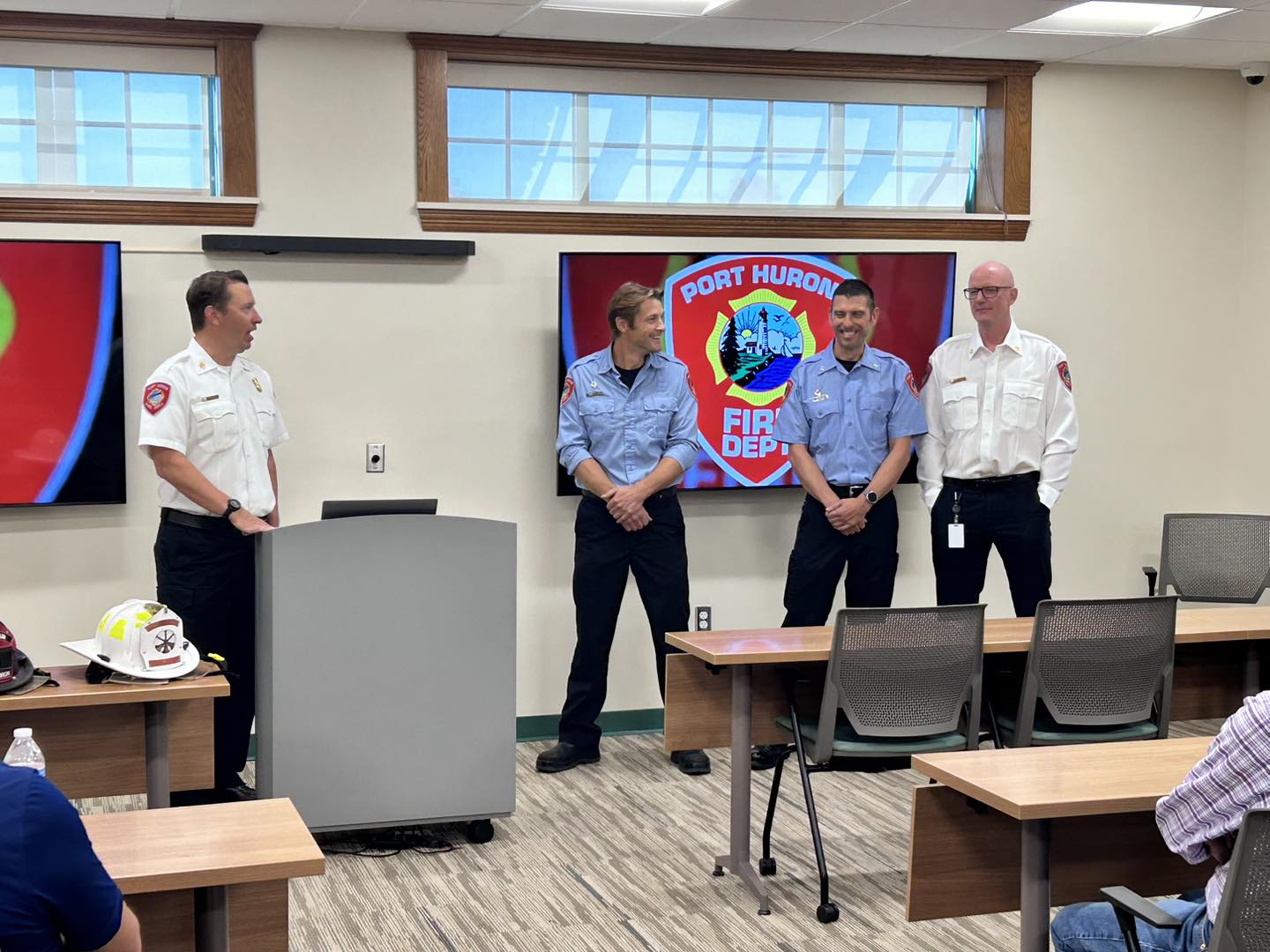
Port Huron Fire Chief Corey Nicholson promotes three fire fighters.
To watch a video on the different burn rates of natural versus synthetic home furniture, visit https://www.youtube.com/watch?v=87hAnxuh1g8.
According to the Fire Safety Research Institute, a division of Underwriters Laboratories, residents can do three things to increase their chances of surviving a home fire.
The first two are relatively well known – have smoke detectors outside each bedroom and have an escape plan known to and practiced by everyone in the home.
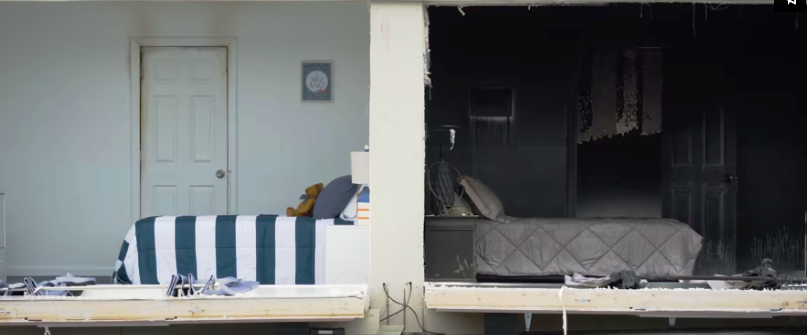
The third thing is the simplest and least known. Close your bedrooms doors when you’re asleep. FSRI found that during a fire, the temperature in a bedroom with the door closed might reach 100 degrees, allowing the person the time – and temperature — to escape; a bedroom with the door open reached 1,000 degrees or higher and filled with smokes and gases in a matter of minutes.
The Port Huron Fire Department showed a short film on the importance of keeping bedrooms doors closed, produced by FSRI, to the Council on Aging Sept. 19 as part of a Senior Safety Day. The practice is called “close before you doze.”
Only 29 percent of people sleep with their bedroom doors closed, according to FSRI.
To watch the film, visit https://fsri.org/programs/close-before-you-doze.
“Thank you at Council on Aging Inc serving St Clair County for hosting another event with us to share this important information with the community,” PHFD said on its Facebook page.
Promotions
“Big congratulations are in order,” said PHFD on its Facebook page Sept. 20. “This morning, Fire Chief Nicholson held the first promotional ceremony at Station No. 1. Family members, current and retired fire personnel, City Mayor Repp, City Manager Freed, and Port Huron PD personnel were all in attendance. Captain Johnston was promoted to Battalion Chief, assigned to C Shift. Lieutenant M. Oleaga was promoted to Captain, assigned to B Shift. Firefighter Holt was promoted to Lieutenant, assigned to B Shift. Join us in celebrating Battalion Chief Johnston, Captain Oleaga, and Lieutenant Holt on their well-deserved promotions.”
Jim Bloch is a freelance writer based in St. Clair, Michigan. Contact him at bloch.jim@gmail.com.
