

In 2008, I had the privilege of interviewing the late Dr. Dorothy Height at the Charles H. Wright Museum of African American History as she was being recognized as a Ford Freedom Award Scholar. By then, she had already earned her place among the greatest moral leaders in history.
For more than seven decades, Height, a legendary civil rights leader and former president of the National Council of Negro Women, quietly built bridges across racial, religious, political and generational divides because she understood that the health of American democracy depends not on the triumph of one group over another, but on the willingness of diverse communities to trust one another.

What stayed with me from that interview was not simply her remarkable legacy. It was her profound understanding of leadership. She believed that the highest calling of a public servant was not merely to inspire those who already stand with you, but to earn the confidence of those who remain uncertain. Because, as she told me during that interview, democracy is strengthened whenever leaders enlarge the circle of trust.
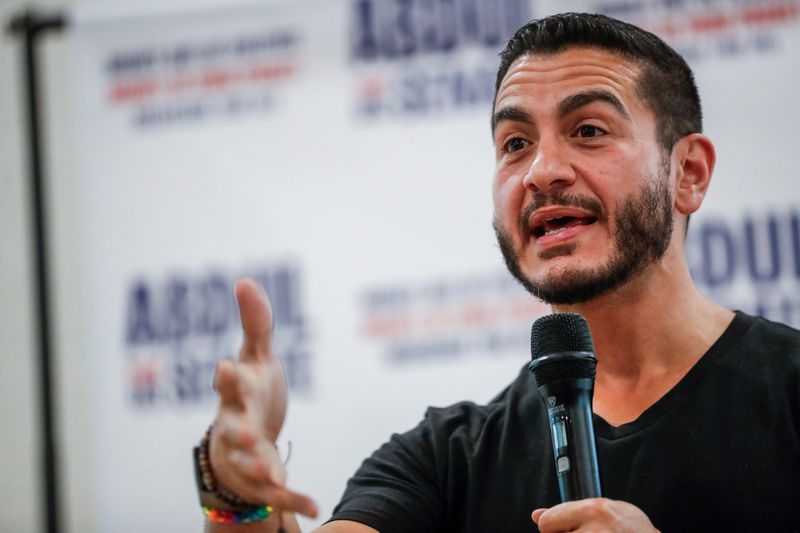
That wisdom now confronts Dr. Abdul El-Sayed, whose primary victory last Tuesday as the Democratic U.S. Senate nominee in Michigan answered the question that he is a darling of the progressive flank of the Democratic Party.
The general election he faces presents a far more consequential question. Can he build a coalition broad enough to earn the confidence of skeptical voters?
That is no longer simply a political challenge. It is a moral test of leadership.
He is passionate and credentialed. But the doubts surrounding his electability present an obligation to demonstrate that he can build the coalition required to defeat Republican Mike Rogers. He must begin with Democrats who supported Congresswoman Haley Stevens. They should not be treated as defeated members of an unworthy establishment. Progressives cannot demand unity while showing contempt for Democrats who reached a different conclusion during the primary.
A movement that intends to govern must learn to welcome people it did not initially persuade. El-Sayed must also engage Jewish voters with moral seriousness. His positions on Israel and Gaza will receive intense scrutiny, and some Jewish voters have genuine concerns about whether their fears, security and historical experiences are understood. Those concerns cannot be mocked, minimized or reflexively attributed to bad faith.
Moral leadership requires defending Palestinian dignity while recognizing Jewish pain and confronting antisemitism without qualification. Compassion cannot become the exclusive possession of one community.
The challenge with Black voters is equally urgent. Some Black Democrats remain angered that a significant number of Arab American voters in the state, inspired by the “uncommitted” movement that was boldly championed by Congresswoman Rashida Tlaib, D-Detroit, and others, withheld support from then-Democratic presidential nominee and former vice president Kamala Harris or voted for President Donald Trump in 2024.
They believe a historic Black female candidacy was sacrificed to register anger and make a point over Gaza, even though the irony of their action against Harris showed that Trump’s policies now present profound challenges to those very communities and the broader Democratic coalition. The point is that those concerns exist; they have affected trust and deserve to be acknowledged and dealt with, not overlooked.
El-Sayed should not assume that his work in Detroit automatically secures the trust of Black voters. He must enter Black communities across the state prepared to listen, confront difficult questions and help repair a breach between communities that have too often been encouraged to see one another’s pain as competing claims.
In the hours following his victory, I received calls that reflect a Democratic coalition that wants to defeat Rogers but remains deeply doubtful about whether El-Sayed can carry the entire party across the finish line in November.
After all, a political party does not grow by making its tent smaller and subjecting every potential ally to an ideological test or treating disagreements as evidence of a moral failure. It grows by persuading those who did not join at the beginning of a journey that they can still arrive at a common destination.
This is the defining challenge of El-Sayed because a coalition with crossover appeal is the strongest expression of democratic leadership and the weeks ahead will determine if his campaign can embody it.
X (formerly Twitter): @BankoleDetNews
bankole@bankolethompson.com
Bankole Thompson’s columns appear on Mondays and Thursdays in The Detroit News.
This article originally appeared on The Detroit News: Abdul El-Sayed won the primary. But can he win Michigan? | Thompson
Reporting by Bankole Thompson / The Detroit News
USA TODAY Network via Reuters Connect
By Bankole Thompson | USA TODAY Network
