GREEN BAY − Green Bay Press-Gazette and PackersNews columnist Pete Dougherty responds to reader questions on the hot topics of the Green Bay Packers’ offseason.
A better perspective on Brian Gutekunst’s drafts?

Steve from St. Charles, MO: Your article regarding the analysis of Gute’s drafts was very interesting. Do you think that if the study was limited to “All-Pro” selections, the results would be closer to average? Also, I would expect the odds of selecting an All-Pro decline as the draft progresses, presenting a greater challenge to teams that usually make the playoffs.
Pete Dougherty: This question refers to a column I wrote a couple of weeks ago about Packers GM Brian Gutekunst’s drafts coming up short in All-Pro/Pro Bowl-type players.
It’s a valid criticism of Gutekunst’s drafts. Other teams that win a lot (the Ravens and 49ers, for instance) have hit on more of those kinds of players despite not usually having high picks. The column also argued that Gutekunst has drafted well the last few years and had an especially strong draft in 2022.
But there’s a counterargument with merit that I forgot to share when I answered a question about this last week. A couple of analysts who have done leaguewide studies of the draft based on drafting position rank Gutekunst highly for his drafting.
Before I share these, let me say, there are significant flaws in any one way of evaluating drafts. There surely are flaws with these, just as there are with looking only at All-Pros and Pro Bowls. But they all have value and tell at least part of the story.
Both studies were posted on X in March.
One was by Steve Patton, an independent NFL analyst on X. In early March he posted a graph that ranked the combined 2022 through ‘25 drafts by the expected value of a team’s picks against the actual value they received, based on Pro Football Reference’s approximate-value players scores. In other words, each pick has an average approximate value, and this study measured the difference between that and what the drafted players have actually done in the league.
By that measure, over the last four years Gutekunst’s drafts rank fourth, behind the Rams, Buccaneers and Bills.
The other is from the Stick To The Model analytics website. They graded the last six drafts based on the value a team gets relative to its draft position. It ranked a team’s draft picks on hit rate, bust rate, star rate and a metric they call “draft value added.”
The methodology is opaque – we don’t know the expertise of the people choosing what category a pick falls into, for instance, and don’t define how they determined “draft value added.”
Also, the rankings will change as players from the most recent draft or two come into their own or fall off.
Regardless, they ranked Gutekunst’s last six drafts as fourth-best in the NFL, behind Buffalo, Dallas and Kansas City.
Again, these approaches have their flaws. How accurate are Pro Football Reference’s approximate value rankings, especially for positions that aren’t easily ranked by statisitcs (offensive linemen, defensive tackles, safeties, etc.)? How good is Stick To the Model at ranking those same kinds of players?
Still, their rankings track.
Patton’s looks at the last four drafts, and Gutekunst stacks up well there, starting with his excellent ‘22 draft that produced four keepers (Christian Watson, Devonte Wyatt, Zach Tom and Sean Rhyan); three players who signed free-agent deals of $10M or more a year (Romeo Doubs, Quay Walker and Kingsley Enagbare); and a seventh-round pick who became a starting left tackle, though he overplayed his hand in free agency and ended up with only a one-year deal from Carolina worth $4M plus incentives.
Stick To The Model went back two years further (that’s the Packers’ Jordan Love draft of 2020) and Gutekunst ended up in the same No. 4 spot even though Love was the only keeper of the ‘20 and ‘21 drafts combined.
Both studies say Gutekunst is doing a really good job of drafting considering where he’s been picking. He’s getting good bang for the buck.
The larger point is, there’s no single, clean metric for grading drafts. It’s safe to say Gutekunst’s later drafts have been much better than his earlier drafts. He’s drafted more than his share of good players even though he’s generally been picking later in each round. He’s come up shy hitting on elite players. And his drafting of Love was a courageous, smart pick.
If I could use only one metric, I’d use signing picks to a second contract. The league average is like 1.5 or 1.6 per draft class. That measure clearly shows Gutekunst’s drafting improvement the last four years. The ‘22 class alone has four players retained with second contracts, plus several who got good deals in free agency.
But these other measures have merit also. They all tell a different part of the story.
Some questions about this year’s draft
Rick from Brookfield: Hi Pete. If the Packers are really “all in” this season on winning a championship, how much contribution do they need from the upcoming rookie class? Is there any way to say they need “X” number of starters, or “X” number of strong special teamers? How important is this year’s draft to winning this year’s title?
Dougherty: They’ll probably need something meaningful from this class if they’re going to make a deep run. Improvement from within will be the bigger factor, but the Packers will almost surely need some new talent to help this year as well.
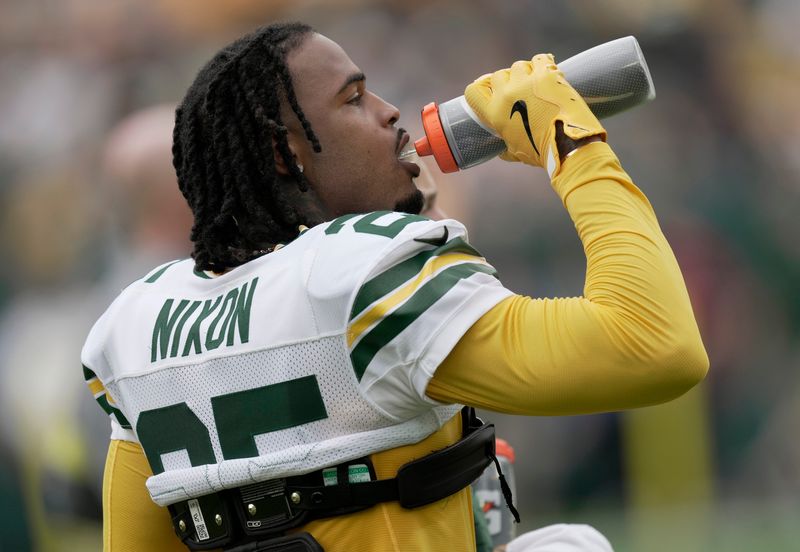
I’m thinking first at cornerback. It would help them a lot if they can draft a cornerback who’s good enough to start. Right now the best guess is Keisean Nixon and Benjamin St-Juste will be the starters, but if Gutekunst can draft a corner who could beat out one of them, that would be a nice talent upgrade at their least talented position and provide depth cushion when injuries inevitably hit.
Getting less position-specific, if a rookie can either start or be a significant rotational player at a couple of several positions (edge rusher, defensive line, running back and backup offensive lineman immediately come to mind) it would improve the Packers’ odds of making a run in the playoffs.
Tough to put a number on it though. Drafting two guys who are good enough to play a lot as rookies, either because they win a spot high up in the rotation or play because of injuries, would be doing well.
Tom: I find it laughable that people can get their hopes up for a certain player that they love because some writer said that this should be the pick at No. 52. Really? At No. 52! So much can happen in the draft that there is no way to tell who will even be available at that pick. Having said that, how big of a pool of players do you think GB is zeroing in on when their turn comes up?
Dougherty: I’m guessing the Packers can narrow the most likely pool to five or six players, because they know the players they like and don’t like, whereas we don’t.
But really, they have to be ready for numerous scenarios because, as you note, the more picks ahead of you, the more possible variations of the way the board could fall. There’s no knowing what might happen.
Scouts over the years have told me that in most drafts there isn’t much difference in the grades among the players that will be drafted from, say, 25 to 55. Those numbers can vary draft to draft, but that’s the gist.
Now, each team’s board will be different, with players dropped or raised team-by-team for any number of reasons: Health, football character, off-field character, scheme fit and different teams seeing different qualities in the same player.
Teams also don’t have the same number of grades per round as there are picks. For instance, each team generally has 15 to maybe 22 players with first-round grades. But it’s a different 15 to 22 for each team, so teams picking at the bottom of the round still have a decent chance of getting a player they graded in the first round.
The same applies to subsequent rounds, though I don’t know the number fluctuations. Picking at No. 52, I’m guessing the Packers can get someone in the top 30 or so on their board.
That alone can help them shrink the pool of players they’ll likely be considering when their pick comes up at 52. But again, because teams and scouts can see players differently, it’s hard for someone on the outside to know the players the Packers will have in their top 30.
That makes it much harder as an outsider to guess their pick when it’s as late as No. 52. I do a prediction of their top pick every year, and while it’s always a crapshoot, it feels impossible to get it right this year. We’ll see.
In any event, you never know what player they might really like that other teams aren’t as high on, and vice versa. And the Packers don’t know how the board is going to fall, so they have to be ready for numerous contingencies. They’re in draft meetings now setting their final board, and as the draft gets closer they’ll spend a lot of time going through scenarios in the second round. They have to be ready for anything.
Gerard: NFL teams can host an unlimited number of “local” draft prospects for in-person visits that do not count against the 30-player limit (top 30 visits) for out-of-town prospects. How do they define local? Is that any college within the Wisconsin borders? And do you know if they have brought in any locals?
Dougherty: For the Packers, local draft prospects attended a college within the state. Northern Illinois also is included in the Packers’ area, but I don’t know of any other schools out of state that are.
Pete in Cape Coral: Thanks again for the chat. Historically, the Packers have preferred their edge players to be on the bigger side. Do you know if new DC Jonathan Gannon prefers the same in his D?
Dougherty: Gannon still, unbelievably, has not had an introductory press conference, so no one on the Packers beat has had a chance to ask him that.
But based on his edge defenders with the Cardinals last season, he also likes them on the bigger side. His starters were Josh Sweat (6-foot-5, 265) and Zaven Collins (6-4, 270). That’s about in line with what Gutekunst prefers.
Pretty safe bet the Packers will continue to lean toward the bigger edge players. Gutekunst is very much a believer in football being a big man’s game, and especially playing in Green Bay (winter weather, natural grass) he likes big edge guys to hold up against the run.
Could Dexter Lawrence be a Packer?
George: Any chance the Packers look into Dexter Lawrence? What would he cost pick-wise, and could they afford him even if they wanted to trade the picks? Seems unlikely, but he may be the type of player they need.
Dougherty: I just don’t see how the Packers have the asset to trade for Lawrence.
They could make the contract work, that’s not the issue. He’s an outstanding player, that’s not the issue. But the Packers don’t have the draft capital to pull off this kind of deal.
Last year Dallas traded a 2026 D2 and a 2027 D1 plus a player (DT Mazi Smith) for DT Quinnen Williams. Williams, like Lawrence, turns 29 near the end of the season.
The Packers don’t have a ‘27 D1, and I find it hard to believe the Giants would take a ‘28 D1, that’s a long time to wait for the pick. Future picks count for less in trades then current picks because of the wait time. And how many good, young players would the Packers have to give up if the Giants were OK with trading for players plus a second- or third-rounder?
I just don’t see how it would work for the Packers. Plus, Lawrence isn’t young. He might have only one or two really good seasons left in him.
I don’t see how the Packers could get a deal done with the Giants. The trade for Micah Parsons basically blew out their ability to make a big trade like this for another year.
What are Lambeau naming rights worth?
Quincy Porlier: What is the maximum conceivable $$$-haul the Packers could receive from selling off Lambeau Field naming rights? As someone who grew up down the street from Mrs. Lambeau’s house, saw Johnny Blood “fall asleep” on our living room couch, and still sings “Blue & Gold” when singing the Packers Fight Song, I’d happily rename it “Temu-TicketMaster-Milli Vanilli Field” if it could buy us a couple of All-Pro cornerbacks.
Dougherty: First thing I wonder is if Porlier Street is named after someone in your family history.
Anyway, according to a story in Forbes in December, the average NFL stadium-rights deal is worth about $10M per year. The highest is SoFi at a little more than $20M per year.
It’s worth noting if (really, when) the Packers sell the naming rights to Lambeau, it almost surely will be something like what the Dodgers recently did. Their deal with Uniqlo changed the name to Uniqlo Field at Dodger Stadium. It pays the Dodgers an average of $25M per season.
Your guess is as good as mine as what Lambeau could get for a similar arrangement (company name’s Lambeau Field, or Lambeau Field as presented by company name, for instance). It’s an iconic venue, so I’d think it would get more than the NFL average.
That wouldn’t buy even one All-Pro cornerback for a season, but it would still be a big chunk of money for the Packers’ pot.
Do Packers overvalue O-line versatility?
Jim B: I believe the Packers have made a mistake by overemphasizing versatility in playing positions especially with younger players. A prime example is how they have handled their first-rounder Jordan Morgan.
First, it’s difficult enough to transition into the pro game in itself but having to learn two or three positions is difficult. Draft a good player at a position and keep him there, let him grow and excel at the position selected. The Packers in the past drafted players at one position then had them learn a different one.
Why draft a safety and try to make them into a CB or draft a DE and have them play LB? Versatility should be for backup players. I understand the versatility concept, but that comes at perhaps at a greater cost in players excelling at their chosen positions. Pete, what are your observations on this subject?
Dougherty: It’s a never-ending question. Teams always have to walk a line on these things, because they’re looking to get the best out of each player (i.e., keep him at one position), but there are limitations that go with a 53-man roster and 48-man game-day roster (i.e., versatility is a necessity).
For instance, on the offensive line NFL teams generally suit up only seven players (occasionally eight if someone is playing hurt). By definition several players have to be able to play multiple spots, including center, which is very specialized because of the snapping.
That means you have to draft versatile players. Versatility matters for starters, too, because let’s say the Packers have an injury at one of their tackles. As of today, they might prefer to move Anthony Belton to tackle and replace him with a backup at right guard. At least he’d give them the flexibility to do that because he’d been a tackle his entire college career.
And some players can move around. Zach Tom played solid to good football at every position on the line early in his career. Elgton Jenkins the same until his knee injury.
The same goes for the secondary, where you need a cornerback or two who can play outside and slot, and a couple of safeties who can play safety and the slot. Injuries are just too common in the league, and you have to be able to replace guys at a moment’s notice, or go without a starter for several weeks or more. You have to adapt to injuries in-game and week to week. Position flexibility is a must, there just aren’t enough roster spots to do otherwise.
But I get your point. Things didn’t go well for Morgan moving around. He’s a talented guy, but he’d been a tackle all his life, and he was only OK at best at guard. They moved him around because they thought it was best for the team and the way to get their five best linemen on the field under any given injury circumstances. But it hindered his development, and he didn’t play that well at guard.
I think a lesson from Morgan is that working a young player at more than two positions is a mistake unless he’s unusually versatile, like Tom and Jenkins were as a young players. You’ve got to experiment some in camp to find out, there’s almost no avoiding it. But I’d say for most young players less is more when it comes to moving them around.
What are the Packers going to do with their salary cap room?
George from SD: Seems the Packers have cleared or shifted salary cap money; do you believe this is to sign a nose tackle or sign extensions for Tucker Kraft, Christian Watson and Devonte Wyatt?
Dougherty: Probably more for the latter than former, though the money is available for all contingencies.
According to independent Packers cap analyst Ken Ingalls, the Packers have about $13.6M in effective cap room (that is, after accounting for built-in future costs such as the draft, practice squad and in-season piggybank). That gives them room for extending at least one and maybe two of the players you mentioned, and they can restructure other veteran contracts to create more space if they need it.
But there’s a real chance that after the draft they’ll need a stopgap cornerback or nose tackle, or even both. They have some money to either sign a veteran who’s still available on the free-agent market or absorb a salary in a trade. And if they need more cap space to do those extensions, they can create it. Though in Wyatt’s case, an extension probably would lower his $12.9M cap number a little even though in cash terms he’d be getting a raise.
Jeff J: Defensive tackle is one of the biggest needs for the Packers. DJ Reader seems like a perfect fit, do you think the Packers will try to sign him?
Dougherty: Reader is the kind of signing the Packers might have to consider after the draft.
If they don’t draft a nose tackle in the first three or four rounds, I could see them signing a guy like Reader after the draft. He made about $11M last year but turns 32 in July and remains unsigned, so his price should be a lot lower.
I don’t know if Gutekunst agrees, though. Maybe he’d shoot for something cheaper, or maybe he’s OK with what they already have. If they could get Reader for $5M, would they do it? I’d have to seriously consider it if I were them. But if they draft a nose tackle in the first three or four rounds, I doubt they’d have any interest in Reader or any other NT.
A long time ago former New York Giants GM George Young told a reporter I know, “Whatever you’re thinking, there’s a good chance we think the opposite.” So just because you or I think the Packers have a big issue at nose tackle doesn’t mean they agree. Or, just because you or I think Reader would be a viable stopgap for one season doesn’t mean they agree.
But yeah, if the Packers don’t come out of the draft with a defensive tackle who can play NT, then Reader is exactly the kind of player I’d be looking at if I were them.
What happens at pre-draft visits?
Pete from Marinette: I’m wondering what a pre-draft visit involves? Is there a set of drills each player must go through, are all position coaches available, are they given a tour of the facilities, etc.?
Dougherty: Draft prospects brought in for the 30 allowed visits cannot work out, so that’s not part of the visit.
They are given a tour. I don’t know if they all get physicals, but if the team wants to double-check an injury (or if the player wasn’t invited to the NFL scouting combine, and thus didn’t get a physical there), they can give them a medical examination on the visit.
I think the players usually meet with the coordinator on their side of the ball as well as the position coach for an interview. It’s a much more extensive meeting than the 15 minutes they get in official meetings at the combine, for instance.
I think the team usually teaches the player some plays and a little about the scheme, and then puts him on the white board to test his recall and understanding. They sometimes do the same with some of the player’s college videotape, ask them what happened on this play or that, or have them diagram their favorite call or two.
Why no contract details on the GM and coach?
MSF: What are the details on the extensions signed by Gutekunst and coach Matt LaFleur? Why has this not been made public?
Dougherty: We don’t know the details of the contracts because team President Ed Policy, Gutekunst and LaFleur have not disclosed them.
Teams are not required to divulge such information. Because of their public ownership structure I think the Packers should for their top two football men, as well as Policy. The Packers obviously disagree.
Remember, there’s also no clearinghouse for coach and GM contracts like there is with players.
The details of players contracts get leaked because it’s mandatory for teams to file contracts with the league and players to file their contracts with the NFLPA. Those contracts go into a database. The NFL database is available to all teams, the NFLPA database is available to all agents and players. The CBA mandates they file contracts so the league and union can monitor cap costs and compliance leaguewide.
Word on the LaFleur and Gutekunst contracts will eventually get out via agents who represent other coaches and GMs. The agents need to find out what all the coaches and GMs are making so they can best represent their clients. At some point an agent will find out and tell a reporter what he knows about LaFleur’s and Gutekunst’s contracts.
I’ve asked around and haven’t heard anything to bank on. But it sounds like LaFleur is making somewhere in the vicinity of $14M a year, and Gutekunst maybe half that. The more interesting question is how many years their deals were extended. I’ve heard from different sources either two or three, meaning they now have either three or four years on their contracts (they had one year remaining going into their negotiations). But I’d like to know which it is.
Why were Adam Stenavich and Luke Butkus retained?
Terry W: Thanks for the question time Pete. Last season saw the total offense regress to middle of the pack leaguewide. Running game not nearly as effective, Love under more pressure and lack of production in the fourth quarter. Seems much of the issue was rooted in the offensive line. So are you surprised offensive coordinator and former line coach Adam Stenavich, as well as current line coach Luke Butkus were retained?
Dougherty: Not surprised Stenavich was retained, but I really thought Butkus would be a casualty of the offensive line struggles last season.
I don’t know what went on behind the scenes, and how much say Butkus had in determining who plays where. Maybe Morgan’s bouncing around wasn’t his call, or maybe he wanted to try Belton at guard earlier but was vetoed by LaFleur and Stenavich.
But there hasn’t been the OL improvement and ability to weather injuries in recent years that we saw earlier in LaFleur’s tenure when Stenavich was the OL coach. So I thought LaFleur would make a change there. He obviously did not. That’s an important decision, we’ll see how it works out.
Why not let all 53 dress on game day?
Matt Kern: I’m curious why the NFL has a 53-man roster but only allows 48 to dress for games? Seems like an easy move on so many levels (player health, increasing travel, increasing number of games, etc.) to solve a lot of issues.
Dougherty: It’s a money-saving thing, the owners are pinching pennies.
Basically, it’s a way around having a more extensive IR list, and thus a way to pay fewer players.
If they allowed teams to dress all 53, then a team that had a lot of short-term injuries would be at a disadvantage against an opponent that had fewer. If one team had five players who couldn’t suit up because of injuries and the other only one or two, that would be a nice advantage for the latter.
And not having a short-term IR list – the minimum number of games a player has to miss on IR is four – means teams can pay fewer players. If they put a player on IR, that opens a spot on the 53, so that adds another player making the league minimum rather than the practice-squad minimum. But if he’s left inactive for a week or two or three, he remains on the 53.
Those rules are loosening up some. Each player on the practice squad now gets three game-day call-ups (and a raise that week to the league minimum salary) where they don’t count against the 53 and then can return to the practice squad.
Regardless, 53- and 48-man roster setup is a money-saving measure for owners. When the league goes to 18 games, I wouldn’t be surprised if roster sizes increase a player or two also.
Did Packers make a mistake on Quay Walker?
McKeough: Should Quay Walker have gotten the fifth-year option?
Dougherty: In a word, no.
That option was $14.7M. Walker is a talented player who brings a nice element of speed to the middle of a defense. But as we saw again late last season, there’s still too much of a hit-and-miss element to his game. Something is missing to make it worth paying him that kind of money.
He excels at making plays in the flats and coming up from pass drops to tackle checkdowns and short throws in front of him. He’s a decent blitzer. But he doesn’t trigger fast against the run (unless he’s blitzing) and gets lost too often in coverage to be a $15M player.
Do Packers need a new look?
Jimbo: Hi Pete, should the Packers update their uniforms? A fresh look wouldn’t hurt!
Dougherty: In a word, no.
Their uniforms are iconic. They date back to the Lombardi era, which is the most successful stretch (five titles in seven years) for a team in NFL history. They’re too much a part of the team’s identity to change in any significant way. The Packers are all about tradition and legacy. It’s who they are.
And mercy on the CEO who attempts a uniform change. Probably the biggest fan uproar of Bob Harlan’s tenure was when word leaked out that Ron Wolf was looking at mockups to change the Packers uniforms to something similar to Notre Dame’s navy and gold (similar also to iterations of Packers uniforms early in their history).
A large segment of fans were apopleptic. Harlan was inundated with so many outraged calls and letters that he shut down Wolf before the process picked up steam.
Is NFL expansion anywhere near?
Kevin: Do you think expansion will come up for the NFL? If so, what markets do you think they’d look at – and when?
Dougherty: There was the recent news that NBA is looking to add Las Vegas and Seattle, but there’s zero buzz for North American expansion for the NFL as far as I know.
The higher priority by far is getting to 18 games. Wouldn’t be surprised if that happens as early as 2027 or ‘28.
I think the league is still trying to figure out how it can expand to Europe rather than in the U.S. There are major logistical issues: The long flights, the need for a U.S. base for each European team to conduct workouts, etc. There’s just a lot there to work out.
I think the NFL is hoping that supersonic flying returns soon. Several companies working hard on making supersonic planes that don’t create as much of a sonic boom, which is one of the main reasons supersonic flying died out, along with making them more efficient to improve profit margins. If those issues are overcome, it could cut the travel time to Europe in half and make expansion to Europe more viable.
One line of thinking has the league adding a four-team European division. But then it would have to realign the other divisions to create an equal number of teams and divisions in each conference.
But I think that’s still the league’s hope. Europe is very much an untapped TV market, and having four teams there is a potentially big new revenue stream, more than they could get by expanding in the U.S. When I was asking a few people around the league about this a couple years ago, the sense was expansion to Europe could happen within maybe a decade. Don’t know if that’s still viable or if it’s further off. But I can’t say I’ve heard anything about expansion in North America.
This article originally appeared on Packers News: Pete Dougherty has answers on 2026 NFL Draft, Lambeau naming rights
Reporting by Pete Dougherty, Green Bay Press-Gazette / Packers News
USA TODAY Network via Reuters Connect