This story has been updated with additional information.
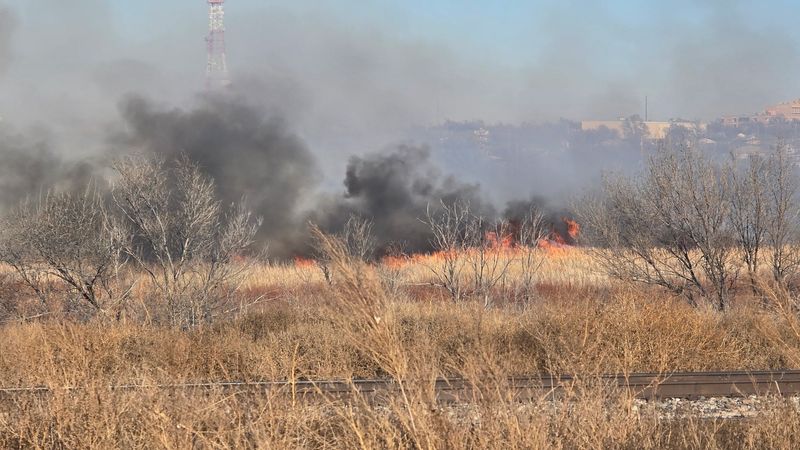
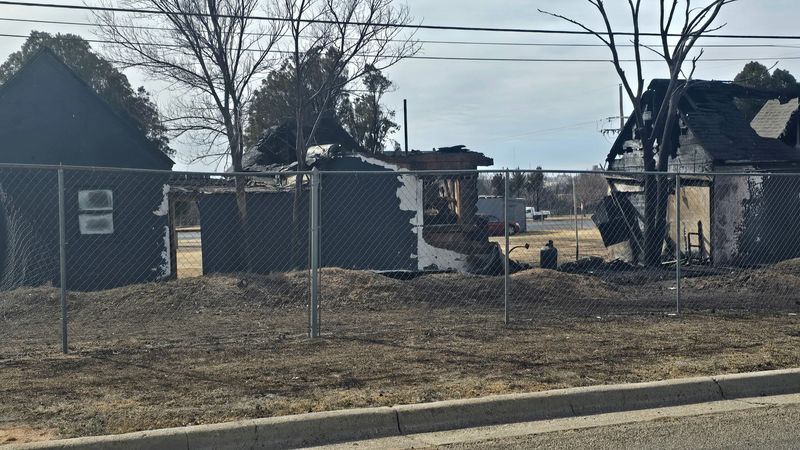
A wind-driven grass fire that burned about 60 acres near Amarillo Boulevard and North Hughes Street, according to the Texas A&M Forest Service, damaged two structures and forced evacuations Monday afternoon, sending thick smoke across downtown and triggering a large multi-agency response that included aerial firefighting inside city limits. The blaze is now under investigation as suspected arson, officials said.

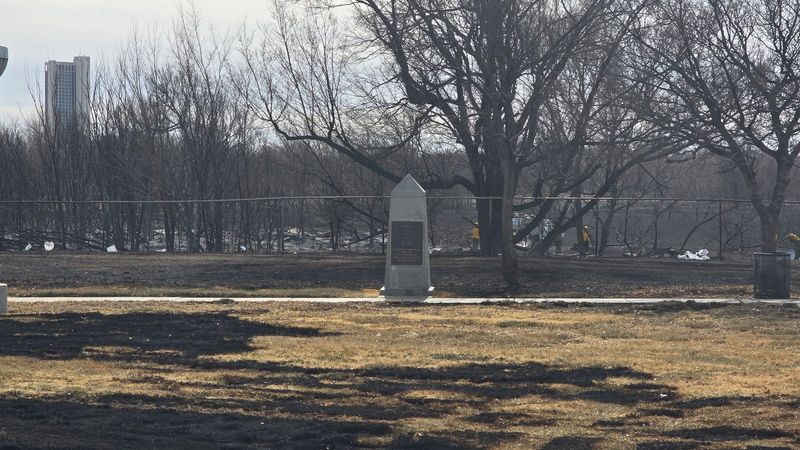
The Feb. 9 blaze, referred to as the Wildhorse Fire, ignited near a dried lake bed adjacent to Martin Luther King Jr. Memorial Park and was reported at 12:39 p.m., with Amarillo Fire Department crews arriving within five minutes, officials said.
What began as an outside brush fire quickly escalated under Red Flag conditions. Sustained south winds of 20 to 30 mph, with gusts reaching 40 mph, pushed flames north through heavy fuels that included brush, mature trees and debris.
As conditions intensified, the fire crossed Amarillo Boulevard and began impacting structures north of the roadway, prompting commanders to request additional resources and state assistance.
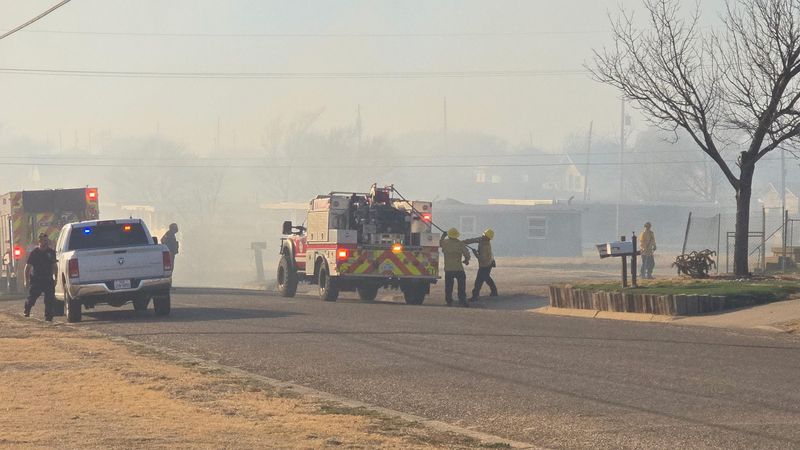
Smoke was visible from downtown Amarillo as the fire intensified. Amarillo Boulevard and parts of the surrounding North Heights neighborhood were engulfed in smoke at the height of the blaze. Residents were seen spraying their homes with garden hoses in an effort to prevent wind-driven embers from igniting structures.
Areas of North Heights were evacuated as a precaution, according to officials.
Crews conducted structure protection operations around North Heights School, and Amarillo ISD coordinated precautionary movement of students as a safety measure.
The fire comes as the Texas Panhandle enters peak wildfire season amid continued dry and windy conditions.
Rapid growth and terrain challenges
Amarillo Fire Chief Jason Mays said crews initially believed they were gaining control before debris ignited and shifting winds fueled a second surge.
“We had a moment where we felt good about what we had,” Mays said. “But when those heavy fuel sources caught, especially old tires and debris, it sparked a second round. With winds like that, once you get open flame, it’s going to move quickly.”
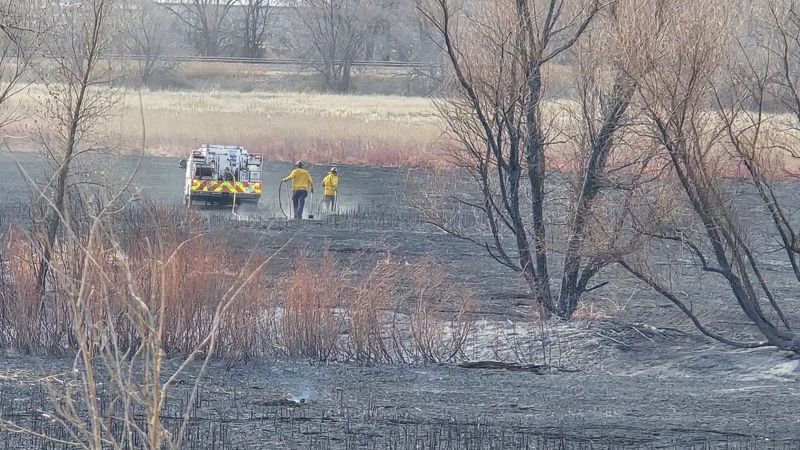
The burn area posed significant challenges for crews. The fire spread through tall grass in an old lake bed that contained hidden obstacles, including concrete, heavy timbers and discarded tires.
“All of that made it difficult for us to get to some of the spots where the fire was,” Jason Love, the fire department’s community liaison, said. “The grass was really tall, so we didn’t always know what was underneath.”
Utility companies, traffic control, and railroad officials coordinated closely with Incident Command throughout the incident, the fire department said.
Soft, marshy ground and dense vegetation limited access for engines in parts of the area, prompting officials to request aerial assistance.
Unified command and aerial support
The fire was managed under unified command between the Amarillo Fire Department and the Texas A&M Forest Service, with additional resources deployed through the Texas Intrastate Fire Mutual Aid System, known as TIFMAS.
Juan Rodriguez of the Texas A&M Forest Service said engines from departments across Texas responded under the system.
“That’s why you’ll see engines from places like Ennis, San Angelo or Odessa,” Rodriguez said. “They’re operating with us under TIFMAS.”
Rodriguez said it is unusual for the Forest Service to be called into a fire so deep inside city limits.
“But there was enough vegetation and fuel load here to create a significant wildfire that threatened neighborhoods and infrastructure,” he said.
Two aircraft staged out of Borger made multiple retardant drops after the fire made what officials described as an “active run” north around 3:30 p.m.
“It’s unusual to see air tankers dropping retardant inside city limits,” Rodriguez said. “But once they established that retardant line, our engines were able to reinforce it.”
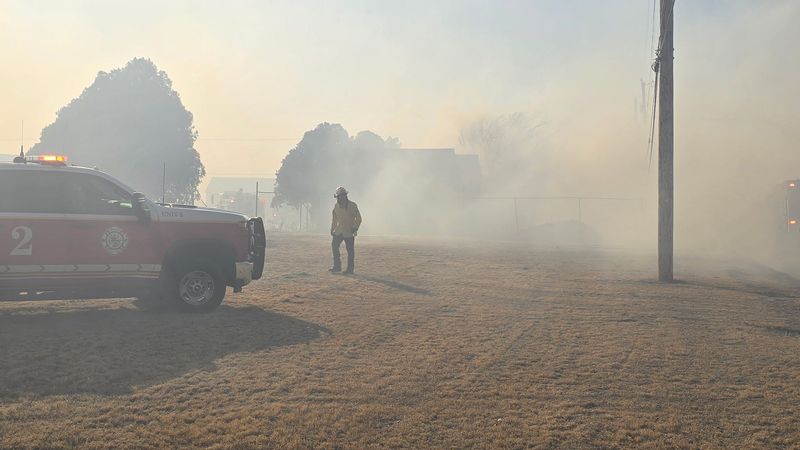
At its peak, more than a dozen Amarillo fire apparatus and multiple command units were deployed, in addition to state strike teams. City motor graders and heavy equipment were used to establish fire breaks and improve access in difficult terrain.
Crews battled the fire into the evening and remained on watch overnight for flare-ups and rekindles. The following day, crews moved back into the burn area to eliminate lingering hot spots and ensure containment lines held.
Structures lost, containment and water pressure
Two structures were lost, officials said. It was not immediately clear whether the buildings were occupied.
No civilian injuries or fatalities were reported. Amarillo Medical Services evaluated and transported one firefighter who was injured during the incident. Officials did not release details about the extent of the injury.
Love said water pressure was not a concern during suppression efforts.
“The water department brought extra pumps online to boost pressure in this area,” he said. “Grass fires are different from house fires. We don’t fight them from hydrants — we use hydrants to refill our trucks, which carry large tanks.”
Xcel Energy coordinated precautionary power shutoffs in the area to reduce hazards from energized lines. Multiple roadways were temporarily shut down during the incident to ensure public and responder safety.
By Tuesday, Feb. 10, officials estimated containment between 85% and 95%. Winds had shifted from the north, forcing crews to reassess containment lines and monitor lingering heat in heavier fuels such as trees, yucca and cactus plants that can retain embers.
“Our priority now is making sure those lines hold,” Rodriguez said Tuesday. “We’re watching remaining heat closely.”
Arson investigation underway
The Amarillo Fire Marshal’s Office is investigating the blaze as suspected arson.
“The fire marshal’s office has received some information that leads them to believe this may have been an arson-type fire,” Love said. “We can’t talk too much about it because it’s an open investigation, but we are investigating this as an arson at this time.”
Love said investigators must be certain before officially determining a cause.
“There are so many factors that play into that,” he said. “It could have been terrain. It could have been someone cooking on an open fire. It could have been electrical. Until we can say 100% what we know, we don’t want to give a cause.”
No arrests have been offically announced in the investigation.
A stress test for the system
Amarillo Mayor Cole Stanley said the location of the fire near the heart of the city made the incident especially concerning.
“A grass fire in the middle of Amarillo is kind of unique,” Stanley said. “With high winds and dry conditions, something like that can get out of hand quickly.”
Stanley credited preparation and coordination for preventing more significant losses.
“You saw small planes attacking that aerially. You saw TDEM roll out. You saw preparation from OEM,” he said. “That’s why it stayed contained to that field area and didn’t spread into a housing project or another side of town.”
Mays said the response served as a real-world stress test of Amarillo’s emergency system.
“You test that system under stress and realize those relationships are healthy,” Mays said. “Everybody was communicating efficiently.”
Wildfire season reminder
Officials emphasized that wildfire risk extends beyond rural areas.
“This happened almost downtown,” Rodriguez said. “Wildfire risk doesn’t stop at the city limits.”
Authorities urged residents to maintain defensible space around homes and report suspicious activity.
This article originally appeared on Amarillo Globe-News: Officials outline response, arson probe in 60-acre Amarillo fire
Reporting by Michael Cuviello, Amarillo Globe-News / Amarillo Globe-News
USA TODAY Network via Reuters Connect