Legends, lore, and other tales often have a basis of truth. A common, close-to-home example that is based upon an animal exists in American folklore. However, the folklore and related activities have greatly overshadowed their factual basis.
So much so that, if you ask most folks about this animal and associated rituals, you’ll promptly be told that the critter doesn’t exist!

However, we will discuss this rather delightful, mysterious beast and explore a few possible reasons for its folklore. Therefore, without further ado, we shall proceed upon a Snipe Hunt!
Snipe hunts of yore
Let’s begin by explaining the folkloric ritual, or right-of-passage, that comes to mind when proposing most snipe hunts.
Individuals subjected to a snipe hunt are usually engaged in a nighttime activity wherein designated hunters and/or initiates are taken to an outdoor location and provided with a paper or plastic bag, pillowcase or some other type of sack and are instructed to patiently wait while the remaining participants drive the quarry toward the hunter for capture in the bag.
The snipe may be described as a type of bird, reptile, mammal, furry or predatory animal, or a more fantastic beast.
Sometimes the hunter or initiate is instructed to perform bizarre actions or calls to attract snipes. Afterward, the remaining group members quietly sneak away in the dark and leave the snipe hunter literally “holding the bag” while waiting for a nonexistent animal’s appearance.
I was surprised to learn that this folklore and activity is not a new practical joke in North America, but it has been practiced since at least the 1840’s. In other words, the tradition of snipe hunting has existed so long that it has essentially become synonymous with wild goose chases or fool’s errands.
I admit being somewhat surprised when discovering the snipes I believed imaginary actually existed.
Real life snipes
Indeed, Wilson’s snipes are migratory birds throughout Texas and Oklahoma and are winter residents within the eastern two-thirds of Texas, particularly Texas’ southern half. However, because of their morphology, ecology and adaptations, snipes tend to be infrequently sighted and less reported than other avians.
These characteristics only enhance the folkloric nature of these rather solitary, elusive birds.
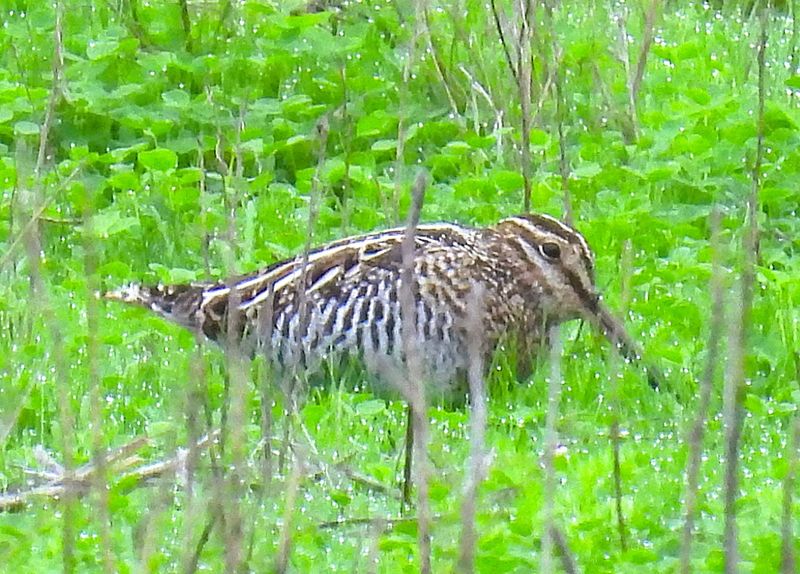
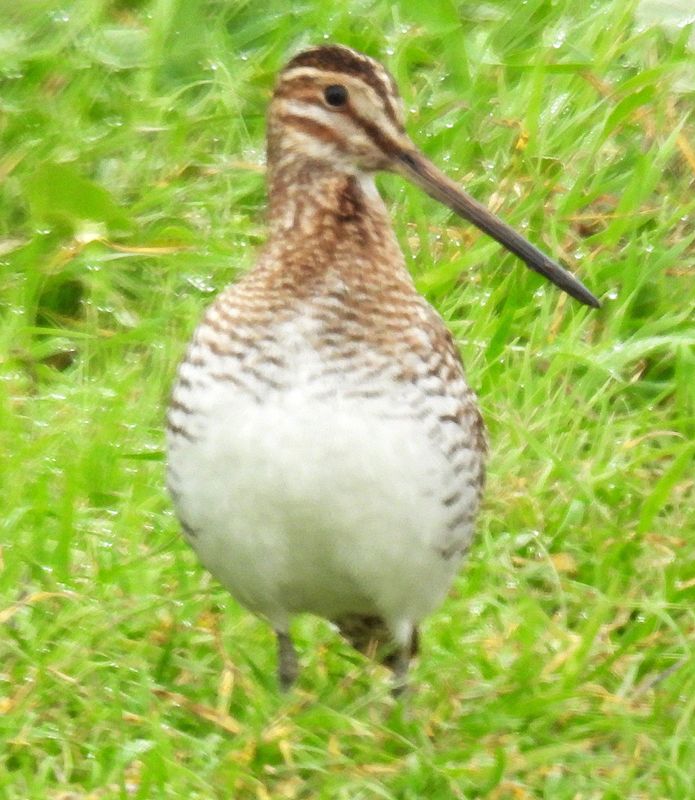
Wilson’s snipes are unflatteringly described as medium-sized, dumpy or pudgy shorebirds with short legs and long, straight bills. The snipe’s dark bill is several times longer than its round head, and snipes have short tails.
Wilson’s snipe also has three broad, dark, lengthwise, dorsal body stripes and an intricate pattern of dark streaks, spots and bars on body and wings with a white belly and dark underwing. The snipe’s eyes are located in a superior, posterior position and confer an almost 360-degree field of vision. Snipes can literally see behind their back without turning their head.
How a snipe hunts
Snipes are usually found along edges of wetlands, ponds, low meadows, flooded fields and weedy marsh habitats. Their intricate color patterns provide excellent camouflage within the preferred muddy, vegetated foraging areas, and snipes most frequently forage during dawn and dusk hours or during cloudy days.
The birds search for a variety of insects and larvae, and their diets also include snails, crustaceans and worms. Small fish, reptiles, frogs and nestling birds are occasionally consumed. Snipes use their long, sensitive bills to probe wet soil in a slow, sewing-machine-like motion, and they can swallow small prey without completely removing their bill from the mud.
Whenever the snipe’s bill is submerged during foraging, the birds’ eye placement and ability to see rearward and skyward are an advantage in avoiding potential threats. Whenever a threat is perceived, snipes tend to squat toward the ground and remain motionless, relying upon their plumage colors and patterns to effectively blend into their surroundings.
How a snipe escapes
When startled into flight, the reason for the snipe’s dumpy or pudgy appearance is revealed as another excellent adaptation. Its overweight appearance is caused by greatly developed flight muscles that allow the birds to attain flight speeds of 50–60 mph.
When flushed from cover, the birds emit a sharp, rasping “scaip” or “escape, escape” call and engage in erratic, zigzag flight patterns which provide effective evasion from most predators and human hunters.
In fact, the British first coined the term “sniper” for individuals skilled enough to consistently shoot down these crafty birds during flushing escape flights. Although snipes may be legally hunted in several states, few individuals are dedicated or skilled enough marksmen to effectively pursue these birds.
Snipes and their chicks
Breeding habits of snipes are somewhat unusual. The birds breeding range is primarily located in the western and the far-northern United States, much of Canada and Alaska.
During spring breeding season, primarily male snipes perch on trees, fenceposts, or other objects and utter melodious “wheat, wheat” calls and engage in nighttime, winnowing display flights wherein the tail feathers are spread to produce a distinctive, ghostly, winnowing sound described as a low whistle or ululation of “huhuhuhuhu … .”
Nighttime flights and calls probably contributed to the snipe’s folklore because snipes were hunted at night by using strong lights to temporarily startle and blind the birds.
Snipes usually lay four eggs in a grass-lined, ground scrape nest that is often surrounded by water, sedges or other vegetation. Snipe chicks are precocial and leave their nest within the first day. Parents engage in another adaptive behavior by separating after chicks are hatched.
Each parent assumes responsibility for raising two chicks. This divides the brood and lessens chances that all young will be killed by a single predation event. Similar to many other shorebirds, snipe parents will attempt luring predators away with broken wing displays.
No joke
Snipe hunting or viewing can be a real activity and not simply a practical joke.
The birds’ secretive nature, ghostly winnowing noises and nighttime activities probably initiated its folkloric reputation and subsequent games. However, these mysterious birds winter in our region and migrate through in spring and fall.
Therefore, by all means, engage in a snipe hunt whenever you have the opportunity!
Jim Goetze is a retired professor of biology and former chairperson of the Natural Sciences Department of Laredo College with an avid interest in all aspects of the natural world. He can be contacted at gonorthtxnature@gmail.com.
This article originally appeared on San Angelo Standard-Times: A mystery creature found | Opinion
Reporting by Jim Goetze, San Angelo Standard-Times / San Angelo Standard-Times
USA TODAY Network via Reuters Connect