An Ohio photographer made an adorable discovery when he found an infant deer with an extremely rare color combination.
In a June 2 Facebook post, Cleveland-based Gabe Leidy Photography shared photos and a video of the piebald fawn with its mostly white coat of fur peppered with some brown hiding in grass near a tree. “Once in a lifetime opportunity today! Check out this precious baby piebald White-tailed Deer,” the video’s caption reads.

The color combination is the result of recessive traits that both parents must carry, according to National Deer Association, making it rare. And it is often an indicator of other genetic conditions.
Rare piebald fawn spotted in Northeast Ohio
The fawn was spotted in a grassy area near a church in Lorain, west of Cleveland, Fox 8 News reports. In his Facebook post, Leidy said he stayed at a distance and watched the infant strike some adorable poses, including an attempt to stand. The mother later returned and moved the youngster.
Piebald deer are born with a genetic condition that causes white hair, in both small or large amounts, to mix in with the animal’s usual brown coat, according to the deer association. It affects less than 1% of deer, though it can be higher in certain regions because of hunting restrictions on deer with the condition. The National Deer Association states that approximately 1 in 1,000 deer across the whitetail’s range are piebald.
Some piebald deer also carry severe deformities, the association continues, because the same set of genes control other physical traits. Deformities can include crooked legs, hooves and spine, a shortened face, and dwarfism. Some piebald deer born with the most extreme deformities only live a few hours.
What to do if you see a fawn alone
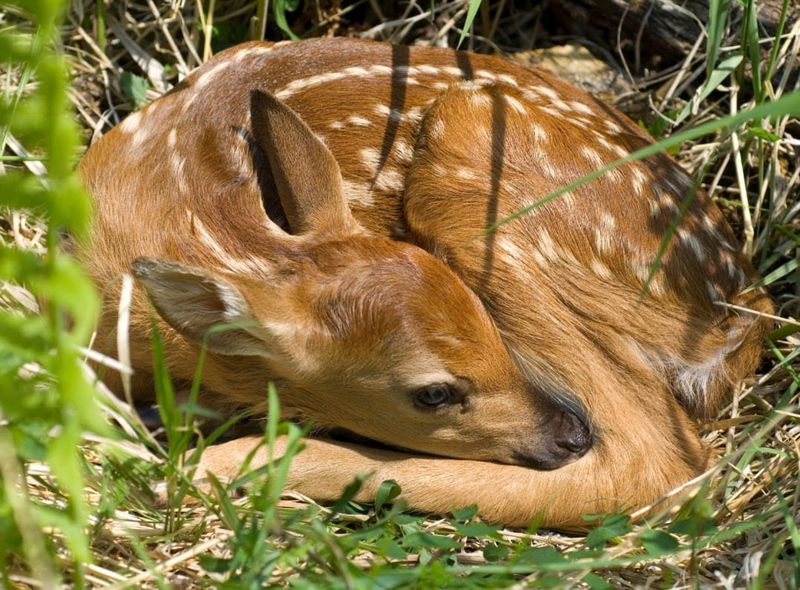
Fawn season runs through late July, and mother deer often leave their babies alone as a way to protect them. Fawns have almost no scent, so they’re safer from predators hidden away as the mother forages. Hiding spots can include flowerbeds, backyards and even garages.
The Ohio Wildlife Center says that most baby deer seen alone do not need help. It urges people to leave fawns alone unless there are clear signs of distress, such as crying, approaching people, being covered in flies, showing signs of dehydration, or being found next to a dead adult deer.
In those cases, people are urged to call the center for guidance.
This article originally appeared on The Columbus Dispatch: Less than 1% of deer look like this, and one was just spotted in Ohio
Reporting by Chad Murphy, USA TODAY NETWORK / The Columbus Dispatch
USA TODAY Network via Reuters Connect
By Chad Murphy, USA TODAY NETWORK | USA TODAY Network