Editor’s note: This story originally ran April 7, 2020, to mark the 30th anniversary of Ryan White’s death.
The trampled grass in the front yard of that modest home in Cicero was a collage of footprints. No way to decipher which belonged to the pack of hungry reporters or teary-eyed teenage friends or the shiny black boots of Michael Jackson.

A red Ford Mustang, his Mustang, sat blanketed in flowers, people walking by to place lilies, tulips and carnations, a beautiful cascade from the hood to the front bumper to the ground.
His mother, Jeanne White, walked toward the house, Jackson behind her like a bodyguard with his hand on her shoulder, the scene unfolding before her in a blur.
Earlier that morning at 7:11 Sunday, April 8, 1990, Ryan White had died inside Riley Hospital for Children. His mom, sister Andrea and Elton John were by his side.
In the next day’s newspaper the front page headline read: “Ryan loses fight against AIDS.”
He was known around the world simply as Ryan, a fresh-faced 13-year-old boy with doey brown eyes, stricken by a disease that most people at the time thought plagued only gay men and IV drug users.
Ryan became the face of an entirely new population of people contracting AIDS and, for many, it was a face that terrified them. Acquired immunodeficiency syndrome caused a severe loss of the body’s cellular immunity, greatly lowering the resistance to infection. People were catching the virus and dying months later.
In Ryan’s nearly six-year fight with AIDS, contracted through a tainted blood infusion he received as a hemophiliac, he battled discrimination and accusations, saying once that he was treated as a “teenage pariah.”
Ryan and his family were the the butt of jokes, target of vandals and he was the victim of vicious rumors. “Sheer panic surrounds me,” he said.
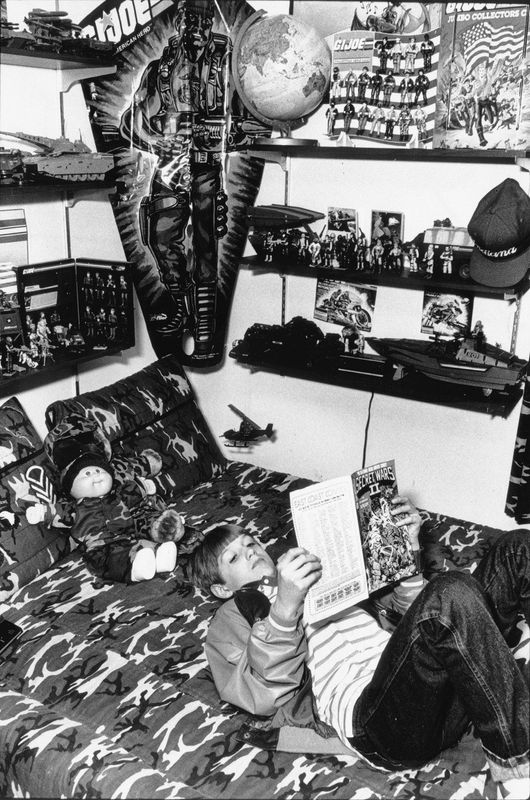
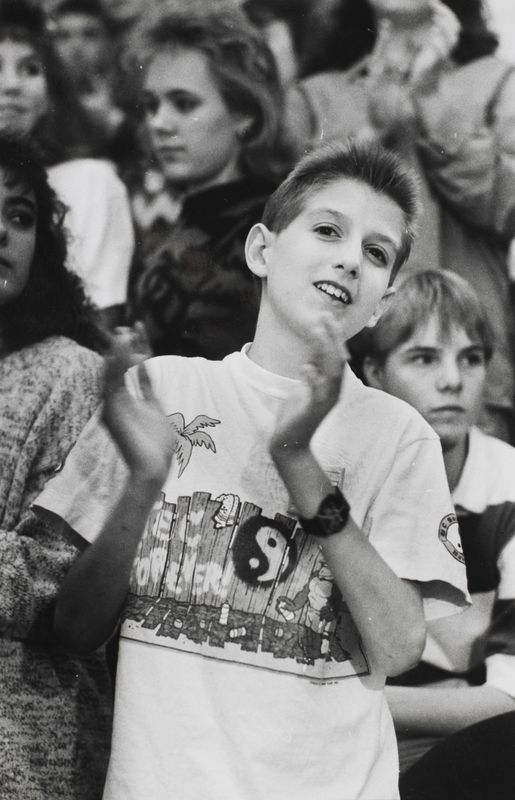
All Ryan wanted was to do the things normal teenagers did. Go to school. Eat in the cafeteria. Shake hands at church. That was his crusade.
So, with the maturity of a person three or four times his age, he crusaded. He fought schools to be treated fairly, starred in a made-for-TV movie of his life story, testified in Washington, inspired fundraising and became the namesake of legislation enacted in 1990: the Ryan White Comprehensive AIDS Resources Emergency (CARE) Act. It called for federal funding of AIDS education, research and medical care.
Ryan died at 18, robbed of decades by the virus, but he died with many lifetimes’ worth of impact behind him.
If he had contracted the disease even a few years later, when AIDS was not a death sentence but a chronic illness that could be treated, Ryan likely would still be alive. He would be 48.
And yet, perhaps Ryan was here exactly when he needed to be, say those who knew him. To open the eyes of the world to what AIDS really was.
“Here comes Ryan who is not afraid to speak out and not the face they expected to have AIDS,” said Elaine Cox, chief medical officer at Riley, who was a fourth-year medical student at the hospital when Ryan died. “It was a moment of just stark education of the public that this was not the disease they had formed in their mind. This was something different.”
March 28, 1990: ‘Come home’
Dr. Martin Kleiman’s pager went off.
“We need to take this,” he told Cox. “It’s Ryan…and he’s bad.”
Ryan was in California where he had hosted an Oscars afterparty with former president Ronald Reagan and his wife Nancy two days before. His health was declining. Still, Ryan tried to stay cheery, telling the Reagans about his date to the prom and his dreams of going to college.
On the phone with Ryan that day, Kleiman listened. Cox will never forget the words exchanged between them.
“I want to come home,” Ryan said.
“Yes. You need to come home,” Kleiman told him.
“He was getting sick and he wanted to be with Dr. Kleiman,” Cox said. “Ryan felt comfort with Dr. Kleiman. He had been Ryan’s biggest advocate.”
Inside Riley on March 29, Ryan settled into a room. A team was ready to go in, but Kleiman wanted to do this alone.
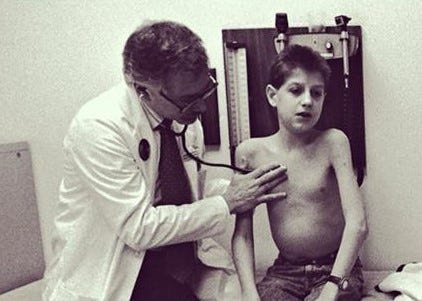
“He went in, put in his IV, took his blood and took care of him,” Cox said. “Ryan and Dr. Kleiman and the family were so incredibly bonded and things were not going well. Dr. Kleiman was so protective of him.”
He was protective of Ryan because this doctor had been there from the beginning. He had been the man who had to tell a 13-year-old boy, just one week before Christmas, that he had AIDS.
Dec. 17, 1984: The diagnosis
He was tiny, six days old, when his health battles began. Ryan was diagnosed with severe hemophilia, a condition in which the ability of the blood to clot is critically reduced, causing extreme bleeding, even from a slight injury.
Doctors prescribed the soon-to-be approved Factor VIII, a treatment for hemophilia that was a blood-clotting protein.
“We thought it was a miracle drug,” Ryan’s mom, now Jeanne White-Ginder, told the Toledo City newspaper in November. She did not respond to multiple requests from the IndyStar. “Hemophiliacs used to be crippled by the time they were 9 or 11 years old, and Factor VIII seemed to keep him from having a lot of issues. But, what we didn’t know at the time, was that the drug we thought was saving (lives) was going to be the drug that later took their lives.”
When exactly Ryan received the contaminated dosage of Factor VIII is unknown, but that batch was later found to have infected 6,000 to 10,000 hemophiliacs in the United States with HIV.
Around his 13th birthday in 1984, Ryan started feeling sick and weak. His temperature spiked. He vomited blood.
Inside Riley on Dec. 17, 1984, Kleiman told the Whites that Ryan had AIDS. His T-cell count was 25. The T-cell count of a healthy individual is 500 to 1,200.
White asked the doctor how long her son had to live. Most AIDS patients, he told her, lived just months.
Spring, 1981: The fear
A harrowing, new disease had exploded in the gay communities of San Francisco, New York and Los Angeles. It destroyed people’s immune systems, allowing infections that were typically harmless to kill them.
The cause was a mystery, and lack of knowledge ignited fear and stigma. San Francisco police officers wore masks and gloves to protect themselves from gay men, the Associated Press reported.
“The poor homosexuals,” Pat Buchanan wrote in the New York Post in 1983. “They have declared war on nature and now nature is exacting an awful retribution.”
But as time went on, AIDS began killing hemophiliacs and injection drug users, as well as their partners and newborns. And it was spreading worldwide.
Ryan wasn’t the only child or teen with AIDS in 1984. There were others, but most weren’t speaking out, Cox said.
“You have to remember in that time people were afraid to say they had it,” said Cox. She once had a teenage patient who let their entire high school think they were dying of cancer because they didn’t want anyone to know they were dying of AIDS, she said.
Few knew anything about AIDS, even experts of the time, said Richard Schreiner, who was the physician-in-chief at Riley when Ryan was at the hospital.
As Ryan continued to live year after year, some in the medical field became skeptical of his diagnosis, Schreiner said.
Cox said it is still not known why one person’s body reacts to a disease or a medication a certain way, while another person’s reacts differently. She does believe Ryan got the best possible care at Riley.
“Dr. Kleiman pushed every button, pulled every lever there was for treatment at the time,” she said. “He would see things and say, ‘Well, let’s go look it up.’ He’d pull the big books down and look it up. He would call other doctors all over and ask, ‘Where have you had success?'”
And while the medical field was beginning to become educated about the spread of the disease and learning ways to treat it, in most parts of the country, fear was still rampant.
In Kokomo, Ind., where Ryan lived at the time, it certainly was.
March 3, 1985: The world finds out
Ryan was too sick to go back to school after his December diagnosis, but by spring he was feeling better. His mom called Western Middle School in Kokomo to see if he could come for a visit.
School officials told her no, that it wasn’t safe for other students and staff. White was unhappy, but Ryan was devastated. White turned to the courts, filing a lawsuit against the school system.
On March 3, 1985, having discovered those court records, the Kokomo Tribune ran a story: “Howard County youth diagnosed with AIDS.” News wires picked it up and Ryan became one of the first children in the United States to be known publicly to have the disease.
“His mother was very open about his problem. She wasn’t trying to hide anything,” said Howard Eigen, who was the director of the intensive care unit at Riley during Ryan’s stay. “And it just struck a chord with everybody.”
Ryan was the unlikely AIDS patient, “totally innocent of having done nothing other than have a disease that requires a transfusion,” Eigen said. “He showed people no matter how good you are, how careful you are, how innocent you are, something bad can happen to you and it did.”
Media latched on to the story of Ryan, converging outside the Whites’ home, sometimes knocking on the window of his bedroom. While at home, banned from school, Ryan was miserable. He continually asked his mom when he could go back.
Parents of Ryan’s classmates started petitions and protests fighting against Ryan’s return to school. It infuriated White, who knew her son was no danger to them.
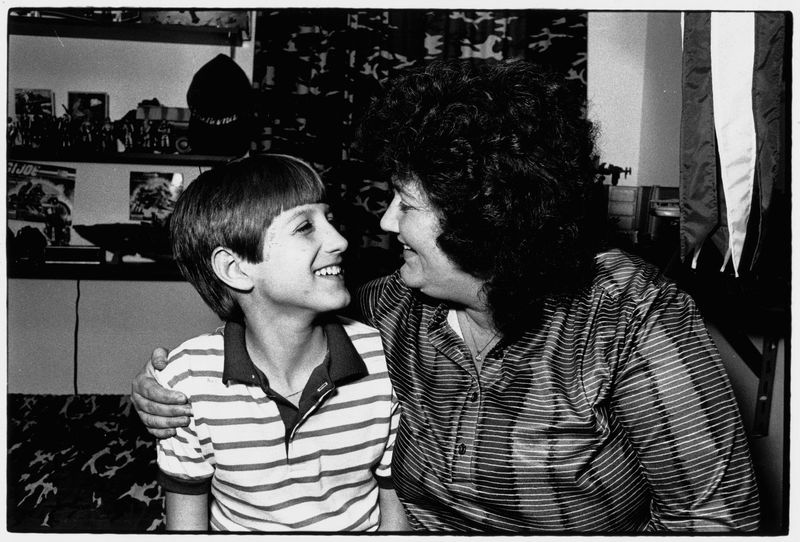
And yet, White said, she saw her son show patience and kindness toward people who were cruel to him.
“I asked him why he didn’t get mad at what people were doing and saying,” White said in November. “And he’d say, ‘Oh mom, they’re just trying to protect their own kids like you’re trying to protect me.'”
After months of court battles, in February 1986, the Indiana Department of Education appeals board ruled Ryan should be allowed to attend school as long as he was cleared by Howard County health officer Alan Adler.
Adler paved Ryan’s way back to school, saying that as long as certain precautions were taken, he posed no threat to other students and staff.
Kleiman stepped up, too.
“This is not fair. This is not just. This is not right,” he said at the time. “There is no reason this kid cannot go to school.”
And yet, when Ryan returned to school, half of his classmates were missing.
Feb. 21, 1986: The empty halls
The day was odd. Ryan, now a 14-year-old seventh grader, left his Kokomo home eager, looking forward to being back at Western Middle School.
Inside, he took a test in math, always his best subject. He told a Chicago Tribune reporter, who was there to follow him back to school, that he was treated ”just like anybody else.”
Students welcomed and surrounded Ryan in his health class, teacher Ruth Dougherty said at the time. ”They didn’t pull away from him. It was like he is the new kid in school,” she said.
There were concerns Ryan would be shunned by other students, called names or bullied, but principal Ronald Colby told the Tribune that “Ryan was welcomed, patted on the back and generally accepted by the students.”
”I saw no one cringe up against the wall or anything,” Colby said.
Still, that day inside the middle school was anything but usual. Of the 360 students enrolled, 151 did not show up.
Colby said he didn’t expect a change of heart among the parents who had fought Ryan`s enrollment.
”It’s not something that’s going to go away in the night,” he said. ”I think it’s going to take a long time.”
The same day Ryan went back to school, Judge Alan Brubaker granted a restraining order to Concerned Citizens to keep Ryan out of school. He based it on a 1949 Indiana Law that requires parents of children with communicable diseases to keep them at home.
Ryan’s return to classes had lasted just one day.
August of 1987: New life, free of hate
Ryan was eventually allowed to go back to school in Kokomo that fall for eighth grade, which was housed at the high school.
“We’ve fought it and fought it and it’s over now,” Sabrina Johnson a senior, told IndyStar on Ryan’s first day back. “As long as he keeps his distance, he’s OK.”
Freshman Jack Smith said he planned to avoid sitting next to Ryan.
Bullying and threats against the the White family continued. Trash was dumped in the front yard. Slurs were yelled from cars driving by the home. The abuse reached its climax when a bullet was fired through the picture window of the Whites’ home.
Jeanne White decided she had to move her family. With an advance from the movie “The Ryan White Story,” the family moved to Cicero in May 1987.
Shortly after, Ryan began taking AZT, a failed cancer drug that was the first anti-HIV medication. And shortly after, he started his journey to becoming a worldwide spokesman for AIDS education.
Ryan appeared on the cover of People magazine. Greg Louganis presented to Ryan the gold medal he won in the 3-meter springboard at the Pan American Games. Ryan appeared on more national talk shows.
In August 1987, he started school at Hamilton Heights High where, White said, he was “wholeheartedly welcomed.”
In March 1988, Ryan testified before the President’s Commission on AIDS and appeared on ABC’s Nightline with Ted Koppel and CNN.
Because of the lack of AIDS education, “sheer panic and lies surrounded me,” Ryan said. “I was labeled a troublemaker, my mom an unfit mother and I was not welcome anywhere.”
People would get up and leave when they saw him approaching and, even at church, they would not shake his hand, Ryan said.
Things changed in his new hometown of Cicero, he said, where people educated about AIDS treated him well.
That June, Ryan got a job at the Maui Skateboard Shop in Castleton, a place he had always loved to stop for shirts and mirrored sunglasses on his drives with his mom from Kokomo to Riley in Downtown Indianapolis.
He continued to speak nationally, meet celebrities and fight for people with AIDS even as his body was wearing down.
And that is exactly what happened as he hosted that Oscar afterparty with the Reagans. Ryan wasn’t feeling well. His breathing was terrible.
He’d fought as hard as he could, he told Kleiman on the phone. Now, he just needed to be back at Riley.
April 1990: One last fight
Ryan was admitted to Riley with an acute respiratory infection March 29, but was moved to the intensive care unit shortly after.
“It was incredibly anguishing times of what do you do?” said Cox. “You always wonder if you put someone on the vent (ventilator) or do you not? Ryan was clear he wanted to fight until the last possibility.”
Until his death, Ryan was heavily sedated and unconscious on a ventilator and treated with antibiotics to fight off infection.
Eigen remembers the visitors pouring in and out. “It got pretty lively,” he said.
Many of the visitors were famous, some with good intentions and others not, Eigen said.
“One absolutely spectacular person was Elton John. He came in my opinion because he cared about a child and he cared about this child very much,” he said. “He didn’t come to make a show. He came out of good heart and good spirit.”
During Ryan’s final days at Riley, the media congregated.
“We didn’t want a circus and we were always at the edge of that because of this story of Ryan,” Eigen said.
Kleiman came up with the idea of holding a news conference each morning at Riley, so that information on Ryan would come from one source at the same time each day.
“Marty (Kleiman) was just so masterful at it, how incredibly masterful he was at dealing with the media,” Schreiner said. “If you do believe that in order to keep rumors and negative stuff from going on, you need to be upfront and tell the truth about everything; that’s what he did.”
Still, Schreiner remembers the news media “just going crazy.”
“Security had to post guards at all of the outside entrances,” he said. “Some photographers were trying to sneak into the hospital to get upstairs to the ICU to get pictures of Ryan in the hospital bed.”
Despite the rush downstairs, Eigen said he can still recall the quietness of the ICU.
“It just sticks in my mind that it was very somber, very quiet,” he said. “There was just this overwhelming sadness and feeling that he was a nice little guy who had no reason to get AIDS and got it as a matter of bad luck and we did the best we could.”
‘He changed the world’
Ryan wasn’t the only child who had AIDS. There were thousands. But few stood up and spoke out about it.
That’s what made him special, Kleiman always said, was Ryan’s bravery.
Kleiman, who is still living but battling health issues, could not talk for this story. Through the years he has spoken many times about Ryan, said Cox, but he never focuses on the end.
“He always talked about what an amazingly brave child he was, that Ryan always held on to the fact he wanted to do the things in life teenagers were doing,” she said, “that he was so courageous for his time.”
On the morning of April 8, 1990, Kleiman gave one final medical update on Ryan to the news media.
“Ryan was critically ill and he was responding to medications which we were using to support his systems and he began to respond less and less,” Kleiman told them, “and finally (he) completely failed to respond and he expired.”
On the trampled grass of his front yard that afternoon in Cicero walked two of Ryan’s friends. Christie Henderson and Heather Hall, juniors at Hamilton Heights, laid flowers at the front of his red Mustang.
They turned away, holding one another and walked across the street to reporters stationed out front.
“I’m really glad to have known him,” Henderson said. “He changed my life.”
“He changed the whole country,” said Hall. “He changed the world.”
Follow IndyStar sports reporter Dana Benbow on Twitter: @DanaBenbow. Reach her via email: dbenbow@indystar.com.
This article originally appeared on Indianapolis Star: ‘He changed the world’: Inside the life and death of Ryan White
Reporting by Dana Hunsinger Benbow, Indianapolis Star / Indianapolis Star
USA TODAY Network via Reuters Connect