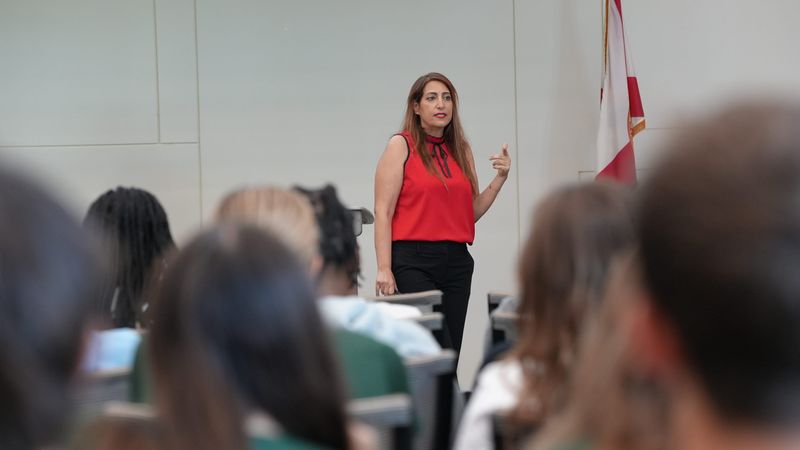
LAKE WORTH BEACH – Nearly 200 Palm Beach State athletes gathered in a school auditorium on Aug. 18, but this was no sports awards banquet.
It was a 90-minute seminar, performed by Chase Bank. The only award gained was knowledge on how to prevent getting scammed and defrauded online.

With the advent of NIL money being paid to all sorts of top college athletes, the stakes have never been higher. College athletes already have been targets. Now they are even moreso in the crosshairs.
As part of the NIL program, Palm Beach State’s athletes are required to do a certain amount of financial education, including banking, credit cards, saving.
Chase community manager Debbie Rahamim performs financial awareness seminars at Palm Beach State several times a year to various student groups. This one focused on fraud.
“It’s important to know scams and fraud are on the rise,’’ said Rahamim, who did the seminar along with Palm Beach Detective Jonathan Saat of the Financial Crimes Unit. “The people perpetrating the frauds are very skilled. They do it full time, work in groups and are very sophisticated.’’
In 2024, according to Rahamim, $2.5 billion was lost to internet fraud in the United States – up 25 percent from 2023. A total of 800,418 complaints were made – up 88 percent over 3 years.
“These young students are living online and 50 percent of the claims reported to Chase are from social media,’’ Rahamim said. “They might reach out on social media and pretend to be someone else or pretend to be someone they know and ask them for money.’’
Rahamim told the student-athletes, “Even someone pretending to be a teammate can call you up.’’
The deviousness goes as far as a phone calls looking like it’s coming from your mother’s cell, Rahamim told the student-athletes.
“They spend so much time with technology, on their cellphones and being online,’’ Rahamim said. “They’re more vulnerable because of their age. And the fraudsters are so sophisticated and these athletes are getting NIL deals/signing bonuses and (solicitors) can misrepresent themselves.’’
Indeed NIL scams are abounding and fraudsters are targeting college athletes to be influencers. It’s open season on college athletes who now have all the freedom – and the risk – with no agent.
One key hint to NIL fraud is if solicitors offer to pay money up front – which usually becomes a fraudulent check while attempting to gain personal information and reimbursement when the check bounces.
Palm Beach State golfer Adin McMaster appreciated NIL advice
Palm Beach State golfer Adin McMaster, who is from Naples, said it was helpful to raise the students’ antenna.
“Protect your money at all costs,’’ said McMaster, who is seeking a Division I scholarship “Don’t be stupid. Don’t click on links you don’t know. You may get an email saying we want you here. Call the coach. Make sure it’s real. It’s pretty easy to contact them.’’
Indeed, if Billy Donovan is emailing to campaign to come to his former school at the University of Florida, be skeptical.
Rahamim always uses as an example the defrauding of sports stars Ricky Williams and Dennis Rodman when they were living in Florida. Each were robbed of millions of dollars by so-called financial advisors.
Statistics show Florida is at the top of the list for internet fraud claims. It’s not just because the Sunshine State’s residents are less cynical.
“There’s the elderly population and wealthy people,’’ Rahamim said. “They hear West Palm, they think Palm Beach Island and we’re all rich.’’
During the presentation, Rahamim mentioned how Florida has more public websites than most states that offer a residents’ personal information. She told the student-athletes to go to that website and ask to opt out of it.
College athletes travel a lot and are prone to free WIFI sites that can be compromised. In addition, some WIFIs posing as free aren’t legitimate sites at all – just fraudulent attempts to get information from sign-ups.
Rahamim also said to be careful about posting videos of your voice on social media. The criminals can duplicate the voice and, with AI tools, send out a fake video.
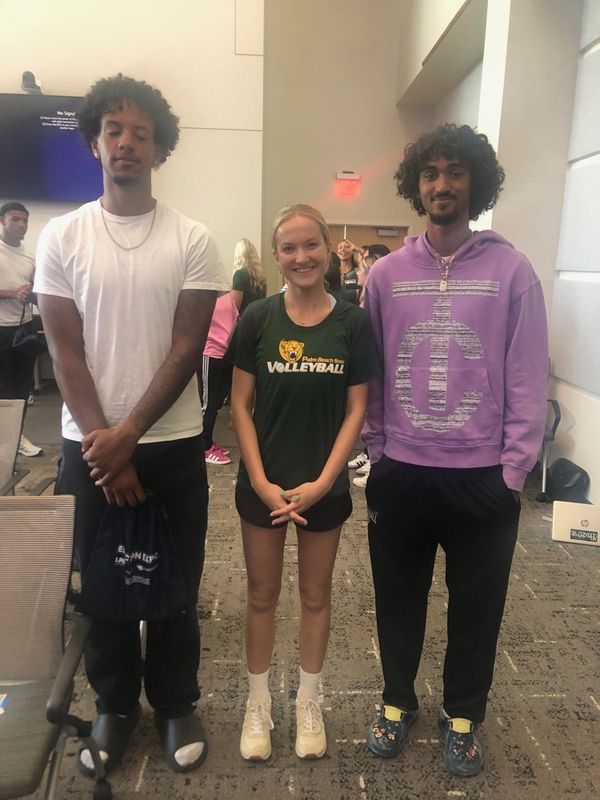
“It helped a lot,’’ said 6-foot-7 sophomore basketball star Carter Mungin of Pittsfield, Mass. “It’s going over how you can get scammed, romance scams. It protects me from eventually getting scammed.’’
The romance scam is another huge risk for the high-profile athlete.
“As we grow up, we have to be more money savvy and take care of our money, be aware of everything in the world,’’ said Sarasota sophomore combo guard Jovan Palavra, who has Division I offers. “As your name becomes bigger and bigger, I know there’s a lot of scammers out there. But it’s not really a big worry. Because us being young, we know what’s real and fake in social media. All the AI scams, you can tell real fast.’’
Chase wishes that to be true, but it’s far from it. That’s why Rahamim’s presentations are essential.
“I love working with the young adult group,’’ Rahamim said. “They’re just starting off and eager to learn. I want to help them catch bad habits before they form. Like getting a credit card and not maxing it out. It’s fun to speak to them about different subject areas apart from saving, budgeting.’’
The scamming element was the least concern of Palm Beach State volleyball star Sophia Soderberg, who is from Australia. The financial world is different in the U.S. than her native Adelaide.
More than half of Palm Beach State’s volleyball team are foreign students. The beach volleyball team has won three straight JUCO national championships.
“It’s helpful to understand as an international student to set up banking and the different terminology in the U.S.,’’ Soderberg said. “It’s completely different back home. It’s important to understand the process here with cards and bank accounts.’’
Soderberg, who is looking at Division I offers, also has received sketchy emails – even from Palm Beach State.
“The college sent another email saying there’s a phishing attempt and don’t go on the link’’ Soderberg said. “It’s super helpful to understand what to act and not act on.’’
This article originally appeared on Palm Beach Post: Palm Beach State athletes get schooled in NIL scams, fraudulent offers
Reporting by Marc Berman / Palm Beach Post
USA TODAY Network via Reuters Connect