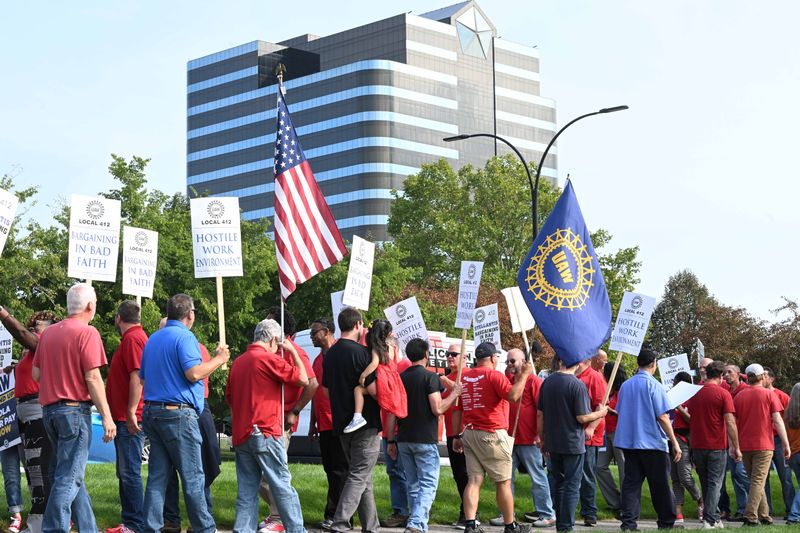
Stellantis NV union workers and leaders were ticked off — though not totally surprised — after the automaker said Thursday it wouldn’t pay out profit-sharing checks this year for the first time in 15 years.
Many United Auto Workers members continue to blame missteps by former CEO Carlos Tavares on the string of poor recent financial results that was capped with the company’s shocking $26 billion loss last year — including a more than $2 billion loss in North America.

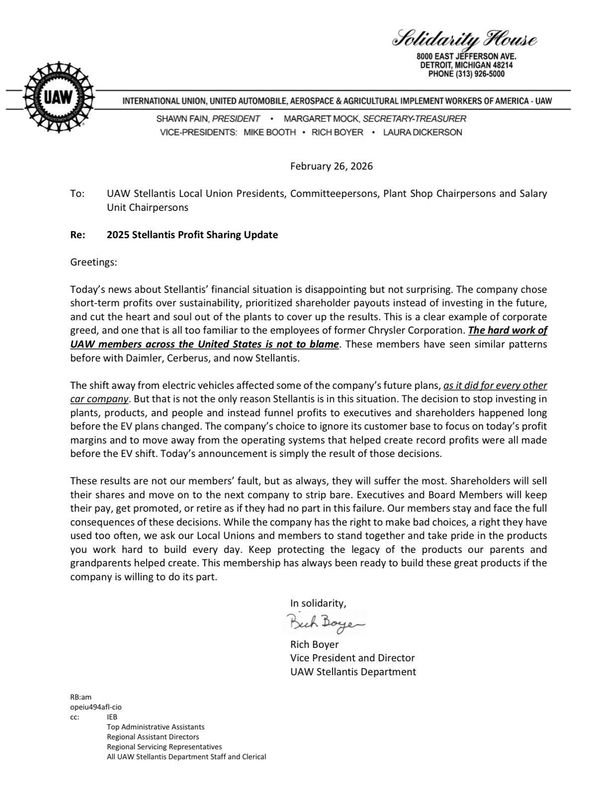
“The company chose short-term profits over sustainability, prioritized shareholder payouts instead of investing in the future, and cut the heart and soul out of the plants to cover up the results,” UAW Vice President Rich Boyer, who oversees the Stellantis department, said in a Thursday letter to other union officials obtained by The Detroit News.
“This is a clear example of corporate greed, and one that is all too familiar to the employees of former Chrysler Corporation,” he added. “The hard work of UAW members across the United States is not to blame.”
Just two years ago, Stellantis workers got nearly $14,000 profit-sharing payouts. The company’s profits were fat after pushing up vehicle prices through the pandemic. But its fortunes shifted quickly.
The carmaker is navigating massive costs to unwind electric vehicle investments that Tavares had pushed for and pivot back toward its gas-burning roots. It’s also dealt with gaps in its vehicle lineup that hurt sales, and elevated prices that consumers more recently were less willing to pay. Higher tariffs and other dramatic policy shifts in Washington since President Donald Trump took office have further complicated the company’s recovery.
“2025 was a year of reset, with results that reflect the considerable cost of needed changes,” CEO Antonio Filosa told analysts on a Thursday call.
Stellantis said that its North American results “did not meet the minimum thresholds” in its UAW contract to provide profit-sharing checks. The company statement noted that 2025 was “a very challenging year” and reflected “the cost of a profound and necessary business reset to correct past decisions,” but that recent product and strategy actions supported a stronger outlook for 2026.
The news quickly drew the ire of UAW leaders and members, who watched as their unionized colleagues at both Ford Motor Co. and General Motors Co. banked substantial payouts earlier this month.
“It’s a damn shame that autoworkers continue to pay the price for horrible mismanagement at Stellantis,” UAW President Shawn Fain said in a statement to The News. “We sounded the alarm on disgraced CEO Carlos Tavares and have been pushing the company to stop throwing money away to Wall Street and instead invest in the plants, products, and people that make this company run.”
Fain criticized the company for $8.3 billion in payouts to Wall Street where “profits are being shared, but not with the people who build the product.” He pledged that the union would push for better management at Stellantis.
So far, the UAW and the Filosa-led automaker have gotten along better than they did when Tavares led the company. Back then, the union was threatening to call strikes over the company’s job cuts and pullbacks on plant investments.
Under Tavares, who resigned in late 2024, members and UAW officials said there was too much focus on EVs, and that the company didn’t have enough interest in the intricacies of its most profitable United States market. They see the poor results and lack of profit sharing as essentially a hangover from his tenure.
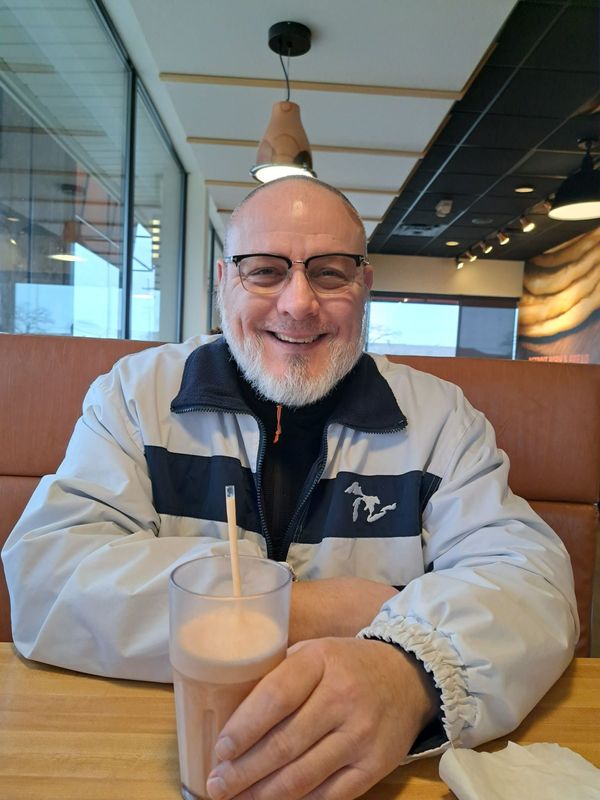
“He just screwed up the entire company, and everybody sat there and watched it happen,” said Brian Keller, who works at a Mopar facility in Auburn Hills and plans to run for UAW president this year. “They allowed it to happen.”
He points the finger both at the Stellantis board and union leaders for not raising concerns and fighting back against the former CEO sooner.
Reactions on Thursday varied by plant. At Sterling Heights Assembly, where workers have been recently working long hours to churn out Ram 1500 pickups, a letter to members from Local 1700 President Michael Spencer indicated workers were fed up. He told them they “will not be walking out on a wild cat strike,” and urged them to keep building “the best quality vehicles possible.”
“I do want to express the disappointment of the thousands of UAW Members who come to work every day and deserve better from Stellantis Corporate leadership in their decisions, product planning and fiduciary responsibility,” Spencer added. “Corporate greed drove the decision to offshore production, cut jobs and speed up production lines.”
At the nearby Warren Truck Assembly Plant, UAW Local 140 President Eric Graham said many of his members saw Thursday’s results coming.
That plant has already been struggling with layoffs and less work after the automaker stopped making the lower-cost Ram 1500 Classic pickup there in 2024 and didn’t fill the gap with a new product. Still, the loss of what’s been steady bonus money in recent years stings.
“Some people count on that money as part of their yearly income,” he said, adding that he’s hopeful that the new CEO, Filosa, is more interested in supporting plants like his.
At a recent meeting with Filosa, Graham said the CEO was approachable, dressed casually in a quarter-zip and jeans, and came across “like he cared a little bit more than Carlos Tavares.”
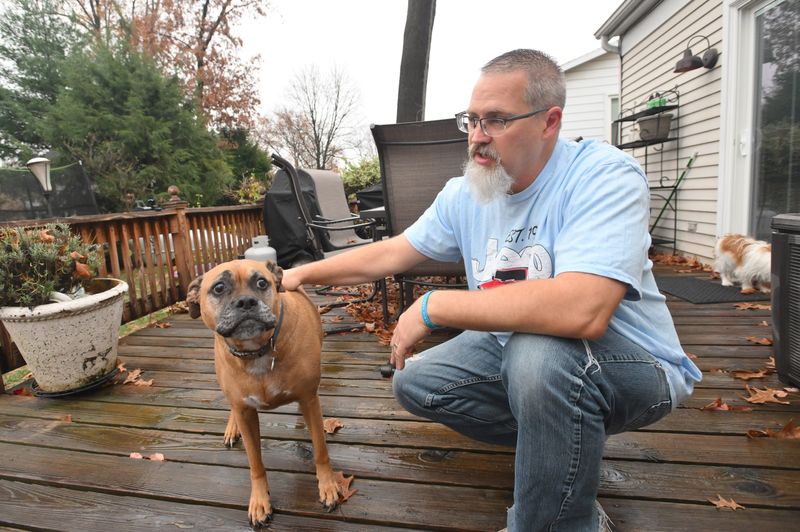
Kirk Hoddinott, 51, a UAW member who works on the Jeep Wrangler line at the Toledo Assembly Complex, said he’s watched his employer’s recent financial results closely so he wasn’t shocked that a profit-sharing check wasn’t coming.
The father of three said it was still frustrating given he was only hired full-time with the company — after previously serving as a supplemental employee — in time to get one reduced payout of about $3,780 last year. Before that, he’d watched colleagues get big payouts he was never eligible to receive.
“They talk a good game,” Hoddinott said of the company’s new leadership under Filosa. “We’re just waiting to see results from it.”
Boyer’s letter noted that other companies have also faced challenges with the shifting EV market but haven’t faced the same level of difficulty as Stellantis. “The decision to stop investing in plants, products, and people and instead funnel profits to executives and shareholders happened long before the EV plans changed,” he wrote.
Keller, the Mopar worker, said in past years he’s been able to plow the big profit-sharing checks into his savings, make a big purchase, or go on a vacation with his wife. Not this year, though: “Now we’re getting screwed,” he said.
lramseth@detroitnews.com
This article originally appeared on The Detroit News: Stellantis workers go off on $0 profit sharing: ‘We’re getting screwed’
Reporting by Luke Ramseth, The Detroit News / The Detroit News
USA TODAY Network via Reuters Connect