The mean streets of Des Moines are, perhaps, not quite as mean as they were a few years ago.
The beginning of the 2020s saw a spike in gang-related gun violence in the city, similar to the activity around the country. Since 2022, however, gang-related shootings have quickly fallen ― by as much as 40% in Des Moines, according to police statistics.

Law enforcement and community leaders said that, thanks to a mix of national and local factors, gang violence is on the wane. And they see an opportunity in the coming years to disrupt the cycle of violence by redirecting young people who might be susceptible to gang life.
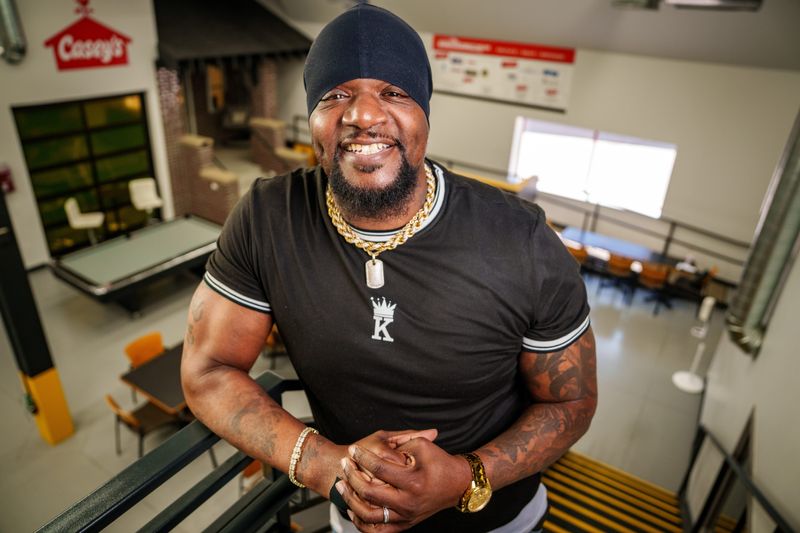
William Holmes, also known as Will Keeps, is an anti-gang activist and founder of the Starts Right Here alternative learning center in Des Moines. He said a combination of criminal prosecutions and community organization has meant previous gang members are off the streets or out of the life. That, in turn, created a window in which those involved in Des Moines’ gang organizations are younger, less hardened to violence and, he hopes, more amenable to opportunities to take a different path.
“I think this is a critical moment because some of the older structure behind the violence has been disrupted,” he told the Des Moines Register. “That creates an opportunity to reach younger kids before things grow into something worse. Des Moines is not at the level of some larger cities, and that is why now is the time to invest heavily in prevention instead of waiting until the problem becomes harder to control.”
Des Moines gangs’ prevalence varies over the years
It’s only been a few years since Des Moines’ gang problem was at a crescendo.
From 2019 to 2022, Des Moines saw at least 80 suspected gang-related shootings per year, according to Des Moines police tallies. Late 2021 saw the start of a more than yearlong series of retaliatory attacks between gangs, with in excess of 50 incidents reported from November 2021 to January 2023, according to a Des Moines Register analysis of court filings. The violence peaked in 2022, with 89 shootings attributed to gang activity.
Police said many of the attacks involved feuds between two groups: Only My Brothers, or OMB, which they described as loosely affiliated with the national Crips and Gangster Disciples; and the separate but associated Strap Gang and Only The Real, or OTR, which are connected to the national Bloods and Vice Lords. Both sides have made alliances and reformulated over the years, with groups also going by names including C-Block, Heavy Hittas, 600 Gang and Self-Made Gangsters, police said.
“In essence, there is a large-scale, violent gang dispute taking place between Strap Gang and OMB,” an officer wrote in a 2023 court filing.
These rivalries are believed to have contributed to several high-profile acts of violence.
In January 2023, a student opened fire on two rivals at Holmes’ Starts Right Here program, severely wounding Holmes and killing two other students. Prosecutors argued the shooter, an alleged accomplice and the victims were members of feuding gangs. The shooter was convicted, but the alleged getaway driver, tried separately, was acquitted, with one juror telling the Register afterward that jurors had not been convinced about the gang angle.
Gang associations also are believed to have played a role in the March 2022 fatal shooting of a teen outside East High School.
Since 2022, though, the situation has begun to change. Des Moines police tallied 62 gang shootings in 2023 and 76 in 2024, then 53 in 2025, a drop of nearly 40% from the 2022 peak. In the same timeframe, overall fatal shootings have fallen from 19 in 2022 to 10 in 2025.
The total number of people injured by gunfire in Des Moines actually rose from 2023 to 2025 ― but a drop in gang-related shootings is still an important signal, police spokesperson Sgt. Paul Parizek said.
“Every shooting is bad, every shooting is potential tragedy, but gang shootings are still unique in that they’re much more likely to tend to spawn reprisals,” Parizek said.
Gang prosecutions have thinned out gang leaders, but groups endure
While many factors have contributed to the decline in gang violence, the experts the Register interviewed agreed criminal prosecutions and incarceration have played a big role.
Polk County has prosecuted several people in connection with gang violence, including in the East High and Starts Right Here shootings. Preston Walls, who opened fire at Starts Right Here, was sentenced to 65 years in prison, while some of the several shooters involved in the East High School drive-by slaying have received sentences of up to life in prison.
In addition, federal racketeering and drug trafficking indictments have targeted a dozen or more gang members at a time. One investigation concluded in 2025 with 17 OMB gang members and affiliates receiving prison terms. Another indictment, filed earlier this year, names several alleged Strap Gang members.
David Waterman, U.S. attorney for the Southern District of Iowa, said in a Register interview that Des Moines saw a 63% drop in homicides after the major OMB investigation. Federal prosecutors have specialized tools, including the Racketeer Influenced and Corrupt Organizations Act, or RICO, for targeting organized criminal activity, with 20-year prison sentences and fines of up to $250,000 upon conviction.
“We are able to use federal statutes in a sophisticated manner to confront and dismantle these drug trafficking organizations,” Waterman said. He cited as “two great examples” the prosecution of members of the Fifth Street gang in Davenport and the OMB gang in Des Moines.
While OMB and Strap are still “names people recognize,” Holmes said, the current scene involves smaller, younger, less organized groups. They may be affiliated with older gangs but without the same violent intensity as their predecessors.
“A lot of the older individuals are either locked up, dead, or trying to move differently now,” he said. “That leaves younger kids looking up to what they saw growing up. Some of them are trying to keep certain names or reputations alive without really understanding the consequences.”
The risk, both Parizek and Holmes warned, is that prosecutions can create a power vacuum among criminal gangs while failing to address factors drawing people to join them.
“Incarceration alone does not solve the deeper issues,” Holmes said. “If there are no opportunities, mentorship, structure or support systems behind it, younger people can still step into that same lifestyle.”
Gangs recruit young and, experts say, early intervention is key
Gang membership starts young. According to the FBI’s 2024 Uniform Crime Reporting summary, the average gang member is a teenager, age 13 to 16. Walls was just 18 at the time of the Starts Right Here shooting, and the victims were 16 and 18.
“Membership will tell you you’re looking at adolescents, late teens, some of them into their 20s, but the majority of them are kids,” Parizek said.
Kyle Burgason, a criminal justice professor at Iowa State University who has studied gangs and gang activity for more than a decade, said gang recruits “find safety in a gang.”
“They find belonging in a gang, they find purpose in a gang when otherwise there would be none,” Burgason said. “If you’re raised in that and you see that every single day… there are really dire situations of some of these young people, and the only opportunity they have to make it is through a criminal enterprise.”
Holmes said the youths who join gangs are dealing with instability and a lack of guidance, while also looking for protection and acceptance.
To support these kids, “We have to be more attractive than a drug dealer,” he said.
“Young people are attracted to things like money, attention, protection, status and belonging,” he said. “A gang or street lifestyle can make those things look fast and exciting, especially for kids who feel disconnected, overlooked, or like they do not have many opportunities in front of them.”
Early intervention to identify at-risk kids and keep them out of trouble can keep children from turning to gangs, Burgason said.
“You have to get to them early,” Burgason said. “One of the best predictors of criminality, joining gangs, is the age of first contact. The sooner you come into contact with the formal control, social control of the criminal justice system, the more likely you are to be in that system. That’s what’s going to expose you to like-minded peers early.”
Civic groups step in to break the cycle of violence
Organizations like Holmes’ Starts Right Here and Creative Visions, run by lifelong Des Moines resident and former state Rep. Ako Abdul–Samad, aim to get kids off the streets and redirect them to a life not shrouded in violence.
“We try to build real relationships with young people, give them structure, education, mentorship, and opportunities,” Holmes said.
“We have to show them a real alternative that feels possible and rewarding. That means creating opportunities where they can legally make real money, build careers, become entrepreneurs, learn trades, start businesses, use their talents and actually see a future for themselves,” he said. “We have to teach them how to make money the right way and help them believe they can still be successful without destroying their lives in the process.”
Holmes said he believes civil society groups have had success in turning Des Moines’ youths away from gangs, although the impact is hard to quantify.
“Violence prevention is hard to measure because success often looks like something that did not happen,” he said, adding, “We do not save everybody, but every young person redirected away from violence matters.”
Law enforcement officials also see the value in partners who can intercede before any laws are broken and stop violence before it starts, Parizek said.
“They can fill in that gap between the time when the police aren’t there, and maybe make sure the police don’t get involved again,” he said.
How much did national trends contribute to decline in violence?
Des Moines’ overall decrease in crime since 2022 follows a national trend.
Violent crime decreased 4.5% from 2023 to 2024, according to the most recent data from the FBI 2024 Uniform Crime Reporting summary. There were an average of 395.1 violent crimes per 100,000 individuals nationally in 2024, while Iowa averaged 243, according to FBI data.
Crime rates have generally declined for decades, although there was a temporary uptick during the COVID-19 pandemic, according to FBI statistics. In 2019, there were around 19,000 homicide deaths nationwide, according to cause-of-death data from the U.S. Centers for Disease Control and Prevention. In 2020, the number spiked to more than 24,000, and to 26,000 in 2021.
Gang activity also has declined from levels seen during the pandemic, according to the FBI report. Nationwide, in 2021, there were 7.1 incidents of violent gang-related crime per 100,000 people. That number decreased to 6.3 in 2024.
COVID-19 affected patterns of gang activity as well, Berguson said. In many cities, violence increased despite public health lockdowns that limited opportunities for violent encounters in public. The exact reasons for that rise are still debated.
“There’s a number of theories that people have put out there,” Berguson said. “What we didn’t see coming, what a lot of us had to adapt to, is gangs started to have more sophisticated organization, whether it was on Facebook or Snap(chat) or whatever. … So they were able to do some recruiting or posting, maybe more than they would have if they were out in the general public, maybe got some new blood.”
While that nationwide rise has since largely reversed, Parizek believes local factors have played a significant role in the declines seen in Des Moines.
“National trends aren’t very predictive or impactful when it comes to gang activity. National trends are most helpful when there is something tangible involved,” such as drugs or vehicle thefts, he said.
Gang violence, by contrast, tends to be driven by local disputes between local groups, he said.
The decline in gang violence also is a factor, but not the entire story, in a broader drop in killings. There were 13 homicides across the Des Moines metro in 2025, down from 22 the year before.
“It has gone down but there are just so many different things,” Parizek said. “From the violence interrupters to our detectives and their casework, to the cops on the street getting those guns, it’s a really good deal.”
How can gang violence continue to be curbed?
To Holmes, the end of the pandemic-era violence spike and the disruption of gang organizations is an opportunity for all aspects of society, not just police, to turn the next generation of gang members to a healthier path.
“It has to be a full-community effort,” Holmes said.
Parizek said Des Moines police are aware new groups could step into the shoes of prior gang leaders.
“The real work comes in making sure that there’s not someone who creates a void in a vacuum,” he said. “You want to make sure that there’s not somebody that jumps right into that spot. That’s a lot of hard work on our detectives on the intelligence side.”
Gangs and gang violence are unlikely to ever fully go away, Holmes said, but every young person who finds opportunities and meaningful connection outside the gang life is one who isn’t at risk of winding up in a prison cell or a cemetery, or of sending someone else to one.
“At the end of the day, success means more young people staying alive and believing they have something to live for,” Holmes said.
Kyle Werner is the breaking news and public safety reporter for the Register. Reach him at kwerner@registermedia.com.
William Morris covers courts for the Des Moines Register. He can be contacted at wrmorris2@registermedia.com or 715-573-8166.
This article originally appeared on Des Moines Register: Gang violence has dramatically fallen in Des Moines. Here’s why
Reporting by William Morris and Kyle Werner, Des Moines Register / Des Moines Register
USA TODAY Network via Reuters Connect
By William Morris and Kyle Werner, Des Moines Register | USA TODAY Network