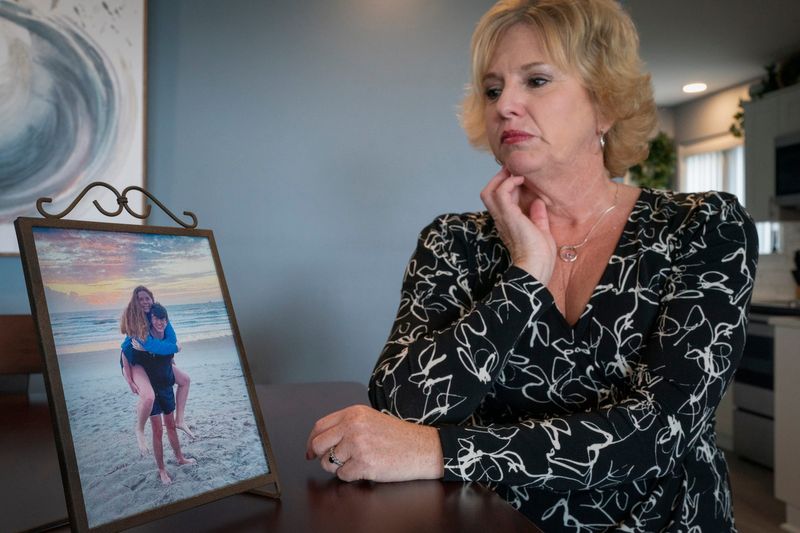
Lisa MacDonald has visited South Haven’s beach only once: to celebrate what would have been her daughter’s 20th birthday — a celebration derailed by tragedy.
Just weeks before starting her sophomore year at Michigan State University, Emily MacDonald and her 22-year-old boyfriend, Kory Ernster, drowned in Lake Michigan during a 2022 family trip to the popular beach town. It happened on a yellow-flag day. A hidden current swept them away.

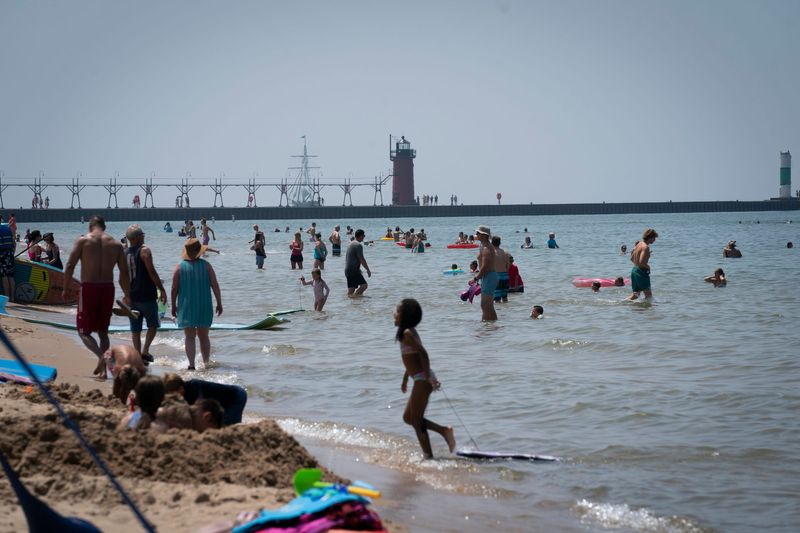
There were no lifeguards as the city had done away with them two decades prior.
This Memorial Day, the still-grieving MacDonald says she will return to that beach, fulfilling a promise she made to herself after losing Emily and Kory four summer ago, that she would fight to make sure that their lives would have purpose.
Specifically, that she would fight to bring lifeguards back to the beaches, in the hopes of sparing another parent the pain she has had to carry.
This holiday, following a years-long, grassroots campaign via social media and many visits to City Hall, lifeguards once again will be patrolling South Haven’s beaches, for the first time in 25 years.
“It’s my grief that fueled the flames for this fight,” said MacDonald, of Chesterfield Township, who will visit the beach with friends and safety advocates in what she expects will be an emotional day. “Emily and Kory deserve this. They are not just numbers on a statistical chart. … They have to be remembered for more than just drowning.”
She added: “I’m not delusional. I can’t save the world. I just wanted to make sure that moving forward, people have a better chance of leaving that beach and not come home in a body bag like my daughter.”
Lawsuits, deaths, community activism drove change
The South Haven City Council officially approved the lifeguard program — which is expected to cost $500,000 — in November following multiple deaths, lawsuits and the dogged efforts of MacDonald and safety advocates, who argued the city’s flag warning system was inadequate and putting too many lives at risk.
South Haven was among dozens of Michigan beach towns that did away with lifeguards when the state parks got rid of them in 1993 — all citing money, liability and staffing shortage concerns. Most towns opted for the cheaper alternative of a green (good), yellow (use caution), red (stay away) flag system, including South Haven.
It was a costly move.
Since getting rid of lifeguards in 2001, South Haven has had 12 drowning deaths, compared with only two drowning deaths occurring in the 40 years when lifeguards were used.
“Every one of them tears at a lifeguard’s heart, thinking about the loss of life, the family, and what may have been a different outcome if our beach community had continued to invest in lifeguards,” said lifelong South Haven resident and former lifeguard Sean Russell, who spent 12 years guarding his city’s beaches before joining the military in 2001.
“Sadly, that meant I was unable to be a timely advocate for this critical, historic part of our first responder team,” said Russell, noting he felt “heartbroken, disappointed and guilty” after learning the lifeguard program was finished.
But Russell eventually returned home, where he would join a growing movement to bring lifeguards back — an effort that gained momentum in 2022 following the drowning deaths of four people in less than a month.
Currently, three grieving families — including MacDonald’s — are suing the city over the drowning deaths of three teenagers in two separate lawsuits. They maintain lifeguards could have saved their loved ones’ lives. Those lawsuits are pending, including one that the Michigan Supreme Court has agreed to hear.
“Many of us worked over a decade to reinstate our lifeguard program on Lake Michigan,” said Russell, who has a message for the new crew stepping up: “Always remember, this job is important and deadly serious. Families are counting on you.”
In a statement to the Free Press, the city of South Haven said it has long been committed to keeping beach visitors safe, and “is excited to welcome our residents and visitors to a safe, clean beach experience again in 2026.”
“Every City department is proud of the work we do every single year to help families and friends make memories here. One highlight this year is the new Lifeguard Program. We’ve always focused first on safety, investing in our beach patrol, emergency call systems, life rings, lights, and flags and other signage. Our lifeguards have gone through rigorous and advanced training to add yet another safety measure on South Beach.”
Most Michigan beaches have no lifeguards
Currently, in a state of more than 1,000 beaches, and where tourists spent $29.3 billion in 2023 alone, there are only four public Lake Michigan beaches with lifeguards: St. Joseph, New Buffalo, Escanaba Lake and now South Haven.
Safety advocates, meanwhile, have been pleading for change for years, stressing Lake Michigan is the deadliest lake in America.
According to the Great Lakes Surf Rescue Project, Lake Michigan has claimed more than 640 lives over the last 15 years.
Yet, there are no lifeguards at 99% of our state’s public beaches, all while coastal towns rake in hundreds of thousands of dollars in beach parking fees, and our state collects millions more in vehicle park permits and billions in tourism dollars.
Over the last 15 years, Lake Michigan’s eastern coastline was the site of at least 136 fatal drownings, according to a Free Press analysis of statistics compiled by the Great Lakes Surf Rescue Project. Nearly half of those Lake Michigan fatal drownings occurred in five cities: Holland, which saw 15 fatal drownings; Muskegon, 14; Grand Haven, 12; South Haven, 11, and Ludington, 11. Another 45 beaches up and down the coast saw at least one drowning.
South Haven dips into beach parking fees
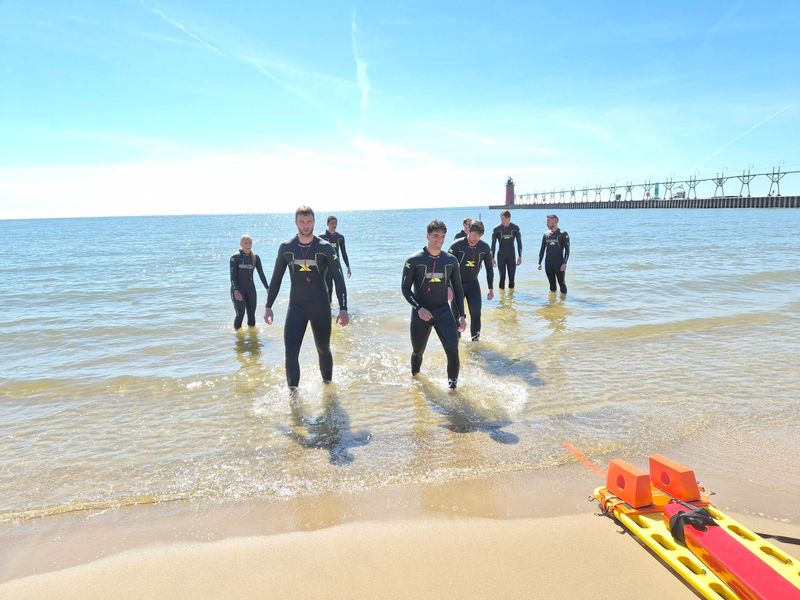
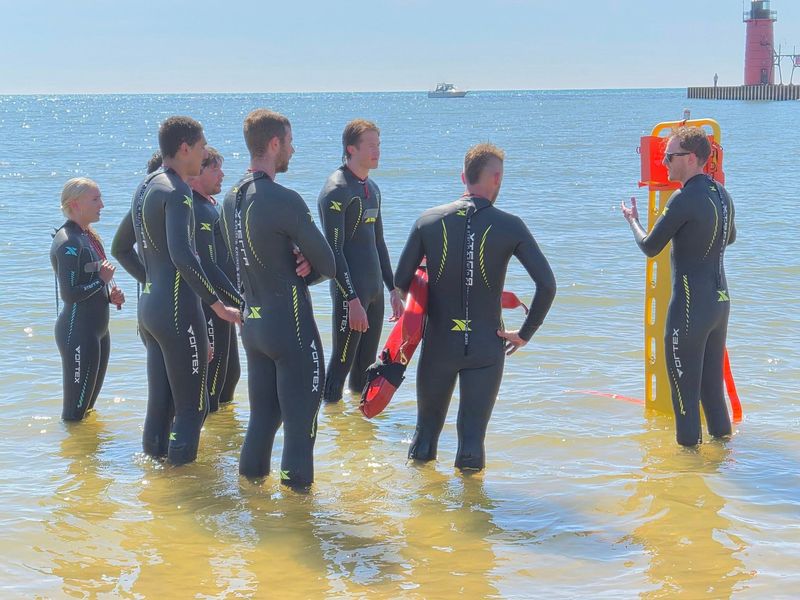
South Haven’s new crew of lifeguards participated in a two-week bootcamp this month in anticipation of its debut on South Beach on Monday, May 25. Lifeguards are scheduled to be on duty from 11 a.m. to 7 p.m. seven days a week, depending on staffing levels. While the city’s other beaches will be unguarded, there are plans to bring lifeguards to North Beach in the future.
The current plan includes 10 lifeguards with a starting salary of $20 an hour; $65,000-plus for lifeguard towers; $20,000 for lifeguard stands. The city said it expects to spend up to $100,000 to run the program annually, though the total cost is expected to reach $500,000, which includes ATVs, lifeguard towers and medical equipment.
To help cover the costs, the city increased beach parking fees: It got rid of the $10 daily rate, replacing it with a $3 hourly rate. The cost of a weekly parking pass also went up to $50 from $30.
For people like Josie Dillon, a South Haven business owner who has turned her storefront window into a lifeguard display in honor of the new program, it’s money well spent.
“We are very, very happy and excited to welcome the lifeguards and consider them heroes,” said Dillon, who owns Renaissance, which sells women’s clothing, jewelry and various gifts.
Her window display has a mannequin dressed as a lifeguard. She goes by “Samantha.” And she’s standing next to two photographs: one of the incoming lifeguard crew, and one of the last crew from two decades ago.
“The city of South Haven has made a very wise decision in bringing back our lifeguard program,” Dillon said. “Our beaches are beautiful and inviting, but the currents can be deadly to the strongest of swimmers. Our flag system simply was not adequate. … We need eyes on the water and lifeguards in place for immediate rescues.”
Business owner: We owe it to our visitors to ‘protect’ them
Business owner Ryan Serzatius, who runs Big Blue Rentals, a real estate company that rents condos and properties to South Haven vacationers, is a fourth-generation South Haven resident. He grew up on the water. His dad was a lifeguard. And he has witnessed, and benefited, from all the tourism in South Haven.
So, he said, it was only natural for him to join the movement to bring back lifeguards.
“We’re a waterfront community, and the least we can do is protect the people we are inviting into our community,” Serzatius said, noting that many out-of-towners may not realize how dangerous Lake Michigan can be.
“It’s not an inland lake,” Serzatius warned. “It doesn’t take much. You can get in knee deep water, and get dragged.”
Serzatious’ family also has donated life rings and a robotic lifeguard to South Haven. With the push of a remote button, the device — known as E.M.I.L.Y. (Emergency Integrated Lifesaving Lanyard) — can reach a swimmer in distress immediately. Other beach towns, including New Buffalo and St. Joseph, have them, too.
But for Serzatious, there’s no substitution for human eyes on the beach.
“Once it started taking off,” he said of the lifeguard movement, “we got it done.”
Contact Tresa Baldas: tbaldas@freepress.com
This article originally appeared on Detroit Free Press: Lifeguards, finally: How grieving mom’s fight paid off in South Haven
Reporting by Tresa Baldas, Detroit Free Press / Detroit Free Press
USA TODAY Network via Reuters Connect