Texas Tech sports teams had more than $24.5 million for use in funding athletes’ name, image and likeness agreements between July 1, 2024, and June 30, 2025, according to records maintained by the Tech athletics department.
That’s the last 12-month period before the House v. NCAA settlement terms were approved and nearly four times the amount from the previous July-through-June reporting period.

In response to an open-records request by The Avalanche-Journal, Texas Tech provided breakdowns of NIL funding for Tech athletes by year and by sport starting from July 1, 2021, the date court rulings and state laws legalized college athletes being able to make money from their name, image and likeness.
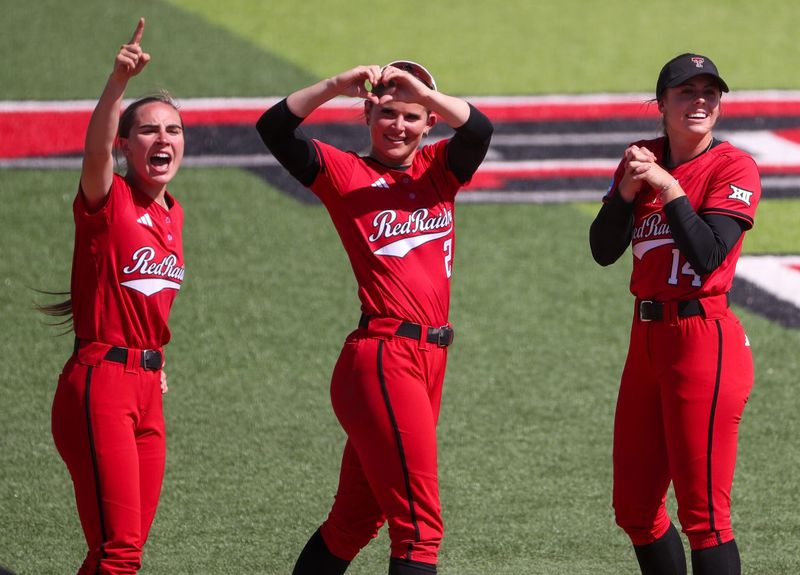
Tech reported $13.67 million on NIL spending in football and $6.54 million on men’s basketball for the time frame of July 1, 2024, through June 30, 2025. The other teams benefiting the most were softball at a little more than $2.00 million, baseball at almost $1.09 million and women’s basketball at $803,399.
The terms of the House v. NCAA settlement impose a fair-market-value assessment on third-party NIL deals. The Power Four conferences established the College Sports Commission to approve or deny deals worth more than $600. The tighter scrutiny on post-House settlement NIL deals incentivized donor collectives — such as The Matador Club that supports Texas Tech — to front-load contracts for the 2025-26 school year and pre-pay all or most of the money before July 1, 2025.
As a result, NIL funding of Texas Tech’s two most prominent sports soared: in football, from about $3.3 million each in the 12-month reporting periods of 2022-23 and 2023-24 to the $13.67 million; in men’s basketball, from about $2 million each in the reporting periods of 2022-23 and 2023-24 to the $6.54 million.
Since July 1, 2025, athletics departments have been able to directly share revenue with their athletes, the total pool for this academic year being about $20.5 million per school. Tech’s plan for year one of revenue sharing, outlined in December 2024 by athletics director Kirby Hocutt and deputy AD Jonathan Botros, has been to give about 74% of that amount to football, about 17-18% to men’s basketball, 2% to women’s basketball, 1.9% to baseball and the combined remainder to all other sports.
That means, in addition to outside NIL, Tech allocated $15.1 million in revenue sharing to the football team this fiscal year and $3.6 million to the men’s basketball team.
In its response to the open-records requests, Tech withheld NIL amounts for its men’s and women’s tennis and women’s golf teams — those with smaller rosters — citing the Family Educational Rights and Privacy Act of 1974. It also didn’t disclose the amounts for the track and field teams for 2021-22, citing FERPA.
According to the NIL Resource Center, NCAA Division I athletes have been required since June to report NIL deals of $600 or more through NIL Go, the online portal developed in partnership with Deloitte and overseen by the College Sports Commission.
The Avalanche-Journal asked Tech senior associate athletics director Robert Giovannetti his confidence level in the veracity of Tech’s reported dollar figures regarding NIL funding. He said the Tech athletics administrators, among them senior associate AD Jennifer Brashear, who oversees internal affairs and compliance, harp on regular reminders to ensure accurate reporting.
“Matter of fact, we had a meeting this morning (Tuesday, March 3) with all sport administrators,” Giovannetti said, “to talk about, ‘Hey, stay on your teams,’ to remind them … Because we can’t fill it out (NIL reporting) for them, right? They all have to input their own deals. We can’t do it for them.
“Maybe their agents can do it for them that we’d never know about, but we would hope that they’ve all filled out their paperwork on all their deals. Have they? We don’t know, but I would say with a pretty good degree of confidence that they have.”
Giovannetti said Brashear and Justin Opperman, Tech associate AD for revenue share and compliance, meet with coaches and players regularly to keep them educated and current on the subject.
“And so, I would assume we’ve got pretty good compliance with what they’re supposed to do,” Giovannetti said. “Probably early on [the early 2020s] not as much, when it was a little more nebulous what they were supposed to do, but I think now they understand when they get a deal [the reporting requirement]. … Unless it’s not $600. If it’s less than $600, then they don’t have to go through the NIL Go.”
This article originally appeared on Lubbock Avalanche-Journal: See Texas Tech pre-House settlement NIL funding by year, sport
Reporting by Don Williams, Lubbock Avalanche-Journal / Lubbock Avalanche-Journal
USA TODAY Network via Reuters Connect