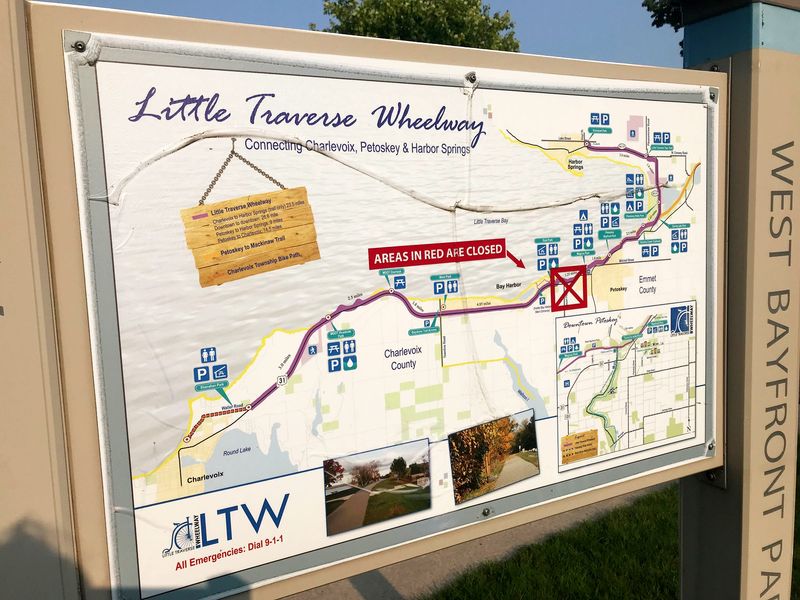
PETOSKEY — Engineers estimate it could cost nearly $20 million to fix a one-mile stretch of the Little Traverse Wheelway and address slope stability and erosion concerns in the area.
Rory Agnew of Baird & Associates presented the completed basis of design report for the project to the Petoskey City Council on Monday, Oct. 20. The lengthy document includes sections on existing site conditions, basis of design, final design development, material sourcing and construction logistics, and an opinion on probable construction costs.

Agnew had previously presented the 50% design report to council in October 2024.
“Since then we’ve gone through and advanced that design such that it’s ready to permit as well as we’ve developed all of the final design documents,” he said. “Those are bid documents that include plans, specs and a basis of design report that kind of summarizes all the analysis and the project kind of from Point A to Point Z. It’s a high-level overview of everything as well as the information that we acquired throughout the project.”
Prior to the council meeting, the city hosted an open house for residents to come in and examine the design plans for themselves, ask questions and provide feedback.
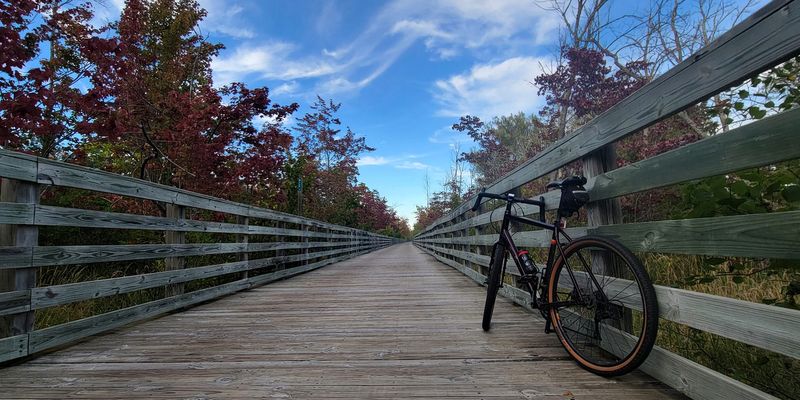
There is significant community interest in the status of the wheelway, a popular 26-mile trail that spans from Harbor Springs to Charlevoix.
“Originally constructed in 2009, it was essentially a rail to trail conversion,” Agnew said. “So essentially paving the top of the existing railbed without the addition of shoreline protection throughout the portion of that project.”
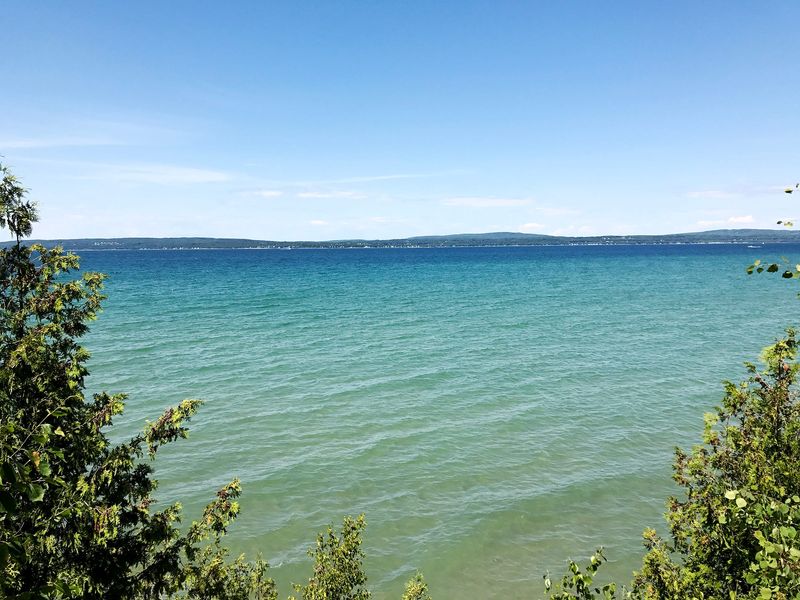
Some portions of the trail run along the shoreline, including the scenic “Miracle Mile” near Petoskey. That one-mile section provided scenic views from atop steep bluffs that dropped down to Little Traverse Bay below.
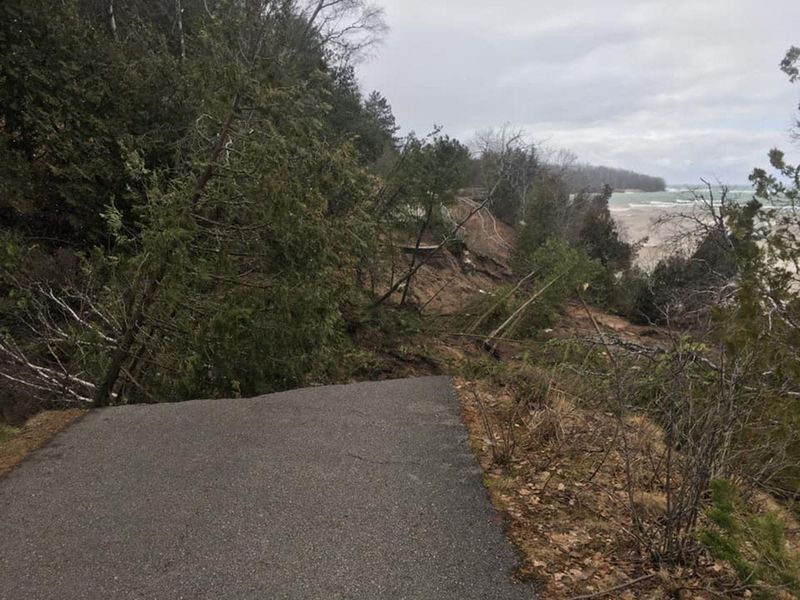
“Come 2020, record high lake levels on the Great Lakes,” Agnew said. “You started to experience all kinds of erosion … as the lake levels went up and waves were able to essentially scarp away at the sandy slopes of the existing bluff there and ultimately causing different types of failure throughout that Miracle Mile stretch.”
There was a major costal bluff collapse, which washed out approximately 150-200 feet of the trail, as well as other smaller, shallow failures that are worsening over time. This led to the closure of the Miracle Mile section, and those walking or biking on the Little Traverse Wheelway are detoured away for safety reasons.
“Since then, we’ve looked at a handful of different options through previous conceptual studies,” Agnew said. “Then, ultimately, the city was able to acquire an EGLE grant in 2023. So what I’m presenting on today is the work we’ve done under that EGLE grant.”
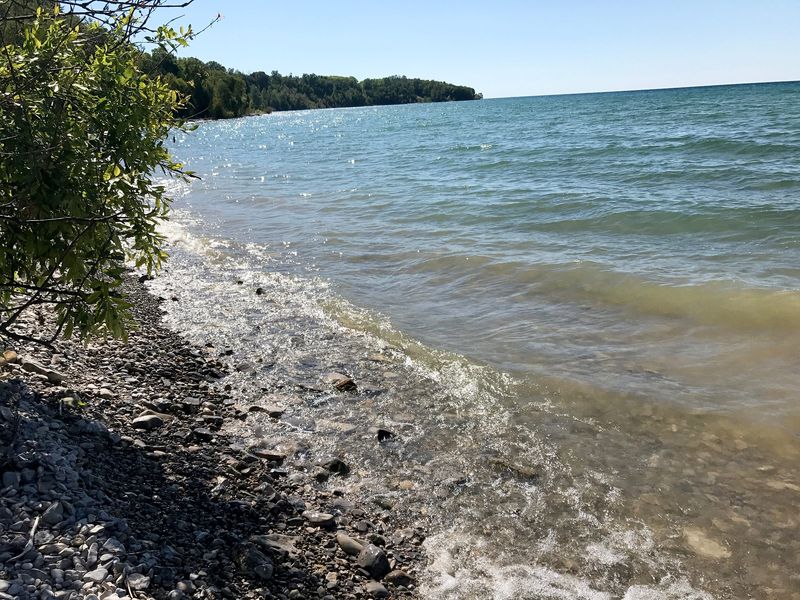
The project is designed around dynamic revetment. According to the National Oceanic and Atmospheric Administration, dynamic revetment, also known as a gravel or cobble berm, is a “design with nature” approach that can mitigate coastal erosion hazards in certain locations.
Agnew added that the wheelway is unique because it runs on an easement and impacts a handful of different properties, including city, county, state/MDOT and private property.
The design calls for adding a cobble beach, regrading into a shallower slope, revegetating the slope, building a bridge to connect sections, adding a gravel path from the trail to the beach for maintenance access and repaving all the way to Magnus Park, as that would be a key construction access route.
“There is a steel sheet pile wall, so that’s a vertical retaining wall along the edge of the trailway for a portion of it that exists currently,” Agnew added. “We’re maintaining that wall and we’re actually proposing to extend it for a portion of this.”
Baird & Associates has developed the needed permitting applications, “however, they’re currently on hold and a lot of that has to do with the funding aspects,” Agnew said.
“The cost estimate that we developed, what we call an opinion of probable construction cost, is currently at $19.8 million,” he said. “Thirteen million of that is the dynamic revetments. There’s a lot of stone. It’s almost 90,000 tons of stone that would be involved with the creation of that particular feature.”
At the Oct. 9 city council meeting, city manager Shane Horn said the biggest challenge for the stone is transportation.
“We can’t barge it in because it’s not deep enough in this area,” he said. “Doing dredging is very expensive. So you’d have to truck it in, and this would be coming from Ontario, would go to Cheboygan. We’d have trucks going from Cheboygan to Petoskey all day. And then you’re dealing with a lot of transportation cost. If we can cut that down by really refining this, using a model, potentially that’s another next step.”
If funding were not an issue and work could be started tomorrow, Agnew estimated a two-year timeline to complete the work.
Members of the council voiced concerns about the projected cost.
“We knew two years ago it was going to be very expensive,” said council member Joseph Nachtrab. “I’m just struggling with this is now five years later, we got this report — very thorough, very cool — it’s going to be two to three years more if we had the money. And then I don’t see anywhere how we’re going to get the money. I’m really at a loss on why we are spending any more time even talking about this without understanding the funding, because it’s massive.”
Council member Lindsey Walker wondered about those who helped get the trail built in 2009, including county and township municipalities.
“Where are our public partners now? Here we’ve borne the cost of all of these assessments and applied for the grants accordingly, and our public partners are not in the room and they’re not at the table. The city of Petoskey can’t do this alone,” she said. “It feels like we’re very much alone in this endeavor and that doesn’t feel very good. And we also feel very responsible for the repair of this. It’s an economic driver in our community and I really believe that we have to do our due diligence to restore it. Maybe not to its original that is being proposed, but maybe the more affordable version.”
Top of Michigan Trails Council Executive Director Brent Bolin said about 116,000 people use the trail every year, generating $10 million of economic activity.
“That’s with the connection to Bay Harbor broken, right? That’s with not being able to ride to Charlevoix,” he said. “But it’s really hard to quantify how much money we aren’t making as a community because of this being out there.”
Bolin pointed to the robust attendance at the open house and the full council room at Monday’s meeting to show the community’s interest, as well as the potential for private donations for the project.
“I think people have been waiting to hear what the plan is and see we have a plan and it’s moving forward, and people are starting to sense that that moment is upon us,” he said. “And from what I’m hearing, people are ready to start stepping up with some of those kinds of commitments. Now does that mean that somebody’s going to walk in with that Powerball ticket? Probably not. But I think that there is a significant opportunity to bring in several million dollars of private funding, which then makes it much easier to have conversations with state legislators and others.”
Bolin added that the city’s leadership is the most important factor at this part of the process.
“When it comes time to figure out how to get this permitted, installed, paid for, lots of other people are going to have to come to the table,” he said. “But the important thing that the city has done is keep this moving forward over time, and your staff has done a really great job of that. And that’s what we need you all to keep doing, right? Because this is the beginning of the conversation about how we actually get this accomplished.”
City council plans to discuss the project further at future meetings.
— Contact Jillian Fellows at jfellows@petoskeynews.com.
This article originally appeared on The Petoskey News-Review: Engineers estimate nearly $20M to repair, reopen eroded Little Traverse Wheelway section
Reporting by Jillian Fellows, The Petoskey News-Review / The Petoskey News-Review
USA TODAY Network via Reuters Connect