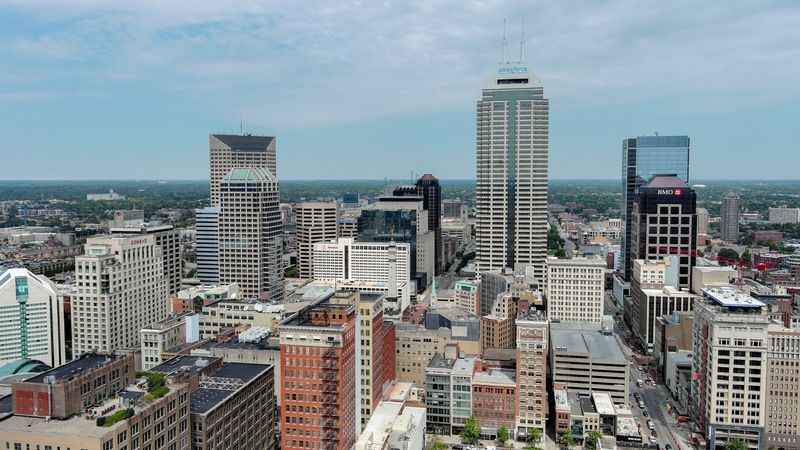
A new report shows that downtown Indianapolis is increasingly a place that people call home, surpassing 30,000 residents this year with thousands more expected over the next decade. That growth in locals comes as the city’s hotels and venues continue to attract eye-popping numbers of visitors with major events.
The nonprofit Downtown Indy Alliance — newly rebranded from Downtown Indy Inc. — released its annual report Sept. 25 that overviews the state of downtown, highlighting population growth, business trends and new efforts to make the city’s core a cleaner, safer space. The second year of a new downtown perception survey included in the report indicates that people are starting to view downtown more positively.

The report defines downtown as a 6.5-square-mile area bordered by 16th Street to the north, Interstate 65 to the east, Interstate 70 to the south and the Belt Railroad to the west. That railroad skirts by downtown west of the White River, so the neighborhoods of Stringtown and parts of West Indianapolis are included in the report, as is the area that will be home to the new Elanco headquarters.
Here are five insights from the 2025 report that tell the evolving story of downtown Indianapolis:
Downtown population growth is driven by young people
The downtown area’s current population of nearly 30,500 residents is more than twice the number of people who lived there a decade ago, a resurgence that follows decades of decline and stagnation.
Families make up a growing share of the downtown population, with more than 7,000 people living in households of two or more people. And an increasing number of people live in multi-family apartments, with almost 13,000 units occupied and hundreds more being built, according to the report.
About 43% of downtown residents belong to either Gen Z (born between 1997 and 2012) or Gen Alpha (born after 2012), which has dragged down the median age to 31.5 years old. The typical downtown resident in Indy is about two years younger than their peers in cities like Columbus, Ohio, and Charlotte, North Carolina.
Downtown Indy Alliance CEO Taylor Schaffer said her organization has set a goal to help grow downtown’s residential population by 20,000 people over the next decade, driven by large new multi-family developments like the Cole Motor campus, Old City Hall and the Gold Building.
Most people feel safe downtown despite summer violence
Despite outbreaks of violence including a deadly Fourth of July holiday weekend, people said they felt slightly safer in downtown Indy this summer than they did last year, according to a two-month survey conducted from late June to late August with nearly 2,200 respondents.
New results from the second annual Downtown Perception Survey conducted in partnership with Indiana University’s Indiana Business Research Center showed that:
Despite more positive sentiments from young adults and downtown residents, older adults and residents of doughnut counties still report the most negative views of downtown Indy.
Police data cited in the report shows that violent crime and property crime in downtown Indianapolis have fallen 6.5% and 7.6% year-to-date, respectively. Only 6% of all crime in Marion County occurs downtown, the data shows.
Hotel demand is rising. Here are 2025’s busiest events
Downtown Indy’s hotel occupancy rate continues to rise after a pandemic slump, thanks to major events like Gen Con.
Three of the five busiest nights at downtown Indianapolis hotels this year coincided with Gen Con, the tabletop game convention that drew a record number of people — nearly 72,000 — to the city from July 31 to Aug. 3. The busiest night of the year for downtown hotels was Saturday, May 24, the day before the 109th Running of the Indianapolis 500.
WNBA All-Star Weekend on July 18-19 was another boon for hotels and downtown businesses, attracting more than 320,000 visitors from outside the region. By comparison, Taylor Swift weekend attracted 725,000 out-of-town visitors from Nov. 1-3, 2024, most of whom traveled from more than 100 miles away.
In 2024, guests booked about 1.8 million hotel rooms in downtown Indy, contributing to a 64.7% average hotel occupancy rate. That’s two percentage points higher than the national average, according to the report.
Rising vacancy rates in housing, office space
With hundreds of new housing units in the downtown market, the average monthly rent has leveled off around $1,470 after years of steep increases. The occupancy rate of downtown apartments is hovering around 90%, several percentage points lower than in recent years.
But the problem of vacant office buildings is growing worse in downtown Indy and most cities across the United States. The downtown office vacancy rate grew from 11.2% last year to 12.1% this year, continuing a five-year trend exacerbated by the pandemic.
Denser downtown means more tax revenue
Downtown Indianapolis continues to drive growth in the city’s tax base, accounting for 22% of all local taxes paid in Marion County in 2022, the most recent year in which both property and income tax data are included in the report.
The assessed value of all downtown properties was about $8.5 billion in 2024, according to the report. Property taxes collected downtown in 2024 increased to $157 million, a 10% increase from just two years before.
Income tax collection has grown at an even faster rate. From 2019 to 2022, income tax revenue collected from downtown residents increased 38% to more than $40 million. The median household income of $81,400 among downtown residents is over 20% higher than the typical income earned in Marion County.
Email Indianapolis City Hall Reporter Jordan Smith at JTsmith@gannett.com. Follow him on X: @jordantsmith09
This article originally appeared on Indianapolis Star: The evolution of downtown Indianapolis in 2025, explained in 5 data takeaways
Reporting by Jordan Smith, Indianapolis Star / Indianapolis Star
USA TODAY Network via Reuters Connect